A Zero-Rake Coin Flip on Base vs Crypto Casinos

Why a Single Coin Flip Can Be Fairer Than an Entire Crypto Casino

Most “crypto casinos” take the Web2 playbook, bolt a wallet connect on the front, and call it a day. It’s the same old house edge, the same opaque math—just with a different deposit button.

Yoss.gg went the other way: make the simplest possible on-chain bet and make it actually fair.

Here’s how that works in practice:

  • P2P only. Every flip is between two players, never against a house. If you wager 10 USDC, your opponent wagers 10 USDC. That’s the whole pot.
  • Zero rake. The smart contract pays 20 USDC to the winner. There is no “tiny fee” or hidden margin baked into the odds.
  • Smart contract escrow. Funds move from wallets into a Base L2 contract, then straight back out to the winner. Yoss.gg never takes custody.
  • Commit-reveal randomness. Results are generated via commit-reveal, so neither side can front-run or peek at the outcome. You can verify it all on-chain.
  • USDC only, on Base. Using a stablecoin on a low-fee L2 keeps bets simple: no PnL from token volatility, and gas is ~1 cent per flip instead of eating the stake.

If you’re building in on-chain gaming, this kind of minimal primitive is underrated. One clean, provably fair coin flip that people actually trust is more powerful than a dozen “web3 casinos” that quietly lean on house edge.

Sometimes the honest version of a game isn’t more complicated. It’s just less extractive.

Google, Gemini’a geçişi kolaylaştıran iki yeni özellik duyurdu

Google Gemini

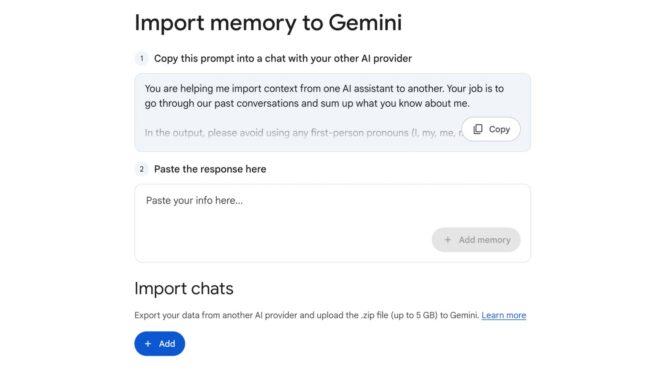
Google GeminiGoogle bugün Gemini’a geçişi kolaylaştıran iki faydalı özellik duyurdu. Kullanıcılar artık ChatGPT, Claude ya da Copilot gibi diğer yapay zeka sistemlerinde kayıt altına alınan kişisel bilgilerini kolaylıkla Gemini’a aktarabiliyor. Kullanılan mevcut sistemin, “Yapay zeka asistanları arasında bağlam aktarmama yardımcı oluyorsun. İşin, geçmiş konuşmalarımızı inceleyip hakkımda bildiklerini özetlemek.” prompt’una verdi cevabı analiz ederek yeni bir bellek oluşturan Gemini, bugün buna ek olarak sohbet geçmişini içe aktarma özelliğini de kazandı. Bu konuda yaptığı açıklamada, “Verilerinizi başka bir yapay zeka sağlayıcısından alarak (en fazla 5 GB) Gemini’a yükleyin.” diyen Google, burada .zip formatında yüklemeyi destekliyor. Anthropic de geçtiğimiz hafta Claude’a geçişi kolaylaştıran bir “bellek” özelliği sunmuştu. “Claude’a geçerken her şeye sıfırdan başlamayın.” denilerek duyurulan özellik, şirketin burada paylaştığı prompt’a diğer yapay zeka servislerinin verdiği yanıt temel alınarak çalışıyor. “Başka bir servise geçiyorum ve verilerimi dışa aktarmam gerekiyor. Hakkımda kaydettiğin her şeyi listele.” şeklinde başlayan prompt’a verilen cevabı analiz eden Claude, kullanıcı için yeni […]

Google, Gemini’a geçişi kolaylaştıran iki yeni özellik duyurdu yazısı ilk olarak Teknoloji haberleri – LOG üzerinde yayınlandı.

GDPR for US Companies: Does It Apply to You and What Do You Need to Do?

GDPR doesn’t care where your company is based. If you have visitors or customers in the EU, it applies to you — no matter how small your business.

The Short Answer

Yes. GDPR applies to any organization that processes personal data of people in the EU, regardless of where the company is located. This is Article 3 of the regulation — the territorial scope provision — and it was written this way deliberately.

If your website is accessible from Europe and you collect any data from EU visitors — analytics, email sign-ups, contact forms, session recordings — GDPR applies. The location of your servers doesn’t matter. Your company’s incorporation doesn’t matter. What matters is whether you’re processing personal data of EU residents.

“Personal data” is broad. It includes names, email addresses, IP addresses, cookie identifiers, and any information that can identify a specific person. If you’re running Google Analytics, you’re processing personal data of every visitor — including EU ones.

The “Establishment” vs “Targeting” Tests

GDPR reaches companies outside the EU through two distinct hooks.

The Establishment Test

If you have an office, subsidiary, branch, or any other stable arrangement in the EU, GDPR applies automatically. This covers companies that technically run operations from the US but have EU presences — even a single remote employee based in Germany could count, depending on context.

The Targeting Test

This is the one that catches most US businesses. If you offer goods or services to EU residents, or monitor their behavior, GDPR applies regardless of whether you have any EU presence at all.

Signs you’re targeting EU users:

  • Your site displays prices in Euros or GBP alongside USD
  • You run Google Ads campaigns targeting EU countries
  • You have EU-specific marketing campaigns or landing pages
  • You ship physical products to EU addresses
  • Your site is available in German, French, Spanish, or other EU languages
  • You have case studies or testimonials from EU customers

For the vast majority of US businesses with EU exposure, it’s the targeting test that applies. Running a SaaS product with a global sign-up page? You’re targeting EU users. Running an e-commerce store that ships internationally? You’re targeting EU users.

Even if you didn’t intend to target EU users, if they find your site, sign up, and you collect their data — you’re likely in scope.

What US Companies Often Get Wrong

“We’re too small to be targeted”

Size doesn’t determine whether GDPR applies to you — it affects enforcement likelihood, not legal obligation. A two-person startup with EU sign-ups is technically subject to GDPR. The practical risk is lower than for a company doing millions in EU revenue, but the legal exposure is real.

“GDPR only applies to EU companies”

This is the most common misconception. It’s also exactly what Article 3 was written to prevent. The drafters anticipated that companies would set up outside the EU to avoid the regulation. The extraterritorial scope closes that gap.

“We don’t have EU customers so it doesn’t apply”

Anonymous EU visitors may still count under some interpretations. If your analytics tool collects IP addresses from EU-based visitors and assigns them persistent cookie identifiers, you’re processing personal data — even if those visitors never became customers. The data subject doesn’t have to transact with you.

“We just need a cookie banner”

A cookie banner that says “we use cookies” and fires trackers before you click anything is not GDPR compliance. It’s a signal that you’ve heard of GDPR without implementing it. Compliance requires actual consent before non-essential cookies load, a privacy policy that discloses your real data practices, and a process for handling user rights requests.

What GDPR Actually Requires

If you’re a US company with EU visitors or customers, here’s what the regulation requires:

Lawful basis for processing. You need a legal justification for every category of personal data you collect. For marketing and analytics, this is usually consent. For contractual obligations (processing an order), it’s the contract. You must document your basis and disclose it.

Cookie consent before trackers fire. Non-essential cookies — analytics, advertising, retargeting pixels — cannot load until the visitor actively consents. Not a pre-ticked box. Not implied consent from continued browsing. An explicit opt-in that blocks the scripts until the visitor says yes.

Privacy policy disclosing EU user rights. Your privacy policy must explain: what data you collect, why, the legal basis for each purpose, which third parties you share it with (specific companies, not just “partners”), how long you retain it, and how EU visitors can exercise their rights — access, deletion, correction, portability, objection.

Ability to handle DSARs within 30 days. Any EU resident can request a copy of all personal data you hold on them, ask you to delete it, or tell you to stop processing it. You have 30 days to respond. You need a process for this before the first request lands — not a panicked scramble after.

Data processing agreements with your SaaS tools. If you use any third-party tool that processes EU visitor data on your behalf — email providers, analytics platforms, CRMs, support software — you need a Data Processing Agreement in place with each one. Most reputable SaaS tools have a DPA available; you often just need to sign it.

EU Representative Requirement

Article 27 of GDPR requires companies that are not established in the EU — but that regularly process EU personal data at scale — to designate a representative based in the EU. This representative acts as a point of contact for EU supervisory authorities and data subjects.

In practice, enforcement of this requirement against US-only companies is rare. There’s no US mechanism for EU regulators to compel appointment. Most small US businesses with incidental EU traffic ignore this requirement entirely, and regulators have not pursued it aggressively against small operators.

That said, if you’re doing meaningful EU revenue — hundreds of EU customers, regular EU marketing campaigns — it’s worth being aware of and discussing with a privacy lawyer. As EU-US enforcement mechanisms evolve, what’s practically ignored today may not be in five years.

The Risk Picture for US Companies

EU regulators can’t easily enforce against a US-only company that has no EU presence and no EU bank accounts. The practical enforcement path — serving notices, issuing fines, collecting — is genuinely difficult.

But the risk isn’t zero, and it scales with EU exposure:

EU-based customers can file complaints. A data subject complaint with a supervisory authority (like the German DPA or France’s CNIL) is a standard enforcement trigger. These authorities can investigate, make findings, and issue fines. For a US company with significant EU business, a complaint from a single unhappy customer can open a regulatory inquiry.

Compliance becomes a commercial requirement. If you want to sell to EU businesses — enterprises, government entities, regulated industries — they will ask about your GDPR compliance as part of procurement. Without it, you lose deals. This is often more immediately painful than regulatory risk.

Fines can include EU-sourced revenue. GDPR’s fine framework calculates maximum penalties as a percentage of global annual turnover. But regulators assessing actual fines consider EU revenue as a relevant factor. If you’re generating substantial EU revenue, the theoretical exposure is real.

The risk profile in summary: For a US-only business with incidental EU traffic, GDPR risk is low in practice. For a US company actively selling to EU customers, marketing to EU audiences, or building EU revenue, the risk is significant — both regulatory and commercial.

The 5 Things to Do First

If you’re a US company deciding where to start, this is the sequence that matters:

1. Run a scan to see what your site actually collects from EU visitors.
You can’t fix what you can’t see. A website scanner will show you every cookie, tracker, pixel, and third-party script firing on your site — including what fires before and after consent. Start here.

2. Add proper cookie consent.
Not a banner that loads everything and asks forgiveness. A consent mechanism that blocks non-essential scripts before consent is given, shows a clear accept/reject option, and logs consent for compliance records. Test it in incognito mode: if Google Analytics fires before you click “accept,” your consent is broken.

3. Update your privacy policy to disclose EU visitor rights.
Your privacy policy should describe what you collect from EU visitors, the legal basis for each use, which third-party tools process their data, and how they can exercise rights (access, deletion, correction). Most template privacy policies are inadequate. Use one generated from your actual data practices.

4. Get DPAs from your SaaS tools.
Go through every tool that processes visitor or customer data: your email platform, analytics provider, CRM, support software, payment processor. Find their DPA, sign it, and keep a record. Most major platforms (Google, HubSpot, Mailchimp, Stripe) have DPAs ready to sign — it takes minutes per tool.

5. Set up a DSAR process.
Create a simple intake method — a form, a dedicated email address — and assign someone to handle requests. Know where user data lives: your database, your email tool, your analytics platform, any backups. You have 30 days to respond. Building the process takes an afternoon; not having it when the first request lands costs much more.

Ready to see what your site is actually collecting from EU visitors?

Run a free scan at app.custodia-privacy.com/scan — no signup required. You’ll see every tracker, cookie, and third-party script loading on your site in under 60 seconds.

Last updated: March 2026

Apple, Mac Pro’yu resmi olarak emekliye ayırdı

Mac Pro

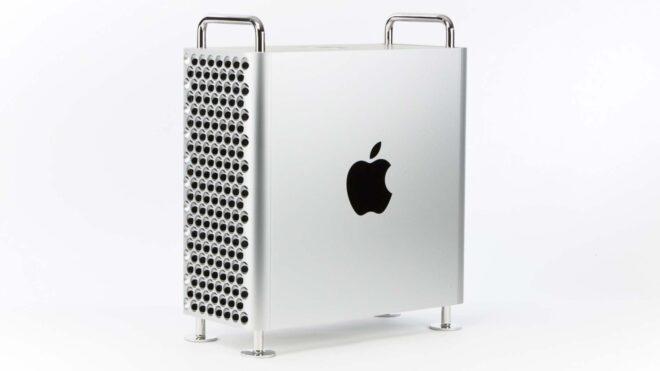
Mac ProDün gece sürpriz bir adım atan Apple, profesyonellere yönelik Mac Pro modelini resmi olarak emekliye ayırdı. 2023’te çıkan M2 Ultra işlemcili mevcut modeli satıştan kaldıran şirket, artık yeni bir Mac Pro’nun gelmeyeceğini duyurdu. Bu adım sonrasında Apple’ın masaüstü tarafındaki en güçlü Mac modeli Mac Studio olurken, cihazın yıl sonunda M5 Ultra ile güncellenmesi bekleniyor.

Apple, Mac Pro’yu resmi olarak emekliye ayırdı yazısı ilk olarak Teknoloji haberleri – LOG üzerinde yayınlandı.

Behind the Streams: Live at Netflix — 2025–10–22 Tokyo Video Tech #10 Session 2 Report

Most people know Netflix as the place you go to binge a series on a quiet evening. But since 2023, the company has been venturing into territory where there are no second takes — live streaming, at a scale that now reaches tens of millions of households simultaneously.

At Tokyo Video Tech #10 “Continuous”, held on October 22, 2025 at the Netflix Tokyo office, members of Netflix’s live streaming team gave their first talk in Tokyo. They walked the audience through what it actually takes to pull off a live broadcast at Netflix scale: the multi-path signal routing from venue to Broadcast Operations Center, the cloud encoding pipeline designed so that entire regions can fail without viewers noticing, and the culture of relentless rehearsal — including deliberate failure injection — that turns each one-shot event into something the team has already practiced dozens of times.

Report by: Katz Sakai

Launched in 2023, Netflix’s live streaming service has grown — through continuous trial and refinement — into a platform capable of reaching tens of millions of households simultaneously.
By skillfully building on the technical foundation and operational expertise developed through its VOD business, Netflix has created an architecture that balances the immediacy and reliability required for live broadcasting.
Above all, the session conveyed a clear message: success in live streaming depends on constant preparation and disciplined operational practice behind the scenes.

Live Streaming and Netflix

When people think of Netflix, on-demand streaming is usually what comes to mind.
However, the company has also been taking on the challenge of live streaming as a new form of entertainment.
Its first step in this direction was the Chris Rock: Selective Outrage comedy special, streamed live in 2023 — the first live event in Netflix’s history, which drew significant attention worldwide. Since then, Netflix has continued to scale its live streaming efforts.
For example, the boxing event Jake Paul vs. Mike Tyson was streamed live to more than 60 million households around the globe.

From the Venue to the BOC: Signal Aggregation

One of the biggest challenges in live streaming is ensuring that the video signals from the event venue are reliably delivered to the Broadcast Operations Center (BOC).

When Netflix first began its live streaming initiatives, all encoding was handled directly at the venue. However, due to various network and infrastructure constraints, achieving scalability proved difficult. Based on these lessons, Netflix transitioned to a model that minimizes on-site processing and consolidates control within the BOC.

Today, signals are transmitted from the venue to the BOC through multiple independent paths. Satellite links, dedicated lines, IP-based transmission (such as SRT), and bonded cellular connections — each with different technical characteristics — are combined to ensure that even if one path fails, the stream remains uninterrupted.
Furthermore, Netflix conducts technical studies for each transmission method, compiling the resulting insights into recommended parameters and operational guidelines that are shared with vendor partners.

At the BOC, the incoming signals are monitored and processed as needed.
This may include inserting the Netflix watermark, adding slates such as “Starting Soon” before the event or “Thanks for Watching” after it, and in the event of a total signal loss, displaying an emergency slate to maintain a consistent viewing experience.

For large-scale international events such as sports or entertainment broadcasts, the BOC also handles multilingual dubbing and audio mixing — producing simultaneous audio tracks in English, Japanese, German, and other languages to deliver regionally tailored streams to global audiences.

Converting BOC Signals into Delivery Formats in the Cloud

When transmitting video signals from the Broadcast Operations Center (BOC) to the cloud, Netflix places particular emphasis on redundancy and synchronization design to ensure uninterrupted streaming.
In live broadcasting, even a slight interruption can significantly impact the viewer experience, making it essential to balance both availability and consistency across the system.

For transmission from the BOC to the cloud, multiple independent paths — such as dedicated lines, IP-based links, and bonded cellular connections — are used in combination. This design ensures that if one route encounters a failure, others can immediately take over.
Within the cloud, the same incoming signal is processed simultaneously across multiple regions, preventing any single point of failure and ensuring high resilience.

Once the signals reach the cloud, they are first processed by encoders and then passed to live packagers, which convert them into delivery-ready formats.
These packagers leverage Netflix’s extensive knowledge accumulated through years of VOD delivery — specifically, its database of device-level capabilities and limitations. In practice, this means the system already “knows” which codecs, resolutions, and streaming formats are supported on each device, and applies that intelligence directly to live packaging.
As a result, Netflix minimizes compatibility risks and ensures that live streams maintain consistent quality and playback success rates across the vast range of viewing devices.

The packagers are also designed to handle the precise timing and segment synchronization requirements unique to live streaming.
All cloud encoders reference a shared epoch (a common timing source), ensuring that segments generated in different regions remain interchangeable. This enables instant failover between regions — if one region experiences an outage, another can seamlessly take over without disrupting the live stream.

In this way, Netflix’s live streaming architecture — built on the three design pillars of redundancy, time synchronization, and device compatibility — maintains high reliability while delivering a consistent playback experience across diverse devices worldwide.

Principles of Delivery: Compatibility, Scale, and Quality

The three key elements that Netflix prioritizes in live delivery are compatibility, scale, and quality.

Compatibility
The devices used by Netflix viewers are incredibly diverse — from smartphones released many years ago to the latest high-end devices — representing thousands of playback environments. As with VOD, Netflix’s live streaming platform is designed with the guiding principle of being playable on as many devices as possible.
To achieve this, the delivery protocol is unified under an HTTPS-based approach, allowing existing Netflix players to stream live content without modification.
Video is encoded in both the widely compatible AVC (H.264) and the more efficient HEVC (H.265) formats, while support for the next-generation AV1 codec continues to expand. This approach ensures that older devices can still play streams smoothly, while newer ones benefit from higher picture quality — achieving a balance between inclusivity and performance.

Scale
Live streaming can attract tens of millions of concurrent viewers accessing the service simultaneously. To handle this immense load, Netflix leverages its proprietary CDN, Open Connect. More than 18,000 servers deployed across 6,000 locations worldwide receive live segments from the origin and deliver them to viewers from the nearest node.
The player references manifests built on a segment template model, minimizing server queries and allowing efficient handling of massive request volumes.
This scalable architecture enables stable delivery even during global events such as Jake Paul vs. Mike Tyson.

Quality
Just as in VOD, the Netflix player continuously monitors network conditions to select the optimal bitrate in real time. If throughput drops during playback, the system immediately switches to an alternative CDN node or adjusts the video bitrate to prevent buffering. Through these adaptive measures, Netflix ensures that viewers around the world can enjoy a smooth, uninterrupted live streaming experience regardless of their network conditions.

Success in Live Streaming Starts with Preparation

Another crucial factor in live streaming is preparation and operational discipline. Unlike VOD, live streaming is a true one-shot performance — there are no retakes. For that reason, the team treats preparation like daily “training,” continuously running tests and rehearsals to stay ready for any scenario.

Building robust test environments
To simulate real-world live events, Netflix developed an internal system capable of generating virtual live streams. This system allows engineers to instantly launch test broadcasts and verify the entire pipeline — from encoding and packaging to CDN behavior — under production-like conditions. It enables safe experimentation with new features and architectural changes without risking live operations.

Practicing resilience through failure testing
Netflix routinely performs failure injection tests, deliberately introducing issues such as network latency, packet loss, and simulated cloud region outages. This culture of anticipating the unexpected strengthens system robustness, ensuring that even during large-scale global events, live streams remain stable and uninterrupted.

Forecasting and real-time adaptability
Every live event begins with audience size predictions powered by machine learning models, allowing teams to pre-provision sufficient cloud and CDN resources. During and immediately before broadcasts, Netflix continuously analyzes real-time viewership trends. If the system detects audience growth exceeding expectations, capacity adjustments are made on the fly to prevent congestion. By integrating thorough pre-event simulations with agile real-time responses, Netflix achieves stable and consistent live delivery under any conditions.

In Conclusion

What stood out most in this session was how Netflix approaches live streaming — a relatively new domain for the company — without relying on individual know-how. Instead, the team has established clearly documented procedures and specifications to ensure operational consistency and reproducibility. Even the signal setup from the venue to the Broadcast Operations Center (BOC) has been systematized into operational guidelines rather than being treated as a “black magic”, enabling the same level of quality and reliability across different countries and production environments.

Equally impressive was how Netflix has effectively leveraged its long-standing technical assets and operational expertise from VOD streaming. By applying its accumulated knowledge of device compatibility and CDN scaling directly to live workflows, the company delivers live events with the same “Netflix-quality” scalability and reliability that define its on-demand service.

Above all, the session conveyed a powerful message: live success is built on daily preparation. Through continuous testing in virtual live environments, deliberate failure injections, and regular rehearsals, Netflix ensures that each one-time broadcast runs smoothly when it matters most.

For more details on Netflix’s live streaming technology and engineering practices, you can refer to their official Netflix Tech Blog.

Join Us

Tokyo Video Tech is an open community — whether you’re a seasoned video engineer or just curious about the field, you’re welcome to join. Follow us on Luma to stay updated on upcoming events.
→ Join the mettup

How React Native Application Development Bridges the Gap Between Native and Hybrid Apps

In today’s fast-paced digital world, businesses are constantly searching for efficient ways to build mobile applications that are both high-performing and cost-effective. Traditionally, companies had to choose between native apps, known for their performance, and hybrid apps, valued for their faster development cycles. However, React Native Application Development has emerged as a powerful solution that bridges the gap between these two approaches.
This modern framework allows developers to create applications that combine the best of both worlds—delivering near-native performance while maintaining the flexibility of cross-platform development.
Understanding Native vs Hybrid Apps
Before diving into how React Native fits in, it’s important to understand the differences:
• Native Apps are built specifically for platforms like Android or iOS using platform-specific languages (Java/Kotlin or Swift). They offer excellent performance and user experience but require separate development efforts.
• Hybrid Apps are built using web technologies like HTML, CSS, and JavaScript and wrapped inside a native container. They are cost-effective but often suffer from performance limitations.
This is where React Native Application Development stands out by offering a balanced solution.
What is React Native Application Development?
React Native is an open-source framework developed by Facebook that enables developers to build mobile applications using JavaScript and React. Instead of rendering web views, it uses native components, which results in better performance compared to traditional hybrid apps.
With a single codebase, developers can create apps for both Android and iOS, significantly reducing development time and cost.
How React Native Bridges the Gap

  1. Near-Native Performance
    React Native uses native components rather than web views, which allows apps to perform almost like fully native applications. This eliminates the lag often associated with hybrid apps.
  2. Single Codebase for Multiple Platforms
    One of the biggest advantages of React Native Application Development is code reusability. Developers can write one codebase and deploy it across multiple platforms, saving time and resources.
  3. Faster Development and Deployment
    With features like hot reloading, developers can instantly see changes without rebuilding the entire app. This speeds up the development process significantly.
  4. Cost Efficiency
    Since businesses don’t need separate teams for Android and iOS, development costs are reduced. This makes React Native an ideal choice for startups and small businesses.
  5. Strong Community Support
    React Native has a large and active developer community, which ensures continuous improvements, updates, and availability of third-party libraries.
  6. Seamless Integration with Native Code
    For complex features, developers can still integrate native modules, ensuring that performance and functionality are not compromised.
    Key Benefits for Businesses
    • Reduced Time-to-Market
    • Consistent User Experience Across Platforms
    • Scalable and Maintainable Codebase
    • Lower Development and Maintenance Costs
    These advantages make React Native Application Development a preferred choice for businesses aiming to build high-quality mobile apps without exceeding their budget.
    When Should You Choose React Native?
    React Native is an excellent choice if:
    • You want to launch apps on both Android and iOS simultaneously
    • You have budget constraints but still need good performance
    • You want faster development cycles
    • Your app doesn’t require heavy platform-specific functionalities
    However, for highly complex apps like advanced gaming or intensive graphics-based applications, native development might still be more suitable.
    Conclusion
    React Native Application Development has revolutionized the mobile app development landscape by offering a perfect balance between performance and efficiency. It effectively bridges the gap between native and hybrid apps, enabling businesses to build scalable, high-performing applications without the need for separate development efforts.
    For companies looking to stay competitive in the digital age, adopting React Native can be a strategic move that ensures faster delivery, reduced costs, and an enhanced user experience.
    FAQs
  7. Is React Native better than native app development?
    React Native is not necessarily better but offers a balanced approach. It provides near-native performance with faster development and lower costs.
  8. Can React Native apps perform like native apps?
    Yes, React Native apps can achieve near-native performance, especially for most business and utility applications.
  9. Is React Native suitable for startups?
    Absolutely. Its cost-effectiveness and faster development make it ideal for startups.
  10. Does React Native support both Android and iOS?
    Yes, a single codebase can be used to develop apps for both platforms.
  11. Are there any limitations to React Native?
    While powerful, it may not be ideal for highly complex applications requiring heavy graphics or deep hardware integration.

Using Docker For Github Project deployment

27/03/2026
Suryaprakash S – Author
Developer

Today we will see about using of Docker for Github project deployment

  • Install required tools
    sudo apt update && sudo apt upgrade -y

  • Install Git
    sudo apt install git -y

  • Install Node.js (IMPORTANT → Node 20+)
    sudo apt remove nodejs npm -y

curl -fsSL https://deb.nodesource.com/setup_20.x | sudo -E bash –

sudo apt install -y nodejs

  • Install dependencies
    rm -rf node_modules package-lock.json
    npm install

  • Build project (IMPORTANT)
    npm run build


  • Install Docker
    sudo apt install docker.io -y
    sudo systemctl start docker
    sudo systemctl enable docker

  • Run website using Docker
    docker run -d -p 80:80
    -v $(pwd)/dist:/usr/share/nginx/html
    –name mysite
    nginx

  • Verify container
    docker ps

  • Open website
    http:your-ec2-public-ip

If you find any conflicts , check here

  • Docker install conflict

sudo apt remove containerd containerd.io -y
sudo apt install docker.io -y

  • Docker permission denied
    sudo usermod -aG docker ubuntu
    newgrp docker

  • Container not running / site not opening
    docker ps
    Test Locally – curl localhost
    Chekc logs – docker logs mysite

  • Website not opening in browser
    Fix: Security Group

Allow:

Type Port Source
HTTP 80 0.0.0.0/0

  • FINAL DEPLOYMENT COMMAND
    sudo docker run -d -p 80:80
    -v $(pwd)/dist:/usr/share/nginx/html
    –name mysite
    nginx

Live Streaming at “Spring Festival in Tokyo” — 2025–10–22 Tokyo Video Tech #10 Session 1 Report

A classical music festival and an internet infrastructure company might seem like an unlikely pairing. But for the past several years, IIJ (Internet Initiative Japan) — one of Japan’s first commercial internet service providers, founded in 1992 and now a major force in cloud, networking, and enterprise IT — has been quietly pushing the boundaries of live streaming technology. Not for esports or pop concerts, but for opera, chamber music, and orchestral performances in the heart of Tokyo’s Ueno Park.

At Tokyo Video Tech #10 “Continuous”, held on October 22, 2025 at the Netflix Tokyo office, Fumitaka Watanabe from IIJ pulled back the curtain on what it really takes to deliver these streams: the hundreds of meters of cables laid and removed for every show, the custom subtitle tools built because AI couldn’t match the nuance of opera, and the creative networking solutions required when your venue is two floors underground in a World Heritage site.

Report by: Katz Sakai

“Spring Festival in Tokyo” and IIJ

The Spring Festival in Tokyo is a classical music festival founded in 2005 by maestro Seiji Ozawa and others. Each year, over a period of roughly 40 days from mid-March, around 70 performances are held across 12 to 15 venues throughout Ueno Park. In 2020, the festival was canceled due to the pandemic, but in 2021, IIJ embarked on an unprecedented challenge — live streaming every single concert.

Journey So Far

  • 2021: The First Year — “Handcrafted Streaming of Every Performance”
    A conference room inside Tokyo Bunka Kaikan was converted into a temporary streaming base. Video feeds from each venue were aggregated via NDI and fiber connections. Performances were streamed in multiple formats including 4K, high-resolution audio, multi-angle views, and with subtitles.
  • 2022: Transition to Remote Production
    A permanent base was established at IIJ’s Iidabashi office, where video from the venues was transmitted via SRT. Encoding and distribution were handled from the office’s stable network environment. IIJ also developed a custom web player that allowed viewers to switch camera angles and check program information in real time.
  • 2023: Launch of “IIJ Studio TOKYO”
    In October 2022, IIJ built a dedicated in-house streaming studio — IIJ Studio TOKYO — enabling integrated management of video, audio, and network operations. This dramatically improved the overall stability and quality of the live streams.
  • 2024: Returning to the Field with Agile Operations
    As long-term studio occupation proved difficult, the team brought switching equipment back to Ueno venues, producing finished video signals on-site and transmitting them to IIJ Studio TOKYO via SRT, which continued to serve as the encoding hub. Operations were reoptimized for rapid setup and teardown at each performance.

Challenges Faced in On-Site Operations

The Spring Festival in Tokyo presents unique challenges due to its long duration and multi-venue nature, requiring IIJ to tackle numerous operational and technical issues.

One of the most demanding tasks was cable management and setup. Connecting multiple venues scattered across Ueno Park required laying and removing hundreds of meters of cables for every performance. Preventing tripping hazards and cable damage demanded meticulous on-site expertise and coordination.

Staff allocation was another major concern. At least two operators were assigned to each concert to ensure continuous coverage, but this structure also increased personnel costs and highlighted the difficulty of balancing efficiency with budget constraints.

The diversity of venue environments posed additional hurdles. Some locations had unstable power supplies, causing equipment malfunctions that required off-site reinspection. Others lacked permanent network connections, making it necessary to arrange mobile or temporary lines months in advance.

Unstable networks also proved problematic — especially during the spring hanami season, when mobile networks in Ueno Park became congested despite the use of bonded multi-carrier connections.

A further challenge specific to classical music was the precision required for subtitles. In opera performances, the accuracy and timing of subtitles are integral to the artistic experience, and AI-generated captions proved inadequate. IIJ developed an in-house subtitle insertion tool, allowing human translators’ scripts to be synchronized precisely with the performance in real time.

In summary, delivering these streams demanded not only technical reliability but also deep sensitivity to the cultural context of the event. The success of the project lay in IIJ’s ability to provide a “culturally informed live streaming experience” — one that preserved the integrity and atmosphere of live classical performance.

New Challenges in 2025

In 2025, IIJ took its previous initiatives a step further by introducing several new technical and operational challenges.

First, the team leveraged Vipe, a cloud-based playout system from BCNEXXT, enabling operators to switch between program segments, intermissions, and closing screens with a single click based on a preset timetable. This greatly reduced operational workload and improved on-site efficiency, though it also revealed a new challenge — rising costs associated with cloud services.

Next, IIJ collaborated with KORG and NHK Technologies to conduct a live stream using Dolby Atmos, delivering an immersive audio experience that traditional stereo streaming could not achieve. This marked a new milestone in IIJ’s efforts to “reproduce the live atmosphere as it is.”

The team also took on the ambitious task of testing live streaming from the National Museum of Western Art, a World Cultural Heritage site. Due to strict regulations, every piece of equipment required prior approval, along with detailed reports on power usage and personnel. The concert hall’s location — two floors underground — posed further difficulties, as neither wired nor mobile networks were available, and new line installations were prohibited. IIJ overcame this by connecting the museum to the nearby Tokyo Bunka Kaikan across the street via a 60 GHz wireless network, successfully transmitting both video and audio.

Another major constraint was time. Since the museum remained open to the public until 5 p.m., and the concert opened at 6:30 p.m. and began at 7 p.m., setup time was limited to just one and a half hours, demanding exceptional efficiency and coordination.

Finally, to address mobile network congestion during the cherry blossom season, IIJ experimented with local 5G connectivity. The trial confirmed that stable 60 fps video transmission was possible, though it also revealed that operating local 5G in Japan involves complex licensing procedures, equipment preparation, and substantial costs and lead time.

Network Design Philosophy

For the venue network, IIJ implemented redundancy using multiple connections such as FLET’S Hikari Cross and FLET’S Hikari Next, securing two routing paths — IPoE and PPPoE — and managing them with IIJ’s proprietary router, SEIL. In addition, multiple venues around Ueno Park were interconnected in a mesh topology, enabling remote control of cameras and encoders from any location.

The decision to deploy multiple lines stemmed from practical considerations: during the roughly 40-day festival period, scheduled maintenance by network providers could overlap with event days, and relying on a single line would risk operational downtime.

At the same time, IIJ emphasized that redundancy is not simply “the more, the better.” Excessive investment in multi-layered redundancy could harm overall profitability. Redundancy is a safeguard — a means of maintaining peace of mind and operational continuity. The real challenge lies in striking the right balance between cost efficiency and service reliability.

International Collaboration — Partnership with Berlin Phil Media

Since 2016, IIJ has collaborated with Berlin Phil Media, the streaming subsidiary of the Berlin Philharmonic Orchestra, conducting joint experiments on uncompressed audio transmission and high-quality international live relays. Together, the two organizations have pursued the goal of achieving classical music streaming that surpasses traditional broadcast standards, continuing research and technical verification on advanced delivery systems and cross-border integration.

Silent robotic camera used by the Berlin Phil Media

The greatest lesson IIJ has learned from working with Berlin Phil Media is their unwavering “orchestra-first” philosophy. Every technical decision is made with the musicians in mind — for example, the robotic cameras installed in the concert hall operate completely silently so as not to disturb performers’ concentration. This meticulous attention to the artistic environment inspired IIJ to reaffirm the importance of harmonizing technology and artistry in classical music streaming.

In Conclusion

What left the deepest impression from this session was realizing just how much effort and ingenuity lie behind the seemingly effortless beauty of a concert live stream. From laying cables and designing network routes to fine-tuning subtitles, countless individual actions come together to create the seamless environment that allows us, the audience, to enjoy music online.

It was also inspiring to see how the IIJ team never simply repeats the same routine each year, but continually embraces new technological frontiers — such as cloud-based operations, Dolby Atmos, and local 5G. Their pursuit of stability while still pushing the boundaries of innovation truly embodies IIJ’s mission: to evolve the Internet into a genuine social infrastructure.

Join Us

Tokyo Video Tech is an open community — whether you’re a seasoned video engineer or just curious about the field, you’re welcome to join. Follow us on Luma to stay updated on upcoming events.
→ Join the mettup

I Built Jira for AI Agents – Here’s why your AI Coding Assistant needs its own project management

Think about it. Your AI agent refactors code across 12 files, makes architectural decisions, tries three approaches before settling on one, and fixes a subtle race condition. Then it commits with the message “fix bug” and all that context is gone forever.

We’d never accept this from a human developer. Why do we accept it from the tool that’s increasingly writing most of our code?

AI agents need their own project management

I’m not talking about giving Claude a Jira API key. I’m talking about project management that’s native to how agents work: plain files, git commits, and context windows.

That’s what I built. Claude Project Tracker is Jira for AI agents — a .project/ folder you drop into any repo where your AI agent creates its own tickets, documents every decision, maintains a wiki, and closes issues when done.

No database. No SaaS. No monthly fee. Just files in git.

What it looks like in practice

You: "Fix the login timeout bug"

Claude Code:
  → Creates PROJ-1: "Fix login timeout bug"
  → Status: in-progress
  → Comment: "Investigating auth.ts — timeout at line 42"
  → Comment: "Root cause: token refresh waits for expired session"  
  → Comment: "Tried: extending timeout. Failed: masks the real issue"
  → Comment: "Fix: early return on expired tokens. Modified auth.ts, middleware.ts"
  → Updates wiki: Solutions → Authentication
  → Commits: fix(auth): resolve login timeout [PROJ-1]
  → Status: done

That’s not me writing comments. That’s the agent documenting its own work as it goes.

Three weeks later when the bug resurfaces:

You: "Login is broken again, check PROJ-1"

Claude Code:
  → Reads full ticket history
  → Knows the root cause, what was tried, what worked
  → Picks up with complete context

Why not just use Jira / Linear / GitHub Issues?

Because those tools are designed for humans, not agents.

The mismatch:

Human PM tools Agent-native PM
Requires API integration Reads/writes files directly
SaaS with auth, permissions, billing Plain files in your repo
Designed for manual updates Agent updates automatically
Separate from code Lives next to code
Merge conflicts on shared state Append-only, conflict-free

Claude Code’s superpower is that it reads and writes files. It doesn’t need a REST API to create a ticket — it creates a folder with a JSON file and a Markdown description. It doesn’t need a webhook to add a comment — it writes a new file to the comments directory.

The file system is the API.

The architecture

.project/
├── config.json
├── issues/
│   └── PROJ-1/
│       ├── issue.json         # status, priority, labels
│       ├── description.md     # what was requested
│       └── comments/
│           ├── 001.json       # "Investigating auth.ts..."
│           ├── 002.json       # "Root cause found..."
│           └── 003.json       # "Fixed. 2 files modified."
├── wiki/
│   ├── _index.json            # page tree structure
│   └── pages/
│       ├── steering.md        # your rules for the agent
│       └── solutions-auth.md  # auto-generated docs
└── boards/
    └── default.json           # kanban column config

Why this structure:

  • One folder per issue — atomic git operations, clean diffs
  • Comments as individual files — append-only means zero merge conflicts, even with multiple agents
  • Wiki as Markdown — equally readable by humans and AI
  • No database — works offline, no setup, no migrations, no backups

Steering files: your agent’s operating manual

This is where it gets interesting. You create wiki pages called “steering files” that the agent reads before every task:

Coding Standards:

Use TypeScript strict mode. Prefer Tailwind. No inline styles.

Architecture:

All API endpoints return { data, error } envelope. Use Zod for validation.

Conventions:

snake_case for DB columns. camelCase for JS. Components in PascalCase.

Your agent follows these automatically. No more repeating yourself every session. No more “I told you yesterday to use strict mode.”

The web UI

Agents work in terminals. Humans like boards. So it ships with both.

The web UI gives you:

  • Kanban board — drag-and-drop across columns, time filter on completed work
  • List view — sortable, filterable, paginated
  • Wiki editor — tree navigation, search, Markdown editing
  • Skill manager — create slash commands from the browser
deno run --allow-net --allow-read --allow-write --allow-env server.ts
# → http://localhost:8000

Slash commands

The tracker installs as Claude Code skills:

Command What it does
/track-work Start a task with full audit trail
/create-issue Create a new tracked issue
/standup Summarize recent activity across all issues
/review-ticket Read a ticket’s complete history
/wiki-update Create or update a wiki page
/document-completion Auto-document finished work in the wiki

One-line install

From inside any git repo:

curl -sL https://raw.githubusercontent.com/rpostulart/Claude-Project-Tracker/main/init.sh | bash

That creates the .project/ folder, installs Claude Code skills, and generates a CLAUDE.md that tells Claude to track everything automatically.

The bigger picture

Here’s what I think is happening: AI agents are becoming the primary producers of code. Not assistants. Not copilots. Producers.

And producers need project management. Not human PM tools with AI bolted on — but PM tools designed from the ground up for how agents work.

That means:

  • Files over APIs — agents think in files
  • Git over databases — the audit trail already exists
  • Context over dashboards — agents need ticket history in their context window, not a pretty UI
  • Append-only over CRUD — agents working in parallel need conflict-free writes

Claude Project Tracker is a first step. It works with Claude Code today. The file format is open, and there’s no reason Cursor, Aider, Codex, or any future agent couldn’t adopt the same structure.

Try it

GitHub: github.com/rpostulart/Claude-Project-Tracker

MIT license. Open source. Feedback welcome. Spread the word.

I’d especially love to hear:

  • What would you want your AI agent to track that it currently ?
  • What’s the biggest “I wish I knew what Claude did” moment you’ve had?

Drop a comment or open an issue on GitHub.

Apple, tüm ana yapay zeka sistemlerinin Siri’ye entegre edilmesine izin verebilir

Apple Tim Cook Siri

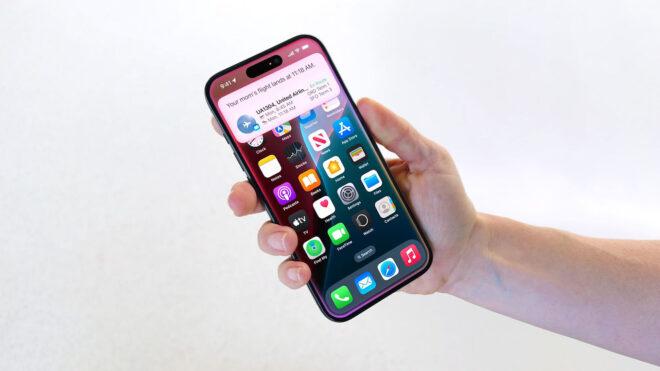
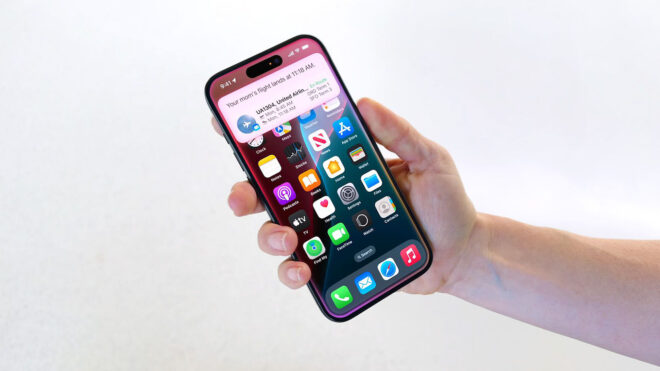
Apple Tim Cook SiriMark Gurman tarafından yapılan son açıklamaya göre Apple, 8 Haziran tarihli WWDC26 kapsamında tanıtılacak iOS 27 güncellemesiyle birlikte kullanıcıların Siri ile bağlamak istedikleri yapay zeka sistemini seçmelerine olanak tanıyacak. Siri şu anda yanıtlayamadığı bir soru olursa, bu soruyu OpenAI ile yapılan iş birliği kapsamında ChatGPT’ye iletmeyi öneriyor. iOS 27 ile kişilerin bu süreçte “Gemini” ve “Claude” gibi diğer yapay zeka sistemlerini de kullanabileceği aktarılıyor. iOS 27 ve macOS 27 işletim sistemleriyle birlikte Siri için başka önemli duyurular da yapılacak. Yeni işletim sistemlerine Siri’ye özel ayrı bir uygulama ekleyeceği belirtilen Apple, Google iş birliği kapsamında Gemini tabanlı özel bir yapay zeka modeliyle güçlendireceği Siri’yi tam anlamıyla bir sohbet botu olarak ChatGPT ve Gemini’ın karşısına da konumlandıracak. Geliştirilen bu altyapıda Siri’yle hem sesli hem de yazılı görüşmeler gerçekleştirilebilecek, sorulan sorulara cevaplar alınabilecek. Siri’yi doğrudan Dynamic Island’a konumlandırmayı düşünen Apple, iddiaya göre WWDC26’da asistanın yeni arayüzünü görücüye çıkaracak ve yine Gurman’a göre Siri’ye […]

Apple, tüm ana yapay zeka sistemlerinin Siri’ye entegre edilmesine izin verebilir yazısı ilk olarak Teknoloji haberleri – LOG üzerinde yayınlandı.