
Building a project for a hackathon is one thing.
Turning it into a production-ready, scalable system is something else entirely.
After the initial version of StadiumIQ, I took it a step further — focusing on architecture, performance, testing, and real-world readiness.
This update transforms StadiumIQ from a simple prototype into a robust smart stadium platform.
BEFORE:
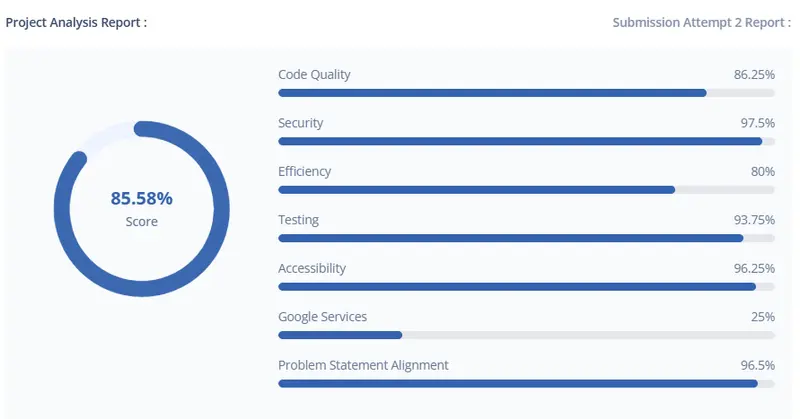
🔄 What Changed?
The core idea remains the same:
👉 Improve stadium experience by reducing crowd congestion and optimizing movement.
But now, the system is:
- More structured
- More reliable
- More scalable
- Closer to real-world deployment
🧠 Major Architectural Upgrade
One of the biggest improvements was breaking down a monolithic structure.
Before:
- Everything handled inside a single script
- Hard to scale and maintain
Now:
- Fully modular architecture using ES modules
- Clear separation of concerns:
- Data simulation
- Routing logic
- UI handling
- Firebase services
👉 This makes the system easier to extend and maintain.
🧪Full Testing Coverage
To ensure reliability, I implemented a complete testing setup:
Jest + jsdom + Babel
Covered:
Simulation logic
Edge cases
Routing decisions
Dynamic UI updates
👉 The system is now validated and stable, not just functional.
☁️ Real-Time Data with Google Services
StadiumIQ now integrates with Firebase Realtime Database:
- Supports live crowd and queue data
- Automatically falls back to simulation mode if data is unavailable
- Ensures uninterrupted user experience
👉 This bridges the gap between prototype and real-world application.
⚡ Performance Optimization
Handling real-time updates efficiently was critical.
Improvements include:
- Debouncing data updates
- Reducing unnecessary DOM re-renders
- Maintaining smooth 60fps UI performance
👉 The app now feels fast, responsive, and stable.
♿ Accessibility & Usability
Accessibility was carefully maintained:
- Semantic HTML structure
- ARIA attributes
- Consistent interaction patterns
👉 Making the system usable for a wider audience.
🧩 Smarter Decision-Making System
The system doesn’t just show data anymore — it acts intelligently:
- Suggests less crowded gates
- Recommends fastest food counters
- Provides optimal navigation routes
- Predicts exit rush scenarios
👉 It behaves like an AI-powered assistant, even without heavy backend infrastructure.
📦 Clean, Submission-Ready Repository
To meet professional and hackathon standards:
- Clean folder structure
- Modular codebase
- Lightweight (<1MB)
- Proper .gitignore and configs
- Improved README with full documentation
👉 Ready for evaluation and real-world extension.
🎯 What I Learned
This upgrade wasn’t just about adding features — it was about building better systems.
Key takeaways:
Structure matters as much as functionality
Testing is essential for reliability
Performance optimization is critical for real-time apps
Clean documentation improves usability and evaluation