The era of “AI as text” is over. Execution is the new interface.

Over the past two years, most teams have interacted with AI the same way: provide text input, receive text output, and manually decide what to do next. But production software doesn’t operate on isolated exchanges. Real systems execute. They plan steps, invoke tools, modify files, recover from errors, and adapt under constraints you define. As … Devamını oku

Under the hood: Security architecture of GitHub Agentic Workflows

Whether you’re an open-source maintainer or part of an enterprise team, waking up to documentation fixes, new unit tests, and refactoring suggestions can be a true “aha” moment. But automation also raises an important concern: how do you put guardrails on agents that have access to your repository and the internet? Will you be wondering … Devamını oku

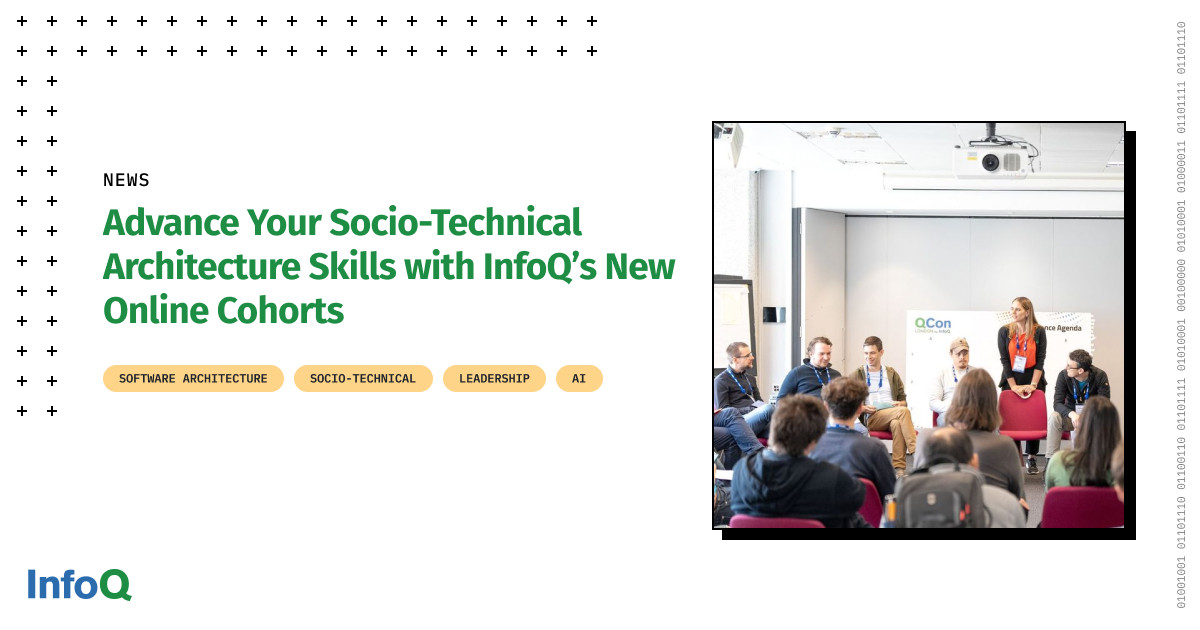
Advance Your Socio-Technical Architecture Skills with InfoQ’s New Online Cohorts

Enhance your architectural leadership with InfoQ’s new online cohorts starting April 15, May 7, and June 10, 2026. Led by Luca Mezzalira, this 5-week program focuses on socio-technical skills like ADRs, platform engineering, and AI trade-offs. Senior practitioners can apply frameworks to live projects, earn ICSAET certification, and contribute to the InfoQ community. By Ian … Devamını oku

Making Retrospectives Effective with Small Concrete Actions and Rotating Facilitators

Teams can run regular retrospectives that focus on 1–2 concrete weekly actions to avoid complaint circles, Natan Žabkar Nordberg mentioned at QCon London. You can rotate facilitators to build ownership, with each one bringing their own unique perspective. He suggested framing bigger changes as 4–6 week experiments, then vote to keep, tweak, or revert, ensuring … Devamını oku

Claude Opus 4.6 Introduces Adaptive Reasoning and Context Compaction for Long-Running Agents

Anthropic’s Claude Opus 4.6 introduces “Adaptive Thinking” and a “Compaction API” to solve context rot in long-running agents. The model supports a 1M token context window with 76% multi-needle retrieval accuracy. While leading benchmarks in agentic coding, independent tests show a 49% detection rate for binary backdoors, highlighting the gap between SOTA claims and production … Devamını oku

Running Ray at Scale on AKS

The Azure Kubernetes Service (AKS) team at Microsoft has shared guidance for running Anyscale’s managed Ray service at scale. They focus on three key issues: GPU capacity limits, scattered ML storage, and problems with credential expiry. By Claudio Masolo