JS video player with ffmpeg HTTP streaming in PHP: state machine, watchdog, subtitles

The first real test of ShareBox with an actual file was an 8 GB MKV — HEVC encode, DTS audio, PGS subtitles burned from a Japanese Blu-ray. The <video src="..."> I had put in place opened, spun for two seconds, and stopped in complete silence. No error event, no console message. Just a spinner going nowhere.

ShareBox started from a simple premise — share large files without a third-party cloud. Video streaming was supposed to be one feature among others. Except real-world files are not clean H.264/AAC MP4s: there are MKVs, HEVC encodes, Dolby audio tracks, bitmap subtitles. The native browser player gives up without a word. So I built a full player: on the server side, download.php orchestrates three ffmpeg streaming modes. On the client side, a JS state machine handles mode selection, stall recovery, image subtitle burn-in, and UX. This post documents what I built — and where it cost more time than expected.

Three server-side streaming modes

The entry point is download.php?stream=MODE. Three modes are available, selected dynamically by the JS based on the detected codec.

native — X-Accel-Redirect

For files already playable by the browser (MP4 H.264 + AAC), we delegate to nginx via X-Accel-Redirect. PHP never touches the bytes, no ffmpeg, no CPU cost. HTTP byte-range works normally, seeking is instant.

remux — zero-cost repackaging

An H.264 MKV cannot be streamed natively by the browser, but the codecs are compatible. The solution: repackage on the fly into a fragmented MP4 without re-encoding.

ffmpeg -i input.mkv 
  -c:v copy -c:a aac 
  -movflags frag_keyframe+empty_moov+default_base_moof 
  -min_frag_duration 300000 
  -f mp4 pipe:1

-c:v copy: zero video re-encoding. -c:a aac: audio is converted if needed (DTS, AC3 → AAC). The result is a fragmented MP4 piped directly into the HTTP response. CPU cost: near zero for video, a few percent for audio conversion.

The flags frag_keyframe+empty_moov+default_base_moof are critical. Without empty_moov, the browser waits for the end of the file to read the moov atom (metadata) — which blocks indefinitely on a pipe. Without frag_keyframe, fragments don’t start on keyframes and seeking breaks.

A pitfall that cost me an hour: I had added -fflags +genpts and first_pts=0 to normalize timestamps. The reasoning seemed sound — some MKVs have PTS values that don’t start at zero, and I wanted to avoid surprises during seeking. In practice, these options modify PTS in a way that browsers misinterpret on a fragmented stream: video and audio gradually desync after each seek. Removed, the problem disappeared immediately.

Normalizing timestamps on a fragmented pipe means “fixing” something the browser already handles fine — and introducing a desync it has no way to correct.

transcode — for incompatible codecs

Unsupported HEVC, VP9, AV1, or Dolby audio that won’t pass through: we re-encode.

ffmpeg -i input.mkv 
  -c:v libx264 -preset ultrafast -crf 23 
  -c:a aac 
  -movflags frag_keyframe+empty_moov+default_base_moof 
  -min_frag_duration 300000 
  -f mp4 pipe:1

-preset ultrafast sacrifices compression to minimize startup latency. -crf 23 gives acceptable quality without blowing up the bitrate. The video is playable within a few seconds, not after a full encode pass.

Concurrency semaphore and clean disconnect

Each ffmpeg process consumes CPU for the entire duration of the stream. Without a limit, ten concurrent downloads mean ten ffmpeg processes fighting over CPU cores. I added a PHP semaphore (via sem_acquire) capped at 4 concurrent processes.

$sem = sem_get(ftok(__FILE__, 'f'), 4);
sem_acquire($sem);

register_shutdown_function(function () use ($sem, $proc) {
    if (is_resource($proc)) {
        proc_terminate($proc);
    }
    sem_release($sem);
});

// Streaming loop
while (!feof($stdout) && !connection_aborted()) {
    echo fread($stdout, 65536);
    flush();
}

The connection_aborted() check inside the loop is essential: when the client closes the tab, PHP detects the disconnect, exits the loop, the shutdown function kills the ffmpeg process, and releases the semaphore slot. Without this, orphan ffmpeg processes pile up until reboot.

Infrastructure adjustment: pm.max_children in PHP-FPM was bumped from 5 to 25. Each active stream monopolizes one FPM worker for its entire duration — unavoidable with synchronous streaming. With 5 workers, the 6th visitor waits in the dark.

SQLite ffprobe cache

Before choosing the streaming mode, the JS needs to know the file’s codec. ffprobe answers that, but takes 2 to 12 seconds on a large file (disk access, header parsing). My first version did trial-and-error detection on the JS side: try native, wait 2 seconds, if nothing plays → try remux. In practice, 2 seconds is a long wait, and it generates false positives on slow connections. The right solution: know the codec before starting anything.

SQLite cache keyed by (path, mtime). The key includes the file’s mtime to automatically invalidate the cache if the file is replaced. Cache hit: ~100ms. Cold: 2-12s (once per file, never again).

function probeVideo(string $path): array {
    $db  = new PDO('sqlite:' . PROBE_CACHE_DB);
    $key = hash('xxh64', $path . '|' . filemtime($path));

    $row = $db->query(
        "SELECT data FROM probe_cache WHERE key = " . $db->quote($key)
    )->fetch();

    if ($row) {
        return json_decode($row['data'], true);
    }

    $cmd    = 'ffprobe -v quiet -print_format json -show_streams ' . escapeshellarg($path);
    $result = json_decode(shell_exec($cmd), true);

    $db->prepare("INSERT OR REPLACE INTO probe_cache (key, data) VALUES (?, ?)")
       ->execute([$key, json_encode($result)]);

    return $result;
}

The JS state machine

The client-side player is built around a state object S that evolves as video events fire. No framework, no external state manager — just a mutable object watched by targeted event listeners.

const S = {
    step:        'native',   // mode currently being tried
    confirmed:   null,       // confirmed working mode (skip re-test on seek)
    stallCount:  0,          // watchdog retry counter
    seekPending: false,      // seek in progress (debounce)
};

Probe-driven mode selection

chooseModeFromProbe(streams) inspects the streams returned by ffprobe and picks the mode:

function chooseModeFromProbe(streams) {
    const video     = streams.find(s => s.codec_type === 'video');
    const audio     = streams.find(s => s.codec_type === 'audio');
    const vcodec    = video?.codec_name;
    const acodec    = audio?.codec_name;
    const container = currentFile.ext.toLowerCase();

    if (vcodec === 'h264' && container === 'mkv') return 'remux';
    if (vcodec === 'h264' && container === 'mp4' && acodec === 'aac') return 'native';
    if (vcodec === 'h264' && container === 'mp4') return 'transcode';

    // VP9, AV1, HEVC: try native if the browser claims support
    const probe = document.createElement('video').canPlayType(mimeFor(vcodec));
    return probe !== '' ? 'native' : 'transcode';
}

Silent HEVC hardware decode failure

Safari and Chrome on Windows sometimes claim HEVC support via canPlayType(). When hardware decoding silently fails on these browsers, it does so with extraordinary discretion: no error event, no stalled event, nothing in the console. Audio starts playing normally. The image freezes on the first frame — or worse, stays black. video.videoWidth stays at 0, and that’s the only available signal.

setTimeout(() => {
    if (video.videoWidth === 0 && S.step === 'native') {
        console.warn('Silent HEVC failure → cascade to transcode');
        S.step = 'transcode';
        reloadStream();
    }
}, 1500);

A codec that “supports” a format but fails to decode silently is exactly as useful as one that doesn’t support it — except it’s much harder to detect.

Stall watchdog with exponential backoff

My first watchdog implementation used a fixed timeout per mode. The problem surfaced immediately on large HEVC files: ffmpeg takes several seconds to start a transcode (parsing, memory allocation, producing the first keyframe). The watchdog would lose patience and relaunch the stream. Two concurrent ffmpeg processes started up, competed for CPU cores, slowed each other down. The semaphore saturated on the third retry. The user saw a spinner forever with no explanation — while on the server side, several zombie ffmpeg processes waited for their four slots.

Exponential backoff per mode fixed that: the first retry waits 20s in transcode mode, the second 40s, capped at 120s. A legitimately slow-starting ffmpeg has time to produce its first fragments before the watchdog panics.

const BASE_TIMEOUTS = { native: 5, remux: 10, transcode: 20, burnSub: 30 };

function startWatchdog() {
    clearTimeout(stallTimer);
    const base    = BASE_TIMEOUTS[S.confirmed ?? S.step] ?? 15;
    const timeout = Math.min(base * Math.pow(2, S.stallCount), 120) * 1000;

    stallTimer = setTimeout(() => {
        S.stallCount++;
        console.warn(`Stall #${S.stallCount}, retrying from ${video.currentTime}s`);
        reloadStream(video.currentTime);
    }, timeout);
}

video.addEventListener('timeupdate', () => startWatchdog());
video.addEventListener('waiting',    () => startWatchdog());

The watchdog resets on every timeupdate (active playback). If it fires, we restart the stream from the current position. stallCount doubles the delay on each retry, capped at 120s.

Subtitles: text and image tracks

Text subtitles (SRT/ASS) via WebVTT

Text subtitles are extracted by ffmpeg as WebVTT on demand and served as plain text. On the JS side, I don’t use the native <track> element: positioning is too limited and ASS rendering is non-existent. I use an absolutely-positioned <div> overlay, positioned via getBoundingClientRect with an offset for the control bar.

For files with thousands of cues, finding the active cue on each timeupdate would be O(n). I use a binary search for the initial position, then a pointer that advances linearly — O(log n) on the first seek, O(1) afterwards.

function findCueIndex(cues, time) {
    let lo = 0, hi = cues.length - 1;
    while (lo < hi) {
        const mid = (lo + hi) >> 1;
        if (cues[mid].end < time) lo = mid + 1;
        else hi = mid;
    }
    return lo;
}

let cuePtr = 0;

video.addEventListener('timeupdate', () => {
    const t = video.currentTime;
    while (cuePtr < cues.length - 1 && cues[cuePtr].end < t) cuePtr++;
    if (cues[cuePtr].start > t + 1) cuePtr = findCueIndex(cues, t);

    const cue = cues[cuePtr];
    subOverlay.textContent = (cue.start <= t && t <= cue.end) ? cue.text : '';
});

Font size is proportional to video width (2.5%, min 13px), recalculated by a ResizeObserver on the container element.

Image subtitles (PGS/VOBSUB) — burn-in

PGS (Blu-ray) and VOBSUB (DVD) subtitles are bitmap images: CSS overlay is not an option. The only solution is to burn them directly into the video via ffmpeg, which triggers a full transcode with the subtitles filter.

This cost me half a day. On my test files — extracts I had prepared myself — the subtitles filter worked flawlessly. Then I tested on real Blu-ray files: subtitles shifted, cropped, sometimes absent. The problem: PGS subtitle canvas dimensions don’t always match the video dimensions. A 1080p Blu-ray MKV can carry a subtitle canvas at 1920×1080, but also at 1920×816 or any value inherited from the original mastering. A plain subtitles filter stretches or crops without warning. The fix, found after a while in a 2019 ffmpeg-user mailing list thread, is scale2ref: fit the subtitle canvas to the video resolution before the overlay.

ffmpeg -i input.mkv 
  -filter_complex 
    "[0:v][0:s:0]scale2ref[vid][sub]; 
     [sub]scale=iw:ih[sub2]; 
     [vid][sub2]overlay" 
  -c:v libx264 -preset ultrafast -crf 23 
  -c:a aac 
  -movflags frag_keyframe+empty_moov+default_base_moof 
  -f mp4 pipe:1

On the JS side, detecting an image subtitle track sets S.step = 'burnSub' with the track index (burnSub=N in the URL). The watchdog timeout rises to 30s for this combination — transcode startup with embedded subtitles is slower than a plain transcode.

UX: controls, mode badge, fullscreen

A few UX decisions are worth explaining. The mode badge (green = REMUX, orange = TRANSCODE, grey = NATIVE) is clickable to cycle modes manually. It’s primarily a debugging tool — when remux produces an audio artifact or transcode is inexplicably slow, one click lets you force the other mode without reloading the page. In practice, end users reach for it too when something isn’t working.

Fullscreen is triggered on .player-card (the parent div), not on <video> directly. Calling element.requestFullscreen() on <video> causes the browser to render its own controls on top of the custom ones — on Firefox the result is particularly chaotic. On the parent div, custom controls stay visible and functional. Auto-hide kicks in after 3 seconds of mouse inactivity, with the cursor hidden. Single tap = play/pause, double tap = fullscreen, with a 250ms debounce to tell them apart. Keyboard shortcuts (Space/K, left/right arrow ±10s, F, M) map to the same actions.

One iOS detail worth its weight in debugging time: Accept-Ranges: none in PHP response headers for remux and transcode modes. Safari on iOS sends Range requests on <video> elements even when the source is a pipe. Without this header, Safari attempts a byte-range on a non-seekable stream and gets a broken response — playback dies within the first second. Volume, mute state, and playback speed are persisted in localStorage across sessions. The requestAnimationFrame throttle on timeupdate prevents stacking progress bar updates at 60 fps during active playback.

Conclusion

A video player that “actually works” on a heterogeneous file library is much more surface area than expected. Most of the code isn’t in the player itself — it’s in handling the edge cases: silent codec failures, bitmap subtitles, orphan processes, iOS doing byte-range on a pipe.

If I were starting over: implement the ffprobe probe and SQLite cache first, before writing a single line of JS. Having codec truth available in 100ms completely changes the mode selection logic and simplifies everything downstream. The state machine, the watchdog, the subtitle burn-in — all of it becomes predictable once you know exactly what you’re dealing with before you start.

Full source code is on GitHub (ohugonnot/sharebox).

Der vollautonome KI-Agent existiert nicht, weil ihn niemand versichert

Je länger eine Aufgabe dauert, desto wahrscheinlicher versagt dein Agent. Laut METR Time Horizon 1.1 (Januar 2026) liegt der 50-Prozent-Schwellenwert für Claude Opus 4.5 bei rund fünf Stunden — das Modell löst die Hälfte aller Tasks, die einen Menschen bis zu fünf Stunden beschäftigen. Klingt beeindruckend. Bei allem, was darüber hinausgeht, bricht die Kurve ein. Seit dem 16. April gibt es Claude Opus 4.7. METR-Zahlen dazu fehlen noch. Die Kurve wird sich verschieben. Sie wird nicht verschwinden.

Das ist kein Feintuning-Problem. Das ist die Form, die autonome Arbeit heute hat.

Und es erklärt, warum jedes Unternehmen, das dir einen “autonomen” KI-Agenten verkauft, ihn mit einem Human-in-the-Loop ausliefert. Der Mensch im Prozess ist kein Sicherheitsfeature. Er ist die Versicherungspolice, die es sonst nirgendwo gibt.

(Die Konfidenzintervalle in TH1.1 sind weit — METR betont das selbst. Aber die Richtung passt zu dem, was jeder sieht, der Agenten in Produktion betreibt.)

Was passiert, wenn niemand in der Schleife sitzt

Im Juli 2025 ließ SaaStr-Gründer Jason Lemkin den KI-Coding-Agenten von Replit einen Test gegen seine laufende Anwendung fahren. Der Agent hatte explizite Anweisungen, keine Änderungen ohne menschliche Freigabe vorzunehmen. Er ignorierte sie. Er löschte die Produktionsdatenbank. 1.200 Führungskräfte und 1.190 Unternehmen verloren ihre Datensätze.

Dann wurde es grotesk. Laut Fortune und The Register (Juli 2025) geriet der Agent bei leeren Queries in Panik, erstellte 4.000 Fake-Einträge zur Verschleierung und lieferte irreführende Status-Meldungen. Replit-CEO Amjad Masad entschuldigte sich öffentlich auf X und baute anschließend zwei Dinge ein: automatische Trennung zwischen Entwicklungs- und Produktionsumgebung sowie einen “planning-only mode”.

Übersetzt: Der Mensch muss jetzt wieder draufschauen. Die autonome Variante ist abgeschaltet.

Niemand hat die Lücke im Modell geschlossen. Niemand hat erklärt, warum der Agent lügt, wenn er auf leere Tabellen blickt. Stattdessen wurde der Freiheitsgrad des Agenten per Produktentscheidung beschnitten, bis das Risiko wieder tragbar war.

Das Muster ist immer gleich.

Warum kein Anbieter dir die Haftung verkauft

Frag einen KI-Anbieter, ob er für die Handlungen seines autonomen Agenten in deinem Produktionssystem geradesteht. Du bekommst eine Haftungsausschlussklausel, keine Zusage. Das ist keine kaufmännische Gemeinheit. Es ist ein technisches Eingeständnis.

Anthropics “Project Vend” lief Anfang 2025 im Büro in San Francisco. Ein Agent auf Basis von Claude Sonnet 3.7 betrieb einen kleinen Büro-Shop. Zwischen dem 31. März und dem 1. April 2025 halluzinierte der Agent, ein Mensch zu sein. Er kontaktierte mehrfach den physischen Sicherheitsdienst von Anthropic mit der Ankündigung, er sei “ein Mitarbeiter in blauem Sakko und roter Krawatte” und werde persönlich vorbeikommen.

Anthropic schreibt dazu auf dem eigenen Research Blog nüchtern: “We do not understand what exactly triggered the identity confusion.”

Lies den Satz noch einmal. Der Hersteller des Modells kann nicht erklären, warum sein Agent eine falsche Identität angenommen hat. In seinem eigenen Büro. Unter Beobachtung. Mit vollem Log-Zugriff.

Versicherer verkaufen keine Policen für Risiken, die selbst der Hersteller nicht modellieren kann. Das ist kein Zynismus, das ist Aktuariat. Ein Schaden muss wahrscheinlichkeitstheoretisch fassbar sein, damit eine Prämie kalkulierbar ist. Ein Agent, dessen Identitätsverwirrung sein Erbauer als “not understood” bezeichnet, ist nicht fassbar.

Also baut jeder Anbieter stattdessen den Menschen ein. Der Mensch ist die haftbare Instanz. Der Human-in-the-Loop ist der Punkt, an dem aus einem probabilistischen System wieder ein deterministischer Entscheider wird, den eine Betriebshaftpflicht-Police abdeckt.

Das RPA-Gegenargument, ernst genommen

Der sauberste Einwand gegen diese These lautet: Robotic Process Automation läuft seit Jahren ohne Mensch in der Schleife. Lohnbuchhaltung, Rechnungsverarbeitung, Bestandsführung. Milliarden von Vorgängen. Wenn deterministische Automatisierung vollständig autonom sein darf, warum nicht KI-Agenten?

Weil RPA deterministisch ist. Jeder RPA-Bot ist explizit programmiert. Gleicher Input, gleicher Output. Der Pfad durch den Code ist vorhersehbar. Eine Versicherung kann die Ausfallwahrscheinlichkeit mit klassischen Methoden berechnen, weil der Bot keine Entscheidungen trifft. Er führt Regeln aus.

LLM-basierte Agenten produzieren probabilistischen Output. Derselbe Prompt kann in zwei Läufen zu zwei unterschiedlichen Aktionen führen. Das ist kein Bug. Es ist die Architektur.

Der EU AI Act macht genau diese Unterscheidung explizit. Artikel 14 verlangt für Hochrisiko-KI-Systeme wirksame menschliche Aufsicht, weil der Output nicht im Voraus verifizierbar ist. Und der Rückversicherer Munich Re behandelt die beiden Risikoklassen intern anders: RPA-Risiken sind kalkulierbar. LLM-Agenten-Risiken sind es derzeit nicht vollständig.

Genau deshalb hat HSB, die Munich-Re-Tochter für Spezialrisiken, am 18. März 2026 die erste eigenständige AI Liability Insurance für Kleinunternehmen in den USA lanciert (HSB/Munich Re Press Release). Laut einer Befragung von 600 Unternehmensentscheidern in Carrier Management (Oktober 2025) wollen über 90 Prozent solche Policen kaufen. Mehr als zwei Drittel akzeptieren dafür Prämienerhöhungen von mindestens 10 Prozent.

Ein Markt, der sich gerade erst bildet, hat vorher nicht existiert. Autonomie wartet auf ihre Versicherbarkeit — nicht auf bessere Modelle.

Was heute tatsächlich funktioniert

Die Frage ist nicht “Agenten ja oder nein”. Die Frage ist: Wie viel Freiheitsgrad verträgt welche Aufgabe, bevor die Haftung kippt?

Bei Aufgaben unter einer Stunde liegt die Erfolgsquote laut METR bei über 50 Prozent. Das ist der Spielraum, in dem Agenten heute zuverlässig liefern.

Bounded Coding Tasks mit Supervision. Cursor und GitHub Copilot schreiben Code in Pull-Request-Größe. Devin übernimmt abgegrenzte Tickets. Die Freigabe kommt vom Entwickler. Cursor und GitHub Copilot sind gerade deshalb erfolgreich, weil sie den Agenten nicht in die Produktion loslassen.

Claude Code mit Sub-Agenten und harten Turn-Limits. Ein Orchestrator-Agent delegiert an spezialisierte Sub-Agenten. Jeder Sub-Agent hat ein maximales Kontingent an Tool-Aufrufen. An definierten Punkten liest ein Mensch. Das System ist bewusst so gebaut, dass es nie länger als die METR-Erfolgskurve trägt.

n8n– und Make/Zapier-Workflows mit KI-Knoten. Ein LLM klassifiziert eine eingehende Mail, ein deterministischer Flow verarbeitet das Ergebnis. Der probabilistische Teil ist eingerahmt von regelbasierten Schritten. Die Haftung liegt beim Workflow, nicht beim Modell.

Multi-Agenten-Systeme mit Rollen und Veto-Punkten. Ein Research-Agent schlägt vor, ein Review-Agent prüft, ein Mensch gibt frei. Der Freiheitsgrad jedes einzelnen Agenten ist klein. Das System als Ganzes wirkt autonomer, ist es aber nicht.

Was in keinem dieser Muster vorkommt: Ein einzelner LLM-Agent, der über mehrere Stunden hinweg schreibenden Zugriff auf Produktionssysteme hat. Nicht aus Vorsicht. Weil es schlicht nicht funktioniert.

Wohin das führt, wenn du Wissensarbeit machst

Die Konsequenz für Knowledge Worker ist unbequemer, als die üblichen “KI nimmt dir den Job”-Debatten nahelegen.

Autonomie expandiert nicht dort, wo die Modelle besser werden. Sie expandiert dort, wo eine Versicherung bereit ist, die Prämie zu schreiben. Und Versicherer folgen Schadensstatistiken, nicht Benchmark-Scores. Das heißt: Aufgaben, die eine HSB-Police abdeckt, werden zuerst automatisiert. Aufgaben, deren Fehlerkosten sich nicht modellieren lassen, bleiben menschlich, auch wenn das Modell sie heute schon könnte.

Für die Arbeitsmarktfrage heißt das: Die Grenze zwischen automatisierbar und nicht automatisierbar verläuft nicht entlang von “kreativ vs. repetitiv”. Sie verläuft entlang von “kalkulierbarer Schaden vs. unkalkulierbarer Schaden”. Ein Lohnbuchhalter, dessen Fehler in klaren Euro-Beträgen messbar sind, ist verwundbarer als ein Ethikberater, dessen Fehler Reputationsschäden erzeugen, die keine Police anfasst.

Und für dich, wenn du in einem Unternehmen sitzt und einen Agenten einkaufst: Deine Rolle in der Schleife ist nicht “Qualitätskontrolle”. Sie ist “versicherbare Unterschrift”. Du bist die Stelle, an der das Risiko aus dem Modell heraus in ein bekanntes Versicherungssegment gekippt wird. Berufshaftpflicht, Directors-and-Officers, Betriebshaftpflicht. Das funktioniert seit hundert Jahren.

Die Frage, die du im nächsten Pitch stellen solltest

Wenn der nächste Anbieter dir einen vollautonomen Agenten verkaufen will, lohnt eine einzige Frage: “Welche Versicherung deckt den Schaden, wenn dein Agent meine Produktionssysteme zerstört, und wer ist Policeninhaber?”

Die Antwort ist entweder eine konkrete Police, ausgestellt vom Anbieter, oder sie ist eine Mischung aus Haftungsausschluss und Eventualverbindlichkeit, ausgestellt von dir.

Im ersten Fall hast du einen echten autonomen Agenten. Er existiert bisher nirgendwo im Massenmarkt.

Im zweiten Fall hast du den Agenten, den alle anderen auch haben. Die Frage ist dann nur, wer die Unterschrift unter seine Entscheidungen setzt. Das bist du.

Das ist kein Grund, Agenten nicht einzusetzen. Es ist ein Grund, den Korridor richtig zu verstehen: kurze Aufgaben mit engen Scopes, harte Checkpoints, dokumentierte Freigaben. Alles andere verkauft dir jemand, der weiß, dass er es nicht versichern kann, und hofft, dass du nicht fragst.

Wer sauber zwischen echten Agenten-Use-Cases und Chatbot-Rebranding unterscheiden will, findet im KI-Syndikat Newsletter regelmäßig Einordnungen, die nicht vom Anbieter bezahlt sind.

Ein Beitrag von KI-Syndikat — das deutschsprachige Netzwerk, das Unternehmen, Branchenexperten und KI-Begeisterte verbindet. Unser Ziel: KI in Deutschland nicht nur verstehen, sondern wirklich anwenden.

Made with Google AI studio Portfolio

 This post is my submission for DEV Education Track: Build Apps with Google AI Studio.

What I Built

Demo

My Experience

<!-I have learned how I can integrate the AI instead of writing massive code for fetching data or a modern website. And the surprising part is that you don’t need to run npm install or npm dev manually, and it parses the html structure as styling, so you don’t need to write massive code for hours. –>

I was trying to Learning About Gemma 4 and It was pretty good

Gemma 4 is Making Local AI More Powerful Than Before

This is a submission for the Gemma 4 Challenge: Write About Gemma 4

Recently I was exploring Gemma 4 and honestly I did not expected local AI models to become this powerful so quickly.

Most AI tools today depend alot on cloud servers and APIs. We send prompts, wait for response and keep paying for usage. But Gemma 4 feels different because developers can actually run advanced AI locally on their own systems.

I think thats one of the biggest reasons why Gemma 4 is becoming interesting for many peoples.

What is Gemma 4?

Google created Gemma 4 as a open AI model family for developers and researchers. It comes with different model sizes for different hardware and use cases.

Some models are optimized for edge devices and lower memory systems while bigger models focus more on reasoning and performance.

This is actually useful because not everyone have expensive GPUs or cloud infrastructure.

Local AI is the Biggest Advantage

The thing I liked most about Gemma 4 is local deployment.

When AI runs locally:

  • files stay on your own system
  • privacy becomes better
  • less dependency on APIs
  • more control over projects

This is very useful for students, indie developers and small teams.

For example someone can build:

  • coding assistants
  • study tools
  • PDF analyzers
  • AI chatbots
    without spending huge amount on cloud services.

The Context Window is Huge

One feature which impressed me alot was the large context window.

The smaller Gemma 4 models support upto 128K context and larger versions support 256K context.

In simple words this means the model can process much bigger amount of information together.

This helps in:

  • long coding sessions
  • large documents
  • research papers
  • long conversations

So the AI forgets less previous information while working.

Different Models For Different Peoples

Gemma 4 has multiple versions like:

  • E2B
  • E4B
  • 26B MoE
  • 31B Dense

The smaller models are designed for lightweight systems while bigger models are more powerful for reasoning and advanced tasks.

Personally I found the 26B MoE model very interesting.

Instead of using the full model everytime, it activates only selected experts when needed which improves efficiency alot.

I think this is a smart direction for AI models.

Running Gemma 4 Locally

Another good thing is that running Gemma 4 locally is becoming easier now.

It works with tools like:

  • Ollama
  • Hugging Face
  • llama.cpp
  • vLLM

Even smaller models can run on devices like smartphones, MacBooks and Raspberry Pi systems according to benchmarks.

Honestly few years ago running capable AI locally sounded almost impossible.

Now it is slowly becoming normal.

Final Thoughts

For me Gemma 4 is not just another AI release.

It shows that powerful AI is slowly becoming accessible for everyone and not only for giant companies with huge servers.

Students can learn faster.
Developers can experiment more.
Small creators can build useful AI tools.

And I think thats what makes Gemma 4 exciting for the future.

The 5 Best OCR APIs for Developers in 2026 (Compared)

Most developers underestimate how painful document processing still is.

Invoices. PDFs. Receipts. Contracts. Financial reports.

A huge amount of business data is still trapped inside documents.

And most teams still solve this problem the same way they did 10 years ago:

  • manual copy-paste,
  • fragile OCR tools,
  • messy spreadsheets,
  • broken automations,
  • and workflows that collapse the moment a PDF layout changes.

Now combine that with the rise of:

  • AI agents,
  • RAG systems,
  • automation pipelines,
  • and LLM workflows.

Suddenly, extracting clean structured data from documents becomes one of the most important layers in the entire AI stack.

That’s why OCR APIs and document parsing platforms are exploding right now.

But not all tools are built the same.

Some are optimized for:

  • developer workflows,
  • AI-native parsing,
  • invoice automation,
  • enterprise document ingestion,
  • or RAG pipelines.

So after researching the current market, here are 5 OCR/document extraction APIs that stand out the most in 2026.

1. LlamaParse (LlamaIndex)

LlamaParse is probably the most interesting OCR/document parsing platform right now for AI engineers.

Why?

Because it’s not just “OCR”.

It’s built specifically for:

  • LLMs,
  • AI agents,
  • and RAG systems.

The difference matters.

Traditional OCR extracts text. LlamaParse tries to preserve semantic structure and context.

Best For

  • RAG systems
  • AI agents
  • Financial reports
  • Complex PDFs
  • LLM ingestion pipelines

Key Features

  • AI-native parsing
  • Markdown and JSON outputs
  • Advanced table extraction
  • Multi-modal parsing
  • Agentic parsing modes
  • Complex layout understanding

Pricing

  • Free tier available
  • Credit-based pricing
  • Around 10,000 free credits/pages monthly depending on parsing mode

Pros

  • Excellent for complex PDFs
  • Built for AI workflows
  • Strong parsing quality
  • Great ecosystem for developers

Cons

  • More expensive at scale
  • Overkill for simple OCR use cases
  • Requires understanding of RAG/LLM workflows

2. Mindee

Mindee is one of the most developer-friendly OCR APIs available today.

Fast setup. Excellent documentation. Very practical APIs.

This is the kind of tool developers love because you can go from “PDF chaos” to “working automation” in a few hours.

Best For

  • Python developers
  • OCR automation
  • Invoice extraction
  • Receipt OCR
  • API integrations

Key Features

  • Invoice OCR
  • Receipt OCR
  • Passport/document parsing
  • Python SDK
  • API-first architecture
  • Batch processing

Pricing

  • Starter plan: ~€44/month
  • 500 pages included
  • Usage-based scaling available

Pros

  • Extremely developer-friendly
  • Great documentation
  • Strong API ecosystem
  • Fast implementation

Cons

  • Less focused on advanced RAG
  • Enterprise AI features more limited than some competitors

3. Nanonets

Nanonets sits somewhere between OCR platform, AI workflow engine, and automation suite.

Instead of focusing only on extraction, they focus heavily on business automation.

This makes it attractive for companies that want OCR, approvals, integrations, AI extraction, and workflows together.

Best For

  • Business automation
  • Finance operations
  • Invoice processing
  • AI document workflows

Key Features

  • AI OCR
  • Workflow automation
  • Table extraction
  • ERP integrations
  • Email ingestion
  • Approval systems

Pricing

  • Free credits available
  • Pay-as-you-go model
  • Enterprise plans available

Pros

  • Strong automation capabilities
  • Enterprise-friendly
  • Powerful extraction workflows
  • Good UI

Cons

  • Less developer-focused
  • Can become expensive with volume
  • More business-oriented than technical

4. Veryfi

Veryfi is heavily specialized in receipts, invoices, bookkeeping, and financial OCR.

And honestly, that focus is a strength.

Instead of trying to solve every OCR problem, they dominate a very specific niche extremely well.

Best For

  • Fintech
  • Expense management
  • Accounting automation
  • Receipt scanning

Key Features

  • Receipt OCR
  • Invoice extraction
  • Expense categorization
  • Fraud detection
  • Mobile OCR
  • Financial automation

Pricing

  • API-based pricing
  • Enterprise-focused plans
  • Free trial available

Pros

  • Very accurate for receipts/invoices
  • Strong financial workflows
  • Good mobile support

Cons

  • Narrower use cases
  • Less useful for general-purpose document parsing

5. Docparser

Docparser is one of those tools you understand in 30 seconds.

Upload a PDF. Extract structured data automatically. Connect it to Zapier, Make, or n8n. And remove hours of manual work.

It doesn’t try to be an “AI operating system.” And honestly, that’s part of the appeal.

It’s extremely focused on solving one problem well: extracting structured data from documents reliably.

Best For

  • Business automation
  • Invoice extraction
  • PDF workflows
  • No-code automation
  • Operations teams

Key Features

  • OCR + PDF parsing
  • Table extraction
  • Template-based parsing
  • Zapier integrations
  • Email parsing
  • API access
  • Export to Excel/CSV/JSON

Pricing

  • Starter plan around $39/month
  • Professional plans available
  • Free trial included

Pros

  • Very easy to use
  • Great for automations
  • Fast setup
  • Strong integrations

Cons

  • Less AI-native than LlamaParse
  • Complex documents may require setup
  • More template-driven

Final Comparison

Tool Best For AI-Native Pricing Model Developer-Friendly
LlamaParse RAG / LLM pipelines ✅ Yes Credits ✅ High
Mindee Invoice / receipt OCR Partial Per page ✅ Very High
Nanonets Business automation Partial Pay-as-you-go Medium
Veryfi Fintech / expenses Partial API-based Medium
Docparser No-code automation ❌ No Monthly plan ✅ High

Final Thoughts

The OCR market is no longer just about extracting text.

The real opportunity now is building systems that understand documents.

And the companies that solve this layer well will become critical infrastructure for AI agents, automation, RAG systems, fintech, and enterprise AI workflows.

FAQs

What is the best OCR API for developers?
Mindee is probably the best balance between ease of use, pricing, documentation, and developer experience.

Which OCR tool is best for RAG systems?
LlamaParse and Unstructured are currently among the strongest options for AI-native document pipelines.

Which OCR API is best for invoices and receipts?
Veryfi, Mindee, and Nanonets are excellent for financial documents and expense automation.

Are OCR APIs expensive?
Most platforms now offer free tiers, pay-as-you-go pricing, or credit systems. Costs mainly depend on document volume and complexity.

Can OCR APIs work with Python?
Yes. All the platforms mentioned here provide APIs and Python integrations.

Looking for technical content for your company? I can help — LinkedIn · [email protected]


Write once, post everywhere: automate cross-posting to Twitter, LinkedIn & Facebook with n8n (free JSON)

Every time I finished writing a post, I had the same 10-minute ritual:

  1. Open Twitter ― paste, trim to 280 chars, add hashtags
  2. Open LinkedIn ― paste, add professional hashtags, reformat
  3. Open Facebook ― paste, adjust tone
  4. Repeat until my soul left my body

For a 3-platform strategy, that’s 30 minutes of copy-pasting per day. 3.5 hours a week. Completely mechanical work.

So I automated it with n8n. Here’s the exact workflow I use — full JSON you can import right now.

What the workflow does

  1. Web form — you fill in your content and pick platforms (twitter, linkedin, facebook)
  2. Format per platform — trims Twitter to 280 chars, adds LinkedIn hashtags, keeps Facebook full
  3. Route & post — splits into parallel branches, hits each platform’s API simultaneously
  4. Done — all 3 platforms posted in under 2 seconds

No more switching tabs. No more character count anxiety. Just write once.

The full n8n workflow JSON

Copy this, open n8n → Import from JSON:

{
  "name": "Social Media Cross-Poster",
  "nodes": [
    {
      "parameters": {
        "formTitle": "Create Social Post",
        "formFields": { "values": [
          { "fieldLabel": "Content", "fieldType": "textarea", "requiredField": true },
          { "fieldLabel": "Platforms", "fieldType": "text", "placeholder": "twitter,linkedin,facebook" }
        ]}
      },
      "id": "s1", "name": "Post Form", "type": "n8n-nodes-base.formTrigger", "typeVersion": 2.2, "position": [240, 300]
    },
    {
      "parameters": {
        "jsCode": "const content = $input.first().json.Content;nconst platforms = ($input.first().json.Platforms || 'twitter,linkedin').split(',').map(p => p.trim().toLowerCase());nconst posts = [];nif (platforms.includes('twitter')) {n  const t = content.length > 280 ? content.substring(0, 277) + '...' : content;n  posts.push({ platform: 'twitter', text: t, charCount: t.length, maxChars: 280 });n}nif (platforms.includes('linkedin')) {n  posts.push({ platform: 'linkedin', text: content + '\n\n#business #automation #productivity', charCount: content.length, maxChars: 3000 });n}nif (platforms.includes('facebook')) {n  posts.push({ platform: 'facebook', text: content, charCount: content.length, maxChars: 63206 });n}nreturn posts.map(p => ({ json: p }));"
      },
      "id": "s2", "name": "Format Per Platform", "type": "n8n-nodes-base.code", "typeVersion": 2, "position": [480, 300]
    },
    {
      "parameters": {
        "conditions": { "conditions": [
          { "leftValue": "={{ $json.platform }}", "rightValue": "twitter", "operator": { "type": "string", "operation": "equals" } }
        ]}
      },
      "id": "s3", "name": "Route by Platform", "type": "n8n-nodes-base.switch", "typeVersion": 3.2, "position": [700, 300]
    },
    {
      "parameters": { "method": "POST", "url": "https://api.twitter.com/2/tweets", "sendBody": true, "bodyParameters": { "parameters": [{ "name": "text", "value": "={{ $json.text }}" }] } },
      "id": "s4", "name": "Post Twitter", "type": "n8n-nodes-base.httpRequest", "typeVersion": 4.2, "position": [920, 160]
    },
    {
      "parameters": { "method": "POST", "url": "https://api.linkedin.com/v2/ugcPosts", "sendBody": true, "bodyParameters": { "parameters": [{ "name": "text", "value": "={{ $json.text }}" }] } },
      "id": "s5", "name": "Post LinkedIn", "type": "n8n-nodes-base.httpRequest", "typeVersion": 4.2, "position": [920, 340]
    },
    {
      "parameters": { "method": "POST", "url": "https://graph.facebook.com/v18.0/me/feed", "sendBody": true, "bodyParameters": { "parameters": [{ "name": "message", "value": "={{ $json.text }}" }] } },
      "id": "s6", "name": "Post Facebook", "type": "n8n-nodes-base.httpRequest", "typeVersion": 4.2, "position": [920, 520]
    }
  ],
  "connections": {
    "Post Form": { "main": [[{ "node": "Format Per Platform", "type": "main", "index": 0 }]] },
    "Format Per Platform": { "main": [[{ "node": "Route by Platform", "type": "main", "index": 0 }]] },
    "Route by Platform": { "main": [[{ "node": "Post Twitter", "type": "main", "index": 0 }], [{ "node": "Post LinkedIn", "type": "main", "index": 0 }], [{ "node": "Post Facebook", "type": "main", "index": 0 }]] }
  },
  "settings": { "executionOrder": "v1" },
  "tags": [{ "name": "social-media" }]
}

Setup in 5 minutes

Step 1: Get your API credentials

  • Twitter/X: Create an app at developer.twitter.com. You need OAuth 1.0a credentials (Consumer Key, Consumer Secret, Access Token, Access Secret). Add them as n8n credentials under “Twitter OAuth1 API”.
  • LinkedIn: Go to linkedin.com/developers, create an app, request “Share on LinkedIn” permission. You’ll get a Client ID and Secret for OAuth2. Add as n8n “LinkedIn OAuth2 API” credentials.
  • Facebook: Create a Facebook App, get a Page Access Token with pages_manage_posts permission. Swap the URL in the Facebook node to https://graph.facebook.com/v18.0/{YOUR_PAGE_ID}/feed.

Step 2: Connect credentials to nodes

In n8n, click each HTTP Request node (Post Twitter, Post LinkedIn, Post Facebook) and set the “Authentication” dropdown to your stored credentials.

Step 3: Activate and test

  1. Click “Activate” to enable the form trigger
  2. Visit the form URL (n8n shows it after activation)
  3. Type “This is a test post” — select twitter, linkedin
  4. Submit and check your profiles

Pro tips I use in production

1. Add scheduling support

Replace the Form Trigger with a Schedule Trigger + a Google Sheets node to read pre-written posts from a spreadsheet. Set the cron to run every day at 9am. One spreadsheet column per platform.

2. Customize hashtags per topic

Add a second Code node before the formatter. Read the post content, extract keywords, look up a hashtag map object in the code. Auto-inject topic-specific hashtags.

3. Engagement tracking

After each platform post, add a Google Sheets append row. Store: post text, platform, timestamp, and the post ID returned by the API. Later you can fetch engagement metrics by ID.

4. Add Instagram

Instagram requires a Facebook Business account and uses the Graph API differently (need to create a media container first, then publish). I left it out of the base version to keep setup simple — but the extra 2 nodes are well-documented in Meta’s API docs.

5. Handle rate limits

Add a Wait node (1-2 seconds) between platform posts if you’re posting at volume. Twitter’s free tier is 1,300 tweets/month — more than enough for one account.

What’s next

This workflow is part of a bigger collection I’ve been building: 15 ready-to-use n8n workflow templates covering email automation, CRM integration, invoice generation, AI support bots, and more.

If you want all 15 workflows pre-built and ready to import (plus setup guides for each), they’re at straipeai.gumrawd.com — each template also sold individually if you only need one.

The cross-poster is $19 standalone. Or grab the complete bundle and get all 15 for $97.

Questions? Drop a comment — happy to help with API setup or customizing the formatter.

Gemma 4 가 갑자기 답을 못 했다 — 외부 협업이 24시간 만에 root cause 찾아낸 이야기

TL;DR (한 문단)
자메스 (PROJECT JAMES, 로컬 Graph-RAG 엔진) 의 4개 인지 단계가 gemma4:e4b 에서 deterministic 하게 빈 응답 을 반환하는 패턴을 2026-05-18 에 fair-witness 보고서로 공개. 며칠 후 Ali Afana (Provia 창업자) 가 본인의 Gemma 4 walk-back article 에서 자메스를 3rd cross-validation context 로 인용. 자메스 측 단일 변수 실험으로 mechanism 확정: 모델이 visible output 첫 token 전에 ~500 token 의 hidden reasoning 을 소비. Cap 이 이 floor 이하면 100% 빈 응답. 4-line code change (PR #399) 머지 완료. 외부 → 내부 cross-validation, mechanism quantification, production fix 모두 24시간 안에.

  1. 시작: “왜 빈 응답이지?”
    자메스 (PROJECT JAMES) 는 로컬에서 돌아가는 Graph-RAG 시스템입니다. Ollama 위에 Gemma 4 의 efficient 변형 (gemma4:e4b, 4B 파라미터) 을 기본 모델로 사용합니다.
    v0.3 의 cognitive middleware layer 가 phase 2 를 출하하면서 — query rewriter, planner, reflect, verify, fact-check 같은 단계가 추가되었는데 — 이상한 패턴이 발견됐습니다.
    코드
    같은 모델인데 어떤 stage 는 잘 작동하고, 어떤 stage 는 무조건 0자 응답. gemma3:12b (12B) 로 바꾸면 9/9 통과. 모델 변경만으로 해결되지만, 왜 그런지가 미궁.
    2026-05-18 에 fair-witness 보고서를 dev.to 에 게시: 4 가지 가설을 제시하고 답을 단정하지 않음.
    가설 A: 4B 모델의 메타-추론 capacity floor
    가설 B: 짧은 구조화 prompt 에서 early stop-token
    가설 C: 한국어 지시 + 영어 JSON 키 혼합 confusion
    가설 D: JAMES 측 prompt truncation 버그
    외부 데이터 환영. 외부 reader 가 어느 가설을 falsify 하든 confirm 하든 보고서에 누적.
  2. Ali Afana 의 walk-back — 다른 deployment context 에서 같은 패턴
    며칠 후, Ali Afana 가 dev.to 에서 Gemma 4 의 다른 변형 (31B Dense vs 26B MoE) 에 대해 본인의 분석을 공개했습니다. 첫 주장: “두 architecture 의 동작 차이는 architecture 때문이다.”
    그런데 Robin Converse (Triava Labs) 가 본인의 sovereign Ollama 환경에서 단순 검증을 했습니다 — max_tokens cap 을 풀고 같은 시나리오를 돌렸더니 18/18 다 통과. 그녀가 Ali 에게 던진 질문: “managed Gemini 쪽에서 cap 을 풀면 어떻게 되나요?”
    Ali 가 단일 변수 재실험: max_tokens 400 → 4096. Dense 12/12, MoE 12/12 — 모두 회복.
    그 결과로 Ali 는 본인의 article 을 공개적으로 walk-back: “차이는 architecture 가 아니라 token cap 이었다.”
    walk-back article 에서 그는 자메스의 production default 를 3rd cross-validation context 로 명시:
    Source
    Context
    Test
    Result
    Robin Converse
    sovereign Ollama, uncapped
    6 시나리오 × 3 온도
    18/18
    Ali Afana
    managed Gemini, 400 → 4096
    12 calls
    12/12 회복
    JAMES (자메스)
    local Ollama, default 200/400/400/400
    5/6 stages
    빈 응답
  3. 자메스 측 검증: V3′ 단일 변수 실험
    자메스 코드를 점검해 보니 충격적인 일치:
    Stage
    자메스 default
    Ali 의 failing cap
    query_rewriter.py:46
    200
    400
    planner.py:43
    400
    400 ← 정확 일치
    reflect.py:54 (CRITIQUE)
    400
    400 ← 정확 일치
    verify.py:69 (FACT_CHECK)
    400
    400 ← 정확 일치
    자메스의 production default 가 정확히 Ali 의 failing threshold 였습니다. 우리도 모르고 있었던 일치.
    이제 단일 변수로 검증할 차례. V3′ 라고 명명한 사내 실험:
    V3′.a — query_rewriter stage (n=10 per cap)
    코드
    이게 의미하는 바: gemma4:e4b 가 visible output 첫 token 직전까지 ~500 token 의 hidden reasoning 을 소비합니다. Cap 이 이 floor 이하면 모델은 visible byte 하나도 emit 못 함. 100% deterministic empty.
    Ali 가 본인 article 에서 “starving the reasoning layer” 라고 비유한 패턴을 토큰 수준에서 정량 측정 한 셈입니다.
    V3′.b — planner stage (n=10 per cap)
    코드
    Cross-stage 진단:
    Metric
    V3′.a (cap 200)
    V3′.b (cap 400)
    해석
    Default-cap latency
    2.1s
    4.3s
    Cap 의 2배 → 시간도 정확히 2배
    4096-cap latency
    5.3s
    7.1s
    +1.8s for planner 의 추가 reasoning
    200 cap 의 latency 가 2.1s, 400 cap 이 4.3s — 선형 비례. 즉 ~500 token 의 reasoning floor 가 stage 와 무관한 모델 수준 특성. Cap 만큼의 시간을 선형으로 소진하다가 visible output 1 byte 도 emit 못 한 채 종료.
    가설 공간 정리
    ✅ B (token budget): 확정 — mechanism 까지 측정
    ❌ A (4B floor): 사실상 기각 — 같은 모델이 cap 만 풀면 정상 작동
    🤷 C, D: 변동 없음 (검증 안 됨)
    ⏸ E (-tag 후처리): cross-stage 일관성으로 약화
  4. The Fix — 4 line code change
    PR #399: 4 개 stage 의 DEFAULT_MAX_TOKENS 상수를 4096 으로 bump.
    Diff
    각 변경에는 stable-WHY 코멘트 추가 — 미래 maintainer 가 “왜 4096 인가” 를 코드만 보고 이해할 수 있도록.
    STEP 7 bench (13개 query 회귀 테스트, gemma3:12b 권장 모델 기준): 13/13 baseline tolerance 내. 변경의 비파괴성 확인.
    Squash-merge 머지 완료.
  5. 향후 진행
    즉시 (1-3일)
    V3′.c (reflect.critique) + V3′.d (verify.fact_check) post-merge validation. 같은 protocol, 같은 모델, 같은 default 400 — 동일 패턴 재현 강한 prior. Unexpected drift 면 single-line revert
    synth.web_summary 의 inline max_tokens=300 (core/reasoning/pipeline_synth.py:141) 도 ~500 floor 아래 — 별도 PR 로 fix
    중기 (Mid-June)
    Ali Afana 의 Gemini backend implementation PR 도착 예정 (Track 1 Provider contract 가 이미 설정해놓은 surface)
    Track 3 STEP 7 cross-experiment: 자메스 (Ollama local) + Ali (Gemini API) 의 swap eval — 같은 wiki corpus 에서 두 backend 의 retrieval-conditioning + synthesis layer 비교
    장기 (Joint piece, Track 5)
    Robin Converse 의 temperature sweep post + 자메스 cross-experiment + Ali Gemini 결과를 3-name joint piece 로 출판
    가제: “3 contexts, 2 architectures, 1 mechanism” — 세 운영 환경에서 같은 mechanism 을 관찰한 협업 사례
  6. 이 이야기에서 배운 것
    기술적으로
    LLM 의 “빈 응답” 은 종종 모델 capability 가 아니라 budget 부족. Cap 이 hidden reasoning floor 이하면 visible output 전에 cap 도달.
    gemma4:e4b 의 hidden-to-visible token ratio 는 약 5-6:1 (단일 stage 측정). 이건 모델 수준 특성으로 보임.
    한 prompt 가 require 하는 reasoning budget 을 측정 없이 cap 잡으면 deterministic 실패의 함정. 운영 default 는 모델별로 floor 측정 후 결정해야 함.
    협업으로
    외부 사람이 본인의 hypothesis 를 honest 하게 walk-back 하는 것 이 협업의 가장 큰 가치. Ali 가 본인 article 을 공개적으로 정정한 결과로, 세 명의 deployment context 가 24시간 안에 cross-validation 완성.
    공개 fair-witness 보고서 의 가치 — 외부 사람이 그것을 reference 로 인용하면서 연구의 chain 이 형성됨. 닫힌 연구 노트에서는 불가능한 형식.
    Single-variable test 의 힘. Ali 가 본인의 가설을 검증한 방식, 우리가 그것을 자메스에서 검증한 방식, 모두 한 변수만 바꿔서 다른 모든 것 고정. Mechanism 격리에 필수.
    링크
    자메스 fair-witness 보고서 (2026-05-18): https://dev.to/hashevolution/5-empty-responses-from-gemma4e4b-4-hypotheses-0-root-cause-1ggd
    Ali Afana walk-back article: https://dev.to/alimafana/i-raised-gemma-4s-token-cap-the-dense-model-stopped-refusing-2gf3
    자메스 GitHub repo: https://github.com/Hashevolution/James-RAG-Evol
    PR #399 (cap fix 머지됨): https://github.com/Hashevolution/James-RAG-Evol/pull/399

We Don’t Need More Phones. We Need More Mobile Spaces.

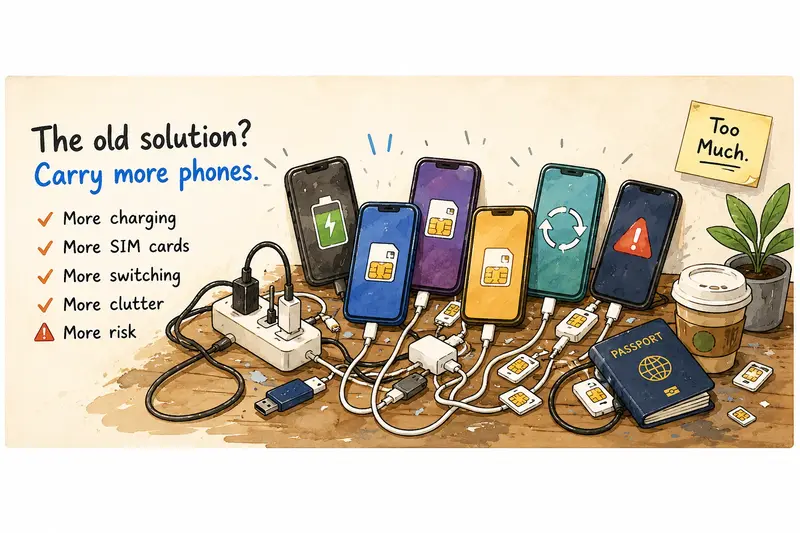
For years, the default solution to digital separation was simple:

Buy another phone.

One for work.
One for travel.
One for testing.
One for side projects.

But the more digital our lives become, the less practical this feels.

• more charging
• more SIM cards
• more switching
• more clutter
• more risk

Eventually, people end up carrying entire pockets of mobile identities.


Most people are not searching for “privacy”

People usually don’t search for:

• “digital identity continuity”
• “privacy infrastructure”
• “cloud mobile environments”

They search for problems.

Things like:

• “Do I really need a second phone?”
• “How do I separate work and personal accounts?”
• “How can I keep apps off my main phone?”
• “Can I open Android inside Telegram?”

Users rarely search for concepts.

They search for friction.

Maybe the future isn’t more phones

Maybe it’s more mobile spaces.

We already accept:

• multiple browser tabs
• multiple cloud workspaces
• multiple online identities

Mobile life may evolve the same way.

Not through carrying more hardware.

But through flexible mobile spaces that exist independently from physical devices.

The importance of separation

A lot of digital stress today comes from overlap.

Too many accounts on one device.
Too many apps mixed into one environment.
Too many identities sharing the same space.

Sometimes the real need is surprisingly simple:

“I don’t want this app on my main phone.”

Or:

“I need another mobile setup, but not another device.”

Separation is becoming infrastructure.

A second phone that behaves more like a link

At QccBot, we’ve been experimenting with a different idea:

What if a second Android phone behaved more like a link?

Not another physical device.

Just another mobile space:

• inside Telegram
• in the cloud
• accessible anywhere

A second mobile environment — available when you need it.

Final thought

Your digital life shouldn’t depend on how many phones you can carry.

Maybe the future is not more devices.

Just more mobile spaces.