Lise öğrencileri TUSAŞ'ın desteğiyle havacılık sektörüne hazırlanıyor
“Kolay para” vaadiyle hesap kiralayanlar, ciddi hukuki sonuçlarla karşı karşıya kalabilir
YAPAY ZEKANIN ETİK SINAVI – Veri merkezlerinin su ve enerji tüketimi ekolojik sürdürülebilirliği tehdit ediyor
Büyükbaşta doğum oranını yüzde 30 artıran yerli üretim eksper pipet kitinde hedef küresel pazar
Sabit internette operatör değişikliği e-Devlet’e taşınıyor
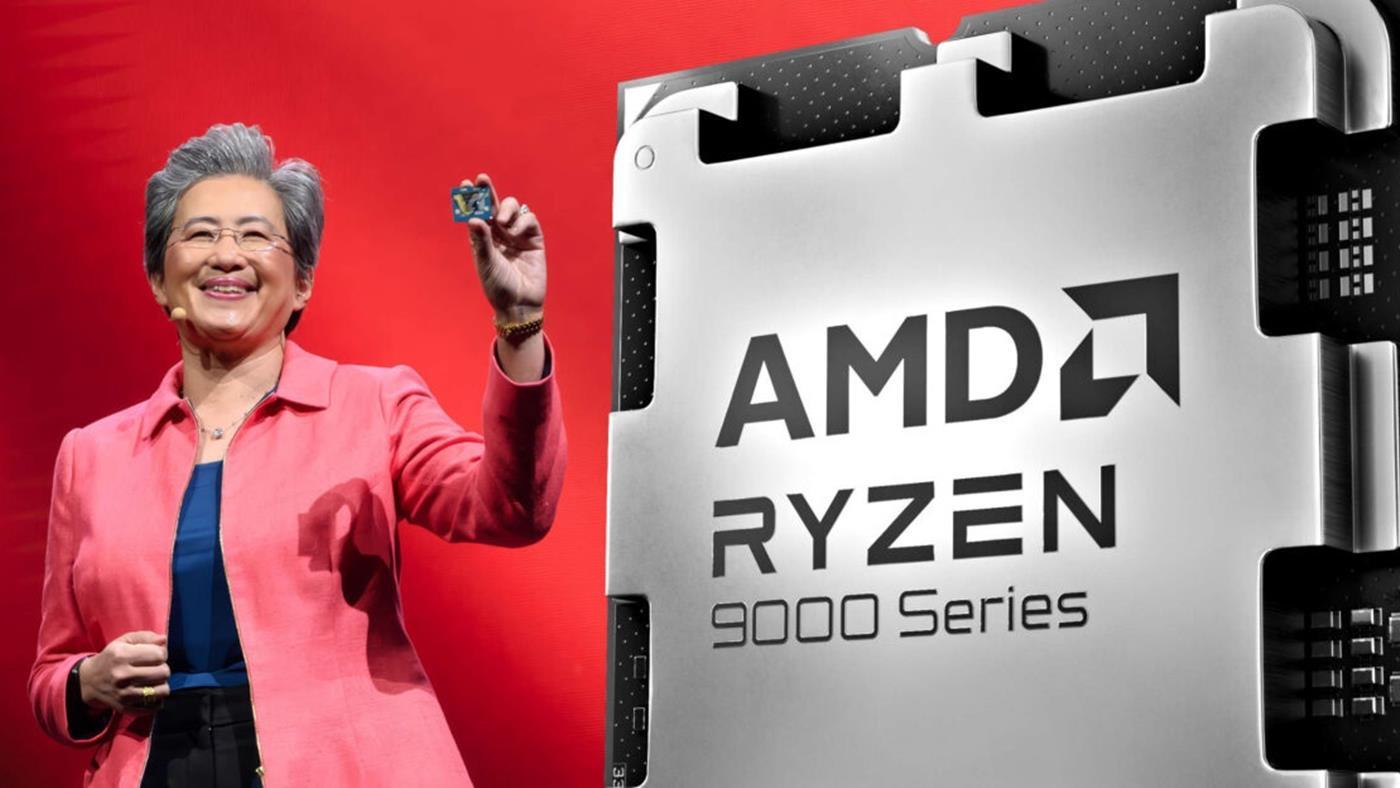
İnternet aboneliğinde “onay süreci” dijitalleşiyor. BTK’nın yeni taslağına göre, operatör değiştirmek isteyen vatandaşlar artık e-Devlet üzerinden tüm süreci yönetebilecek.AMD doğruladı: AM5 soketi yıllarca desteklenecek
AMD, AM4’ün 10. yılını kutlarken AM5 için de benzer bir strateji izleyeceğini açıkladı. Şirket, uzun vadeli soket desteğini sürdüreceğini vurguluyor.Sung Kang’ın “Drifter” filminden ilk fragman paylaşıldı [Video]
Fast and the Furious: Tokyo Drift filminde “Han” karakterine hayat veren Sung Kang’ın “Drifter” filminden ilk resmi fragman paylaşıldı. İsminin de işaret ettiği üzere doğrudan drift (yanlama) odaklı hazırlanan filmde Kang’a Tamara Braun ve Gregory Cruz eşlik ediyor. Filmin hem başrolünü hem de yönetmenliğini üstlenen Kang, çok merak edilen yapımın merkezine ikonik araçlardan Toyota AE86’yı koyuyor. Henüz net bir tarihin paylaşılmadığı film için yapılan ilk açıklama ise şöyle: “Unutulmuş bir çöl kasabasında, drift konusunda üstün yeteneklere sahip ancak trajik geçmişinin etkisinden kurtulamayan yalnız bir pist görevlisi yaşamını sürdürmektedir. Profesyonel bir drift etkinliğinde yarışma fırsatı elde ettiğinde, sahip olduğu ham yeteneğin bugüne kadar imtina ettiği insan ilişkileri ve bağlılık unsurları olmadan yetersiz kalacağını idrak eder. Katı bir akıl hocasının rehberliğinde, yeni ailesine güvenmeyi öğrenmeli ve bireysel sanatını tehlikeli bir ortaklık disiplinine dönüştürmelidir; aksi takdirde kurtulmaya çalıştığı geçmişinin esiri olması kaçınılmazdır.”
Sung Kang’ın “Drifter” filminden ilk fragman paylaşıldı [Video] yazısı ilk olarak Teknoloji haberleri – LOG üzerinde yayınlandı.
I used Google Sheets as a database and it actually worked

I know. You read that title and thought “that’s a terrible idea.” Hear me out.
I needed a Gantt chart for my team. We tried Notion, Monday.com, even a brief moment of insanity with MS Project. Every tool wanted us to learn their way of doing things. Enter data HERE, use THIS view, upgrade to PRO for the feature you actually need.
Meanwhile, our project schedule was already living in a Google Sheet. It had everything — tasks, dates, assignees, status. We just couldn’t see it as a timeline.
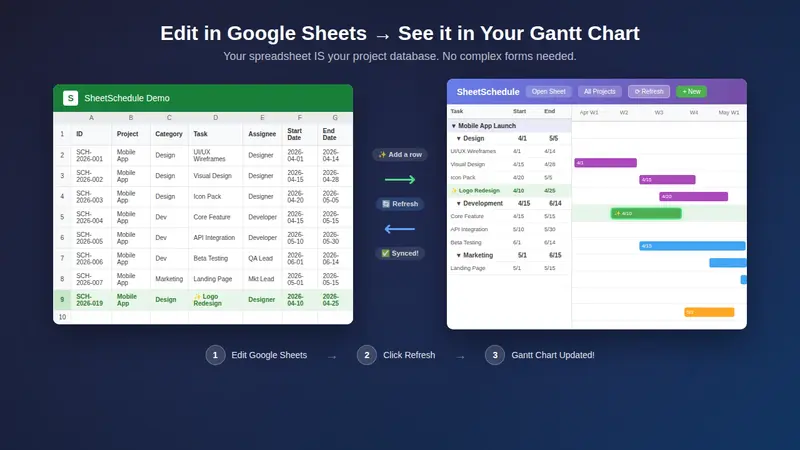
So I built a web app that reads from that sheet and renders a Gantt chart. That’s it. That’s the whole product.
Why Google Sheets is actually fine as a database
Before you roast me in the comments — I’m not suggesting you build your SaaS on Google Sheets. But for a scheduling tool used by a small team? It’s weirdly perfect.
Everyone already knows the interface. No onboarding. No training. Your PM who’s scared of terminals can add a task by typing in a cell.
Collaboration is built in. Multiple people editing the same sheet simultaneously? Google solved that problem years ago. I didn’t have to build any of it.
Backup and version history for free. Every change is tracked. You can roll back to any previous version. Try getting that from a SQLite file.
The API is solid. Python’s gspread library makes it trivial to read and write. I had CRUD operations working in under an hour.
The tradeoff? It’s slow compared to a real database. You won’t be running complex queries. But for a schedule with a few hundred rows? You’ll never notice.
The part that surprised me
The moment it clicked was when I edited a row in the spreadsheet, switched to the browser, clicked Refresh, and saw the Gantt chart update instantly. No deploy. No migration. No cache invalidation. Just… data flowing.
That feedback loop changed how my team works. People stopped asking “how do I add a task?” because they already knew. Open the sheet, add a row, done.
Turning it into a product
After using it internally for a while, I figured other small teams might want the same thing. So I spent a few days cleaning it up:
- Ripped out all our company data
- Translated the UI from Korean to English
- Wrote documentation (this took longer than the actual code changes)
- Built a packaging script that scans for leaked credentials before zipping
The stack is React + TypeScript on the frontend, FastAPI + gspread on the backend. Nothing exotic. I wanted something any developer could deploy in an afternoon.
I put it on Gumroad for $19 as a source code package. Honestly, I’m more interested in learning how marketplace selling works than making money. But if someone gets value from it, that’s a nice bonus.
What I’d do differently
If I started over, I’d probably add an option to use it without a backend — having the frontend call the Google Sheets API directly. Right now you need to deploy two services (static frontend + Python API), which is fine for developers but rules out non-technical users.
That might be v2. Or it might not. We’ll see.
Try it
Live demo: https://sheetschedule-demo.netlify.app/
The demo is connected to a real Google Sheet. You can see the task list, timeline, project filtering — all of it pulling from a spreadsheet.
If you want to run your own: https://goodhap.gumroad.com/l/sheetschedule
The repo includes deployment guides for Netlify, Railway, Render, and Google Cloud Run. Setup takes about 15 minutes if you’ve deployed a Python app before.
Happy to answer questions about the Google Sheets API integration or the productization process. It was more work than I expected but also more fun.

Anthropic’s $60B IPO Bet: What October Means for AI
$1 billion to $19 billion in annualized revenue. Fourteen months. That is the growth curve Anthropic is now trying to price on the public market.
Bloomberg reported on March 27 that Anthropic — the company behind Claude — is weighing an initial public offering as early as October 2026. The company has started preliminary discussions with Goldman Sachs, JPMorgan, and Morgan Stanley. The raise target: more than $60 billion. No S-1 has been filed. But when a company growing at 1,167% year-over-year starts talking to three of Wall Street’s biggest banks, you pay attention.
I have been building with Claude Code for the past year, shipping products on top of Anthropic’s models. The IPO news is not just financial gossip to me — it signals where the platform I depend on is heading. And the numbers behind this filing are worth understanding whether you are an investor, a developer, or both.
The Revenue Machine
Anthropic’s financial trajectory defies normal SaaS math. In December 2024, the company was running at $1 billion in annualized revenue. By February 2026, SaaStr reported that figure had crossed $14 billion. As of March, it is approaching $19 billion.
The catalyst is Claude Code. Anthropic’s agentic coding tool went from zero revenue to over $2.5 billion in annualized billings in roughly nine months. Business subscriptions quadrupled in the first six weeks of 2026 alone. Enterprise customers — defined as those spending over $1 million annually — now exceed 500, up from a dozen two years ago. Eight of the Fortune 10 use Claude.
The consumer side tells a similar story. Monthly visits to claude.ai surged from 16 million in January 2025 to 220 million in January 2026. That is not a rounding error. That is a product finding product-market fit at extraordinary speed.
Anthropic’s latest funding round in February 2026 raised $30 billion at a $380 billion post-money valuation, co-led by Abu Dhabi’s MGX. The previous round, in March 2025, valued the company at $61.5 billion. A 6x jump in under a year.
Amazon holds the largest stake at $8 billion. Google has invested $2 billion. Anthropic raised its 2026 revenue forecast by 20% to $18 billion, according to Seeking Alpha, though the current run rate suggests it could overshoot.
The OpenAI Collision Course
Anthropic is not filing into a vacuum. OpenAI is also exploring a 2026 IPO, which means two AI frontier labs could hit the public market in the same window. That creates a direct competition for investor capital that the tech IPO market has not seen since the cloud wars.
The financial contrast is sharp. European Business Magazine reported that OpenAI burns approximately $14 billion per year while the majority of its users remain on free tiers. Anthropic’s revenue mix skews toward paid enterprise contracts. Epoch AI projects that Anthropic could overtake OpenAI in annualized revenue by mid-2026.
This matters for developers. A successful IPO gives Anthropic a massive capital injection for compute, research, and infrastructure. A competitive IPO race between Anthropic and OpenAI likely means both companies double down on developer tooling and API capabilities to demonstrate growth to public-market investors. If you build on either platform, the next twelve months of product investment will be shaped by who is trying to impress Wall Street.
What Actually Matters
The $60 billion headline is dramatic, but three structural questions will determine whether Anthropic’s IPO succeeds or stumbles.
Compute economics is the first. Revenue of $19 billion is remarkable, but frontier AI model training and inference are brutally expensive. Anthropic has not disclosed margins publicly, but the industry benchmark suggests compute costs consume 50-70% of revenue for companies operating at this scale. The profitability timeline Anthropic presents to investors will set the price.
The Amazon-Google shareholder structure is the second. Amazon is the largest shareholder and has integrated Claude deeply into AWS Bedrock. Google invested $2 billion. Post-IPO governance — whether Anthropic gains true independence or remains strategically tied to its cloud backers — affects how the market values the company. Independence signals platform durability. Deep integration signals distribution but also dependency.
The third is the broader AI investment thesis. There has been no major AI-company IPO in 2024 or 2025. Anthropic’s listing becomes the test case. If it prices well and trades up, it validates the entire AI venture ecosystem. If it stumbles, it cools the sector. Forge Global notes that private-market trading of Anthropic shares is already active, with strong pre-IPO demand.
For developers building on Claude, the IPO is a bet on platform stability. A public Anthropic with $60 billion in fresh capital is a company that can sustain the compute arms race, invest in developer tools, and maintain the kind of model quality that got us here in the first place.
Fourteen months, 19x revenue. October answers one question: does the public market believe AI’s growth curve is real, or priced in?
Full Korean analysis on spoonai.me.
Sources: