CV vs Resume: What’s the Difference and Which Do You Need?

CV or resume? It seems like it should be a simple question. It’s not — at least not without knowing where you’re applying, what industry you’re in, and what the person reading your document is expecting.

The confusion is compounded by the fact that the terms are used interchangeably in everyday conversation, even by hiring managers who should know better. Send the wrong document and you’ll either hand a recruiter forty pages they never asked for, or walk into an academic job search with a one-page summary that tells the hiring committee almost nothing.

This guide cuts through the terminology and tells you exactly what each document is, when to use each one, and how the geography of job searching changes the calculus entirely.

The Core Difference: Purpose and Length

Let’s start with definitions that actually hold up.

A resume is a brief, targeted document — typically one to two pages — summarizing your most relevant professional experience, skills, and achievements for a specific role. It’s selective by design. You don’t include everything; you include the most relevant things. The goal is to make an immediate impression on a recruiter who’s spending seconds on an initial scan.

A CV (curriculum vitae, Latin for “course of life”) is a comprehensive document that records your complete professional, academic, and intellectual history. It grows as you accumulate experience, publications, presentations, grants, certifications, affiliations, and accomplishments. There is no length limit — a senior academic’s CV might run fifteen to thirty pages, and that length is appropriate and expected.

The fundamental difference is not just length. It’s philosophy. A resume is a curated marketing document. A CV is a comprehensive record. Both have legitimate uses; they just serve different purposes for different audiences.

CV vs Resume: Side-by-Side Comparison

CV Resume
Length No limit — grows over career (2 to 30+ pages) 1–2 pages, hard cap
Purpose Complete professional and academic record Targeted pitch for a specific role
When to update Every time you add a credential, publication, or role Each time you apply — tailored per job
Customization Minimal — it’s a record, not a pitch High — must be tailored to the job description
Common in Academia, research, medicine; UK/Australia/NZ for commercial roles US, Canada commercial roles; increasingly global
Key sections Education, publications, grants, teaching, conferences, affiliations Work experience, skills, achievements, summary
Typical audience Hiring committees, grant reviewers, academic institutions Recruiters, HR, hiring managers in commercial orgs

The table above reflects the strict definitions. In practice, as the geography section below covers, the term “CV” gets used for what is functionally a resume in many English-speaking markets.

When to Use a Resume

In most commercial job markets — corporate roles, startups, tech companies, marketing agencies, sales organizations, financial services firms, consulting practices — a resume is what’s expected. The recruiter has 200 applications in a queue, a six-second initial screen, and no interest in reading your complete educational history.

A resume should be:

  • One to two pages. One page is often sufficient for early-career professionals (under five years of experience). Two pages is appropriate for mid-career professionals. More than two pages for a commercial role is almost always a problem, not a demonstration of experience.

  • Targeted to the role. This is the defining feature of a strong resume. You’re not listing everything you’ve done — you’re listing what’s most relevant to this specific job posting.

  • Achievement-oriented. Bullets in a resume should describe outcomes and impact, not just responsibilities. “Managed a team” is a responsibility. “Led a team of 7 engineers to deliver a platform migration 3 weeks ahead of schedule, reducing hosting costs by $40K annually” is an achievement.

  • ATS-compatible. If you’re applying through an online portal, your resume will likely be parsed by an Applicant Tracking System before a human sees it. This means clean formatting, standard section headers, and language that mirrors the job description.

If you’re in the United States, Canada, or the UK applying for non-academic, non-medical, non-research roles, use a resume. Full stop.

NextCV — your premium CV, tailored to every job request

When to Use a CV

There are two main contexts where a CV is the correct document.

Academic, research, and scientific roles. If you’re applying for a faculty position, a postdoctoral fellowship, a research grant, or any role within a university or research institution, you need a CV. The academic CV is a complete record of your scholarly work: education, dissertation, publications, conference presentations, grants awarded, teaching experience, committee service, professional affiliations, and more. Academic hiring committees want the full picture, and they’ll read it. A one-page resume in this context would be taken as a misunderstanding of the role, the field, or both.

Certain medical and clinical roles. In many countries, medical hiring — especially for hospital positions, fellowships, and specialized clinical roles — uses a CV format rather than a resume. This is particularly true in the UK, Ireland, Australia, and New Zealand, where the term “CV” is used more broadly, and in academic medical centers anywhere.

Non-academic CV users also include: scientists applying for industry research positions (especially in pharma and biotech), professionals applying to EU institutions or some government positions that request a Europass CV or a long-form document, and international applicants following the conventions of their home country.

Freelancers and consultants sometimes use an extended CV format for project-based work where a complete record of engagements and outputs demonstrates breadth and depth — though a well-structured resume or portfolio can often serve this purpose better.

What Employers Actually See

The format debate is real, but hiring managers and recruiters are mostly focused on something simpler: does this document tell me quickly whether this person can do this job?

When you send the wrong document type, you create friction before anyone has read a word. An academic hiring committee receiving a one-page resume will either assume you don’t understand academic hiring, or assume your record is thin. A commercial recruiter receiving a twelve-page academic CV will either not read it, or mentally flag you as someone who doesn’t understand how corporate hiring works. Neither impression recovers easily.

ATS systems don’t care what you call it, but they do care about structure. Most ATS platforms parse both CVs and resumes the same way — extracting text, matching keywords, scoring against job requirements. Where problems arise is formatting: tables, graphics, headers embedded in text boxes, and multi-column layouts confuse parsers. Whether you’re submitting a CV or a resume, a clean single-column layout with standard section labels (Work Experience, Education, Skills) will outperform a visually complex document every time.

What hiring managers actually prioritize — once a document clears the ATS — is relevance and clarity. Not whether you called it a CV or a resume. Not whether the formatting is clever. Whether the first fifteen seconds of reading give them a clear answer to: “Is this person qualified for this role, and can I see evidence of it?” Structure and specificity answer that question. Generic descriptions and paragraph-length bullet points do not.

The single biggest formatting mistake in this context is treating your document as a job description listing rather than an evidence file. Recruiters are pattern-matching for impact and fit. Give them the pattern they’re looking for.

The Geography Problem

Here’s where it gets genuinely confusing: in much of the world, “CV” simply means the document you submit when applying for a job — regardless of length or format. And what that document looks like varies dramatically by country.

United States: The distinction is clearest here. “Resume” is the standard commercial job application document (1–2 pages). “CV” refers to the long-form academic or research document. If an American company says “send us your CV,” they almost certainly mean your resume.

United Kingdom, Ireland, Australia, New Zealand: “CV” is the standard term for what Americans call a resume. When a British company posts a job and asks for your CV, they want a 1–2 page targeted document, not your complete academic history. “Resume” is rarely used as a term in these markets, though the documents are functionally equivalent.

Continental Europe: Practice varies by country. Germany has traditionally used a fairly structured CV format with a photo and personal details that would be unusual in an Anglo-American application. France has historically included a photo and date of birth. The Europass CV format, promoted by the EU, is a standardized long-form template used for applications across EU institutions and in some member state public sectors. Increasingly, professional CVs in major European markets are converging toward the cleaner, more targeted Anglo-American format for commercial roles.

Canada: Follows American conventions. Resume for commercial roles; CV for academic and research positions.

Scandinavia: CV is the standard term. Commercial CVs are typically concise (1–2 pages), clean in design, and often include a professional photo and brief personal statement — though the photo convention is less universal than it once was.

The practical implication: before you apply, look at the conventions for the country where the company is based. If you’re applying to a UK company, send what they call a CV (which is your resume). If you’re applying to a US university for a faculty position, send an academic CV. If you’re applying to a German company, check whether their hiring norms include a photo and personal details section.

The Photo Question

Including a photo on your CV or resume is one of the most geographically variable norms in job searching.

Never include a photo if you’re applying to US, Canadian, or UK companies for commercial roles. In these markets, photos are explicitly discouraged to reduce unconscious bias in screening. Many applicant tracking systems are designed to strip them. Some recruiters will discard applications with photos on the assumption that the applicant doesn’t understand local norms.

Commonly expected in Germany, Austria, Switzerland, parts of Scandinavia, and several other European and Asian markets. If local norms include a photo and you omit it, your application may look incomplete or unfamiliar to the recruiter.

Optional or transitional in France, Spain, and many other markets where the convention is shifting.

When in doubt, check the job posting. Companies with international hiring experience often specify their preferences. LinkedIn also publishes country-specific application guides. And if the company has a careers page with example materials, those are worth reviewing.

Content Differences Beyond Length

Beyond length and the photo question, there are content conventions that differ between resume and CV formats.

Personal details. Academic CVs typically include your institutional affiliation and academic email. Commercial CVs in some countries include date of birth, nationality, or marital status — none of which appear in American or British commercial resumes (and which should not appear: this information is legally protected in many jurisdictions, and including it puts the reviewer in an awkward position).

References. Commercial resumes typically note “references available upon request” or omit the topic entirely. Academic CVs often include actual names and contact information for references, since committees may contact them early in the process.

Objective statement vs. professional summary. Old-style commercial resumes used objective statements (“Seeking a challenging role in marketing”). Modern commercial resumes use professional summaries — a 2–4 sentence statement of who you are professionally and what you bring to the role. Academic CVs typically omit both, since your record speaks for itself.

Publications and presentations. On a commercial resume, these appear only if directly relevant (e.g., industry publications for a thought leadership role). On an academic CV, they get their own sections and are listed comprehensively in standard citation format.

Three steps to a tailored CV

Common Mistakes

Most CV and resume errors fall into a small number of recurring patterns. These are the ones that actually cost people interviews.

1. Sending an academic CV for a commercial role. This happens more often than it should, particularly with candidates transitioning from academia to industry. A twelve-page document listing every conference paper and committee role is not what a tech company’s HR manager wants to read. Condense it: lead with transferable skills, highlight industry-relevant achievements, and cut everything that doesn’t speak to the commercial role.

2. Not tailoring the document to the job description. A generic resume sent to fifty companies is less effective than five tailored resumes sent to five companies. Every job description contains the keywords the ATS is scanning for and the priorities the hiring manager cares about. Mirror that language. Reorder your bullets to lead with the most relevant experience. This isn’t gaming the system — it’s communicating clearly.

3. Including outdated or irrelevant experience. The job you had in 2003 that isn’t related to anything you’re applying for now should not appear on your resume. For most professionals, ten to fifteen years of experience is the relevant window. Earlier roles can be listed as a one-line entry (company, title, dates) or omitted entirely. Every line you include is a line the reader has to process — make sure it’s earning its place.

4. Ignoring country-specific conventions. Including a photo on an application to a US company, or omitting one on an application to a German company, signals unfamiliarity with local norms. Same with including date of birth or marital status where they’re not expected, or using a two-page academic CV format for a commercial role in a market that expects one page.

5. Including a photo where it’s inappropriate. This gets its own entry because the consequences are real. In the US, UK, and Canada, an application photo can trigger unconscious bias and is sometimes used as a reason to disqualify an application outright — not by principled decision, but by the recruiter who assumes the applicant doesn’t know the rules. When in doubt, leave it out.

6. Listing responsibilities instead of achievements. “Responsible for managing social media accounts” tells a hiring manager almost nothing. “Grew organic Instagram reach by 340% over eight months through a weekly video series” tells them what you actually did and what it produced. The switch from responsibility to outcome is the single highest-leverage edit you can make to any resume or CV.

Making the Decision

The decision tree is actually fairly simple once you have the context:

Are you applying to an academic, research, or medical role? → CV (long-form, comprehensive).

Are you applying to a commercial role in the US or Canada? → Resume (1–2 pages, targeted).

Are you applying to a commercial role in the UK, Ireland, Australia, or New Zealand? → CV (but in practice, this is a resume — 1–2 pages, targeted — just called a CV locally).

Are you applying in continental Europe? → Check country conventions. For most professional commercial roles, a clean 1–2 page document is appropriate; be attentive to local norms around photos and personal details.

Are you unsure? → A clean, well-formatted, targeted 1–2 page document is the safest default for any commercial role in most English-speaking markets.

One Document, Multiple Versions

The practical reality for most active job seekers is that you need the same information formatted for different contexts. The content of what you’ve done doesn’t change — your job is to understand how to present it appropriately for the market you’re applying to and the role you’re targeting.

Tools like NextCV are useful precisely here: you maintain a complete profile of your experience, and you generate tailored versions for each application. The underlying content is the same; what changes is the emphasis, the language, and the level of detail that’s appropriate for each context.

Whether you call it a CV or a resume, the goal is the same: give the person reading it exactly what they need to make a confident decision about inviting you to interview. The format is just the packaging.

Frequently Asked Questions

What is the difference between a CV and a resume?

A CV (curriculum vitae) is a comprehensive, long-form record of your complete professional and academic history — there’s no length limit, and it grows throughout your career. A resume is a short, targeted document (typically 1–2 pages) summarizing your most relevant experience for a specific role. The core difference is philosophy: a CV is a complete record; a resume is a curated pitch.

Is a CV the same as a resume?

In strict usage, no — they serve different purposes and have different lengths. In practice, many countries (particularly the UK, Australia, Ireland, and New Zealand) use the term “CV” to refer to what Americans call a resume: a short, targeted job application document. So the same 1–2 page document might be called a CV in London and a resume in New York, even though they’re functionally identical.

Should I use a CV or resume for UK jobs?

Use what UK employers call a CV — which is functionally a resume: 1–2 pages, targeted to the role, achievement-oriented. UK employers asking for a “CV” do not want a long-form academic document. The format is the same as an American resume; only the label differs.

Should I use a CV or resume in the USA?

Use a resume for commercial roles in the US: 1–2 pages, tailored to the specific job posting. In the US, “CV” refers specifically to the long-form academic or research document. If you’re applying for a faculty position, fellowship, or research grant at a US institution, then a CV is correct. For everything else — corporate, startup, nonprofit, government — use a resume.

How long should a CV be?

It depends on context. An academic or research CV has no length limit and should include everything relevant to your scholarly record — senior academics commonly have 15–30 page CVs. A commercial CV (what the UK and Australia call the document used for job applications) should be 1–2 pages, the same as an American resume. If someone asks “how long should my CV be” for a job in industry, the answer is almost always: two pages maximum.

Can I use a resume instead of a CV?

Yes, in most commercial job markets. If you’re applying to corporate, tech, startup, finance, or any non-academic commercial role — in the US, Canada, UK, Australia, or most of Europe — a well-structured 1–2 page document works regardless of what you call it. The only context where substituting a resume for a CV is genuinely problematic is academic and research hiring, where committees expect the full comprehensive record and will notice its absence.

Ready to put this into practice? Build your job application CV with NextCV →

Related Articles

CV vs Resume: What’s the Difference and Which Do You Need?

CV or resume? It seems like it should be a simple question. It’s not — at least not without knowing where you’re applying, what industry you’re in, and what the person reading your document is expecting.

The confusion is compounded by the fact that the terms are used interchangeably in everyday conversation, even by hiring managers who should know better. Send the wrong document and you’ll either hand a recruiter forty pages they never asked for, or walk into an academic job search with a one-page summary that tells the hiring committee almost nothing.

This guide cuts through the terminology and tells you exactly what each document is, when to use each one, and how the geography of job searching changes the calculus entirely.

The Core Difference: Purpose and Length

Let’s start with definitions that actually hold up.

A resume is a brief, targeted document — typically one to two pages — summarizing your most relevant professional experience, skills, and achievements for a specific role. It’s selective by design. You don’t include everything; you include the most relevant things. The goal is to make an immediate impression on a recruiter who’s spending seconds on an initial scan.

A CV (curriculum vitae, Latin for “course of life”) is a comprehensive document that records your complete professional, academic, and intellectual history. It grows as you accumulate experience, publications, presentations, grants, certifications, affiliations, and accomplishments. There is no length limit — a senior academic’s CV might run fifteen to thirty pages, and that length is appropriate and expected.

The fundamental difference is not just length. It’s philosophy. A resume is a curated marketing document. A CV is a comprehensive record. Both have legitimate uses; they just serve different purposes for different audiences.

CV vs Resume: Side-by-Side Comparison

CV Resume
Length No limit — grows over career (2 to 30+ pages) 1–2 pages, hard cap
Purpose Complete professional and academic record Targeted pitch for a specific role
When to update Every time you add a credential, publication, or role Each time you apply — tailored per job
Customization Minimal — it’s a record, not a pitch High — must be tailored to the job description
Common in Academia, research, medicine; UK/Australia/NZ for commercial roles US, Canada commercial roles; increasingly global
Key sections Education, publications, grants, teaching, conferences, affiliations Work experience, skills, achievements, summary
Typical audience Hiring committees, grant reviewers, academic institutions Recruiters, HR, hiring managers in commercial orgs

The table above reflects the strict definitions. In practice, as the geography section below covers, the term “CV” gets used for what is functionally a resume in many English-speaking markets.

When to Use a Resume

In most commercial job markets — corporate roles, startups, tech companies, marketing agencies, sales organizations, financial services firms, consulting practices — a resume is what’s expected. The recruiter has 200 applications in a queue, a six-second initial screen, and no interest in reading your complete educational history.

A resume should be:

  • One to two pages. One page is often sufficient for early-career professionals (under five years of experience). Two pages is appropriate for mid-career professionals. More than two pages for a commercial role is almost always a problem, not a demonstration of experience.

  • Targeted to the role. This is the defining feature of a strong resume. You’re not listing everything you’ve done — you’re listing what’s most relevant to this specific job posting.

  • Achievement-oriented. Bullets in a resume should describe outcomes and impact, not just responsibilities. “Managed a team” is a responsibility. “Led a team of 7 engineers to deliver a platform migration 3 weeks ahead of schedule, reducing hosting costs by $40K annually” is an achievement.

  • ATS-compatible. If you’re applying through an online portal, your resume will likely be parsed by an Applicant Tracking System before a human sees it. This means clean formatting, standard section headers, and language that mirrors the job description.

If you’re in the United States, Canada, or the UK applying for non-academic, non-medical, non-research roles, use a resume. Full stop.

NextCV — your premium CV, tailored to every job request

When to Use a CV

There are two main contexts where a CV is the correct document.

Academic, research, and scientific roles. If you’re applying for a faculty position, a postdoctoral fellowship, a research grant, or any role within a university or research institution, you need a CV. The academic CV is a complete record of your scholarly work: education, dissertation, publications, conference presentations, grants awarded, teaching experience, committee service, professional affiliations, and more. Academic hiring committees want the full picture, and they’ll read it. A one-page resume in this context would be taken as a misunderstanding of the role, the field, or both.

Certain medical and clinical roles. In many countries, medical hiring — especially for hospital positions, fellowships, and specialized clinical roles — uses a CV format rather than a resume. This is particularly true in the UK, Ireland, Australia, and New Zealand, where the term “CV” is used more broadly, and in academic medical centers anywhere.

Non-academic CV users also include: scientists applying for industry research positions (especially in pharma and biotech), professionals applying to EU institutions or some government positions that request a Europass CV or a long-form document, and international applicants following the conventions of their home country.

Freelancers and consultants sometimes use an extended CV format for project-based work where a complete record of engagements and outputs demonstrates breadth and depth — though a well-structured resume or portfolio can often serve this purpose better.

What Employers Actually See

The format debate is real, but hiring managers and recruiters are mostly focused on something simpler: does this document tell me quickly whether this person can do this job?

When you send the wrong document type, you create friction before anyone has read a word. An academic hiring committee receiving a one-page resume will either assume you don’t understand academic hiring, or assume your record is thin. A commercial recruiter receiving a twelve-page academic CV will either not read it, or mentally flag you as someone who doesn’t understand how corporate hiring works. Neither impression recovers easily.

ATS systems don’t care what you call it, but they do care about structure. Most ATS platforms parse both CVs and resumes the same way — extracting text, matching keywords, scoring against job requirements. Where problems arise is formatting: tables, graphics, headers embedded in text boxes, and multi-column layouts confuse parsers. Whether you’re submitting a CV or a resume, a clean single-column layout with standard section labels (Work Experience, Education, Skills) will outperform a visually complex document every time.

What hiring managers actually prioritize — once a document clears the ATS — is relevance and clarity. Not whether you called it a CV or a resume. Not whether the formatting is clever. Whether the first fifteen seconds of reading give them a clear answer to: “Is this person qualified for this role, and can I see evidence of it?” Structure and specificity answer that question. Generic descriptions and paragraph-length bullet points do not.

The single biggest formatting mistake in this context is treating your document as a job description listing rather than an evidence file. Recruiters are pattern-matching for impact and fit. Give them the pattern they’re looking for.

The Geography Problem

Here’s where it gets genuinely confusing: in much of the world, “CV” simply means the document you submit when applying for a job — regardless of length or format. And what that document looks like varies dramatically by country.

United States: The distinction is clearest here. “Resume” is the standard commercial job application document (1–2 pages). “CV” refers to the long-form academic or research document. If an American company says “send us your CV,” they almost certainly mean your resume.

United Kingdom, Ireland, Australia, New Zealand: “CV” is the standard term for what Americans call a resume. When a British company posts a job and asks for your CV, they want a 1–2 page targeted document, not your complete academic history. “Resume” is rarely used as a term in these markets, though the documents are functionally equivalent.

Continental Europe: Practice varies by country. Germany has traditionally used a fairly structured CV format with a photo and personal details that would be unusual in an Anglo-American application. France has historically included a photo and date of birth. The Europass CV format, promoted by the EU, is a standardized long-form template used for applications across EU institutions and in some member state public sectors. Increasingly, professional CVs in major European markets are converging toward the cleaner, more targeted Anglo-American format for commercial roles.

Canada: Follows American conventions. Resume for commercial roles; CV for academic and research positions.

Scandinavia: CV is the standard term. Commercial CVs are typically concise (1–2 pages), clean in design, and often include a professional photo and brief personal statement — though the photo convention is less universal than it once was.

The practical implication: before you apply, look at the conventions for the country where the company is based. If you’re applying to a UK company, send what they call a CV (which is your resume). If you’re applying to a US university for a faculty position, send an academic CV. If you’re applying to a German company, check whether their hiring norms include a photo and personal details section.

The Photo Question

Including a photo on your CV or resume is one of the most geographically variable norms in job searching.

Never include a photo if you’re applying to US, Canadian, or UK companies for commercial roles. In these markets, photos are explicitly discouraged to reduce unconscious bias in screening. Many applicant tracking systems are designed to strip them. Some recruiters will discard applications with photos on the assumption that the applicant doesn’t understand local norms.

Commonly expected in Germany, Austria, Switzerland, parts of Scandinavia, and several other European and Asian markets. If local norms include a photo and you omit it, your application may look incomplete or unfamiliar to the recruiter.

Optional or transitional in France, Spain, and many other markets where the convention is shifting.

When in doubt, check the job posting. Companies with international hiring experience often specify their preferences. LinkedIn also publishes country-specific application guides. And if the company has a careers page with example materials, those are worth reviewing.

Content Differences Beyond Length

Beyond length and the photo question, there are content conventions that differ between resume and CV formats.

Personal details. Academic CVs typically include your institutional affiliation and academic email. Commercial CVs in some countries include date of birth, nationality, or marital status — none of which appear in American or British commercial resumes (and which should not appear: this information is legally protected in many jurisdictions, and including it puts the reviewer in an awkward position).

References. Commercial resumes typically note “references available upon request” or omit the topic entirely. Academic CVs often include actual names and contact information for references, since committees may contact them early in the process.

Objective statement vs. professional summary. Old-style commercial resumes used objective statements (“Seeking a challenging role in marketing”). Modern commercial resumes use professional summaries — a 2–4 sentence statement of who you are professionally and what you bring to the role. Academic CVs typically omit both, since your record speaks for itself.

Publications and presentations. On a commercial resume, these appear only if directly relevant (e.g., industry publications for a thought leadership role). On an academic CV, they get their own sections and are listed comprehensively in standard citation format.

Three steps to a tailored CV

Common Mistakes

Most CV and resume errors fall into a small number of recurring patterns. These are the ones that actually cost people interviews.

1. Sending an academic CV for a commercial role. This happens more often than it should, particularly with candidates transitioning from academia to industry. A twelve-page document listing every conference paper and committee role is not what a tech company’s HR manager wants to read. Condense it: lead with transferable skills, highlight industry-relevant achievements, and cut everything that doesn’t speak to the commercial role.

2. Not tailoring the document to the job description. A generic resume sent to fifty companies is less effective than five tailored resumes sent to five companies. Every job description contains the keywords the ATS is scanning for and the priorities the hiring manager cares about. Mirror that language. Reorder your bullets to lead with the most relevant experience. This isn’t gaming the system — it’s communicating clearly.

3. Including outdated or irrelevant experience. The job you had in 2003 that isn’t related to anything you’re applying for now should not appear on your resume. For most professionals, ten to fifteen years of experience is the relevant window. Earlier roles can be listed as a one-line entry (company, title, dates) or omitted entirely. Every line you include is a line the reader has to process — make sure it’s earning its place.

4. Ignoring country-specific conventions. Including a photo on an application to a US company, or omitting one on an application to a German company, signals unfamiliarity with local norms. Same with including date of birth or marital status where they’re not expected, or using a two-page academic CV format for a commercial role in a market that expects one page.

5. Including a photo where it’s inappropriate. This gets its own entry because the consequences are real. In the US, UK, and Canada, an application photo can trigger unconscious bias and is sometimes used as a reason to disqualify an application outright — not by principled decision, but by the recruiter who assumes the applicant doesn’t know the rules. When in doubt, leave it out.

6. Listing responsibilities instead of achievements. “Responsible for managing social media accounts” tells a hiring manager almost nothing. “Grew organic Instagram reach by 340% over eight months through a weekly video series” tells them what you actually did and what it produced. The switch from responsibility to outcome is the single highest-leverage edit you can make to any resume or CV.

Making the Decision

The decision tree is actually fairly simple once you have the context:

Are you applying to an academic, research, or medical role? → CV (long-form, comprehensive).

Are you applying to a commercial role in the US or Canada? → Resume (1–2 pages, targeted).

Are you applying to a commercial role in the UK, Ireland, Australia, or New Zealand? → CV (but in practice, this is a resume — 1–2 pages, targeted — just called a CV locally).

Are you applying in continental Europe? → Check country conventions. For most professional commercial roles, a clean 1–2 page document is appropriate; be attentive to local norms around photos and personal details.

Are you unsure? → A clean, well-formatted, targeted 1–2 page document is the safest default for any commercial role in most English-speaking markets.

One Document, Multiple Versions

The practical reality for most active job seekers is that you need the same information formatted for different contexts. The content of what you’ve done doesn’t change — your job is to understand how to present it appropriately for the market you’re applying to and the role you’re targeting.

Tools like NextCV are useful precisely here: you maintain a complete profile of your experience, and you generate tailored versions for each application. The underlying content is the same; what changes is the emphasis, the language, and the level of detail that’s appropriate for each context.

Whether you call it a CV or a resume, the goal is the same: give the person reading it exactly what they need to make a confident decision about inviting you to interview. The format is just the packaging.

Frequently Asked Questions

What is the difference between a CV and a resume?

A CV (curriculum vitae) is a comprehensive, long-form record of your complete professional and academic history — there’s no length limit, and it grows throughout your career. A resume is a short, targeted document (typically 1–2 pages) summarizing your most relevant experience for a specific role. The core difference is philosophy: a CV is a complete record; a resume is a curated pitch.

Is a CV the same as a resume?

In strict usage, no — they serve different purposes and have different lengths. In practice, many countries (particularly the UK, Australia, Ireland, and New Zealand) use the term “CV” to refer to what Americans call a resume: a short, targeted job application document. So the same 1–2 page document might be called a CV in London and a resume in New York, even though they’re functionally identical.

Should I use a CV or resume for UK jobs?

Use what UK employers call a CV — which is functionally a resume: 1–2 pages, targeted to the role, achievement-oriented. UK employers asking for a “CV” do not want a long-form academic document. The format is the same as an American resume; only the label differs.

Should I use a CV or resume in the USA?

Use a resume for commercial roles in the US: 1–2 pages, tailored to the specific job posting. In the US, “CV” refers specifically to the long-form academic or research document. If you’re applying for a faculty position, fellowship, or research grant at a US institution, then a CV is correct. For everything else — corporate, startup, nonprofit, government — use a resume.

How long should a CV be?

It depends on context. An academic or research CV has no length limit and should include everything relevant to your scholarly record — senior academics commonly have 15–30 page CVs. A commercial CV (what the UK and Australia call the document used for job applications) should be 1–2 pages, the same as an American resume. If someone asks “how long should my CV be” for a job in industry, the answer is almost always: two pages maximum.

Can I use a resume instead of a CV?

Yes, in most commercial job markets. If you’re applying to corporate, tech, startup, finance, or any non-academic commercial role — in the US, Canada, UK, Australia, or most of Europe — a well-structured 1–2 page document works regardless of what you call it. The only context where substituting a resume for a CV is genuinely problematic is academic and research hiring, where committees expect the full comprehensive record and will notice its absence.

Ready to put this into practice? Build your job application CV with NextCV →

Related Articles

CV vs Resume: What’s the Difference and Which Do You Need?

CV or resume? It seems like it should be a simple question. It’s not — at least not without knowing where you’re applying, what industry you’re in, and what the person reading your document is expecting.

The confusion is compounded by the fact that the terms are used interchangeably in everyday conversation, even by hiring managers who should know better. Send the wrong document and you’ll either hand a recruiter forty pages they never asked for, or walk into an academic job search with a one-page summary that tells the hiring committee almost nothing.

This guide cuts through the terminology and tells you exactly what each document is, when to use each one, and how the geography of job searching changes the calculus entirely.

The Core Difference: Purpose and Length

Let’s start with definitions that actually hold up.

A resume is a brief, targeted document — typically one to two pages — summarizing your most relevant professional experience, skills, and achievements for a specific role. It’s selective by design. You don’t include everything; you include the most relevant things. The goal is to make an immediate impression on a recruiter who’s spending seconds on an initial scan.

A CV (curriculum vitae, Latin for “course of life”) is a comprehensive document that records your complete professional, academic, and intellectual history. It grows as you accumulate experience, publications, presentations, grants, certifications, affiliations, and accomplishments. There is no length limit — a senior academic’s CV might run fifteen to thirty pages, and that length is appropriate and expected.

The fundamental difference is not just length. It’s philosophy. A resume is a curated marketing document. A CV is a comprehensive record. Both have legitimate uses; they just serve different purposes for different audiences.

CV vs Resume: Side-by-Side Comparison

CV Resume
Length No limit — grows over career (2 to 30+ pages) 1–2 pages, hard cap
Purpose Complete professional and academic record Targeted pitch for a specific role
When to update Every time you add a credential, publication, or role Each time you apply — tailored per job
Customization Minimal — it’s a record, not a pitch High — must be tailored to the job description
Common in Academia, research, medicine; UK/Australia/NZ for commercial roles US, Canada commercial roles; increasingly global
Key sections Education, publications, grants, teaching, conferences, affiliations Work experience, skills, achievements, summary
Typical audience Hiring committees, grant reviewers, academic institutions Recruiters, HR, hiring managers in commercial orgs

The table above reflects the strict definitions. In practice, as the geography section below covers, the term “CV” gets used for what is functionally a resume in many English-speaking markets.

When to Use a Resume

In most commercial job markets — corporate roles, startups, tech companies, marketing agencies, sales organizations, financial services firms, consulting practices — a resume is what’s expected. The recruiter has 200 applications in a queue, a six-second initial screen, and no interest in reading your complete educational history.

A resume should be:

  • One to two pages. One page is often sufficient for early-career professionals (under five years of experience). Two pages is appropriate for mid-career professionals. More than two pages for a commercial role is almost always a problem, not a demonstration of experience.

  • Targeted to the role. This is the defining feature of a strong resume. You’re not listing everything you’ve done — you’re listing what’s most relevant to this specific job posting.

  • Achievement-oriented. Bullets in a resume should describe outcomes and impact, not just responsibilities. “Managed a team” is a responsibility. “Led a team of 7 engineers to deliver a platform migration 3 weeks ahead of schedule, reducing hosting costs by $40K annually” is an achievement.

  • ATS-compatible. If you’re applying through an online portal, your resume will likely be parsed by an Applicant Tracking System before a human sees it. This means clean formatting, standard section headers, and language that mirrors the job description.

If you’re in the United States, Canada, or the UK applying for non-academic, non-medical, non-research roles, use a resume. Full stop.

NextCV — your premium CV, tailored to every job request

When to Use a CV

There are two main contexts where a CV is the correct document.

Academic, research, and scientific roles. If you’re applying for a faculty position, a postdoctoral fellowship, a research grant, or any role within a university or research institution, you need a CV. The academic CV is a complete record of your scholarly work: education, dissertation, publications, conference presentations, grants awarded, teaching experience, committee service, professional affiliations, and more. Academic hiring committees want the full picture, and they’ll read it. A one-page resume in this context would be taken as a misunderstanding of the role, the field, or both.

Certain medical and clinical roles. In many countries, medical hiring — especially for hospital positions, fellowships, and specialized clinical roles — uses a CV format rather than a resume. This is particularly true in the UK, Ireland, Australia, and New Zealand, where the term “CV” is used more broadly, and in academic medical centers anywhere.

Non-academic CV users also include: scientists applying for industry research positions (especially in pharma and biotech), professionals applying to EU institutions or some government positions that request a Europass CV or a long-form document, and international applicants following the conventions of their home country.

Freelancers and consultants sometimes use an extended CV format for project-based work where a complete record of engagements and outputs demonstrates breadth and depth — though a well-structured resume or portfolio can often serve this purpose better.

What Employers Actually See

The format debate is real, but hiring managers and recruiters are mostly focused on something simpler: does this document tell me quickly whether this person can do this job?

When you send the wrong document type, you create friction before anyone has read a word. An academic hiring committee receiving a one-page resume will either assume you don’t understand academic hiring, or assume your record is thin. A commercial recruiter receiving a twelve-page academic CV will either not read it, or mentally flag you as someone who doesn’t understand how corporate hiring works. Neither impression recovers easily.

ATS systems don’t care what you call it, but they do care about structure. Most ATS platforms parse both CVs and resumes the same way — extracting text, matching keywords, scoring against job requirements. Where problems arise is formatting: tables, graphics, headers embedded in text boxes, and multi-column layouts confuse parsers. Whether you’re submitting a CV or a resume, a clean single-column layout with standard section labels (Work Experience, Education, Skills) will outperform a visually complex document every time.

What hiring managers actually prioritize — once a document clears the ATS — is relevance and clarity. Not whether you called it a CV or a resume. Not whether the formatting is clever. Whether the first fifteen seconds of reading give them a clear answer to: “Is this person qualified for this role, and can I see evidence of it?” Structure and specificity answer that question. Generic descriptions and paragraph-length bullet points do not.

The single biggest formatting mistake in this context is treating your document as a job description listing rather than an evidence file. Recruiters are pattern-matching for impact and fit. Give them the pattern they’re looking for.

The Geography Problem

Here’s where it gets genuinely confusing: in much of the world, “CV” simply means the document you submit when applying for a job — regardless of length or format. And what that document looks like varies dramatically by country.

United States: The distinction is clearest here. “Resume” is the standard commercial job application document (1–2 pages). “CV” refers to the long-form academic or research document. If an American company says “send us your CV,” they almost certainly mean your resume.

United Kingdom, Ireland, Australia, New Zealand: “CV” is the standard term for what Americans call a resume. When a British company posts a job and asks for your CV, they want a 1–2 page targeted document, not your complete academic history. “Resume” is rarely used as a term in these markets, though the documents are functionally equivalent.

Continental Europe: Practice varies by country. Germany has traditionally used a fairly structured CV format with a photo and personal details that would be unusual in an Anglo-American application. France has historically included a photo and date of birth. The Europass CV format, promoted by the EU, is a standardized long-form template used for applications across EU institutions and in some member state public sectors. Increasingly, professional CVs in major European markets are converging toward the cleaner, more targeted Anglo-American format for commercial roles.

Canada: Follows American conventions. Resume for commercial roles; CV for academic and research positions.

Scandinavia: CV is the standard term. Commercial CVs are typically concise (1–2 pages), clean in design, and often include a professional photo and brief personal statement — though the photo convention is less universal than it once was.

The practical implication: before you apply, look at the conventions for the country where the company is based. If you’re applying to a UK company, send what they call a CV (which is your resume). If you’re applying to a US university for a faculty position, send an academic CV. If you’re applying to a German company, check whether their hiring norms include a photo and personal details section.

The Photo Question

Including a photo on your CV or resume is one of the most geographically variable norms in job searching.

Never include a photo if you’re applying to US, Canadian, or UK companies for commercial roles. In these markets, photos are explicitly discouraged to reduce unconscious bias in screening. Many applicant tracking systems are designed to strip them. Some recruiters will discard applications with photos on the assumption that the applicant doesn’t understand local norms.

Commonly expected in Germany, Austria, Switzerland, parts of Scandinavia, and several other European and Asian markets. If local norms include a photo and you omit it, your application may look incomplete or unfamiliar to the recruiter.

Optional or transitional in France, Spain, and many other markets where the convention is shifting.

When in doubt, check the job posting. Companies with international hiring experience often specify their preferences. LinkedIn also publishes country-specific application guides. And if the company has a careers page with example materials, those are worth reviewing.

Content Differences Beyond Length

Beyond length and the photo question, there are content conventions that differ between resume and CV formats.

Personal details. Academic CVs typically include your institutional affiliation and academic email. Commercial CVs in some countries include date of birth, nationality, or marital status — none of which appear in American or British commercial resumes (and which should not appear: this information is legally protected in many jurisdictions, and including it puts the reviewer in an awkward position).

References. Commercial resumes typically note “references available upon request” or omit the topic entirely. Academic CVs often include actual names and contact information for references, since committees may contact them early in the process.

Objective statement vs. professional summary. Old-style commercial resumes used objective statements (“Seeking a challenging role in marketing”). Modern commercial resumes use professional summaries — a 2–4 sentence statement of who you are professionally and what you bring to the role. Academic CVs typically omit both, since your record speaks for itself.

Publications and presentations. On a commercial resume, these appear only if directly relevant (e.g., industry publications for a thought leadership role). On an academic CV, they get their own sections and are listed comprehensively in standard citation format.

Three steps to a tailored CV

Common Mistakes

Most CV and resume errors fall into a small number of recurring patterns. These are the ones that actually cost people interviews.

1. Sending an academic CV for a commercial role. This happens more often than it should, particularly with candidates transitioning from academia to industry. A twelve-page document listing every conference paper and committee role is not what a tech company’s HR manager wants to read. Condense it: lead with transferable skills, highlight industry-relevant achievements, and cut everything that doesn’t speak to the commercial role.

2. Not tailoring the document to the job description. A generic resume sent to fifty companies is less effective than five tailored resumes sent to five companies. Every job description contains the keywords the ATS is scanning for and the priorities the hiring manager cares about. Mirror that language. Reorder your bullets to lead with the most relevant experience. This isn’t gaming the system — it’s communicating clearly.

3. Including outdated or irrelevant experience. The job you had in 2003 that isn’t related to anything you’re applying for now should not appear on your resume. For most professionals, ten to fifteen years of experience is the relevant window. Earlier roles can be listed as a one-line entry (company, title, dates) or omitted entirely. Every line you include is a line the reader has to process — make sure it’s earning its place.

4. Ignoring country-specific conventions. Including a photo on an application to a US company, or omitting one on an application to a German company, signals unfamiliarity with local norms. Same with including date of birth or marital status where they’re not expected, or using a two-page academic CV format for a commercial role in a market that expects one page.

5. Including a photo where it’s inappropriate. This gets its own entry because the consequences are real. In the US, UK, and Canada, an application photo can trigger unconscious bias and is sometimes used as a reason to disqualify an application outright — not by principled decision, but by the recruiter who assumes the applicant doesn’t know the rules. When in doubt, leave it out.

6. Listing responsibilities instead of achievements. “Responsible for managing social media accounts” tells a hiring manager almost nothing. “Grew organic Instagram reach by 340% over eight months through a weekly video series” tells them what you actually did and what it produced. The switch from responsibility to outcome is the single highest-leverage edit you can make to any resume or CV.

Making the Decision

The decision tree is actually fairly simple once you have the context:

Are you applying to an academic, research, or medical role? → CV (long-form, comprehensive).

Are you applying to a commercial role in the US or Canada? → Resume (1–2 pages, targeted).

Are you applying to a commercial role in the UK, Ireland, Australia, or New Zealand? → CV (but in practice, this is a resume — 1–2 pages, targeted — just called a CV locally).

Are you applying in continental Europe? → Check country conventions. For most professional commercial roles, a clean 1–2 page document is appropriate; be attentive to local norms around photos and personal details.

Are you unsure? → A clean, well-formatted, targeted 1–2 page document is the safest default for any commercial role in most English-speaking markets.

One Document, Multiple Versions

The practical reality for most active job seekers is that you need the same information formatted for different contexts. The content of what you’ve done doesn’t change — your job is to understand how to present it appropriately for the market you’re applying to and the role you’re targeting.

Tools like NextCV are useful precisely here: you maintain a complete profile of your experience, and you generate tailored versions for each application. The underlying content is the same; what changes is the emphasis, the language, and the level of detail that’s appropriate for each context.

Whether you call it a CV or a resume, the goal is the same: give the person reading it exactly what they need to make a confident decision about inviting you to interview. The format is just the packaging.

Frequently Asked Questions

What is the difference between a CV and a resume?

A CV (curriculum vitae) is a comprehensive, long-form record of your complete professional and academic history — there’s no length limit, and it grows throughout your career. A resume is a short, targeted document (typically 1–2 pages) summarizing your most relevant experience for a specific role. The core difference is philosophy: a CV is a complete record; a resume is a curated pitch.

Is a CV the same as a resume?

In strict usage, no — they serve different purposes and have different lengths. In practice, many countries (particularly the UK, Australia, Ireland, and New Zealand) use the term “CV” to refer to what Americans call a resume: a short, targeted job application document. So the same 1–2 page document might be called a CV in London and a resume in New York, even though they’re functionally identical.

Should I use a CV or resume for UK jobs?

Use what UK employers call a CV — which is functionally a resume: 1–2 pages, targeted to the role, achievement-oriented. UK employers asking for a “CV” do not want a long-form academic document. The format is the same as an American resume; only the label differs.

Should I use a CV or resume in the USA?

Use a resume for commercial roles in the US: 1–2 pages, tailored to the specific job posting. In the US, “CV” refers specifically to the long-form academic or research document. If you’re applying for a faculty position, fellowship, or research grant at a US institution, then a CV is correct. For everything else — corporate, startup, nonprofit, government — use a resume.

How long should a CV be?

It depends on context. An academic or research CV has no length limit and should include everything relevant to your scholarly record — senior academics commonly have 15–30 page CVs. A commercial CV (what the UK and Australia call the document used for job applications) should be 1–2 pages, the same as an American resume. If someone asks “how long should my CV be” for a job in industry, the answer is almost always: two pages maximum.

Can I use a resume instead of a CV?

Yes, in most commercial job markets. If you’re applying to corporate, tech, startup, finance, or any non-academic commercial role — in the US, Canada, UK, Australia, or most of Europe — a well-structured 1–2 page document works regardless of what you call it. The only context where substituting a resume for a CV is genuinely problematic is academic and research hiring, where committees expect the full comprehensive record and will notice its absence.

Ready to put this into practice? Build your job application CV with NextCV →

Related Articles

student Devs: Build AI Agents & Compete for $55K in Prizes 🚀

🚀 Student Developers, this opportunity is HUGE.

If you’re interested in:
🤖 AI Agents
🧠 Agentic AI
💻 GitHub Copilot
☁️ Microsoft AI tooling
…then you should definitely check this out.

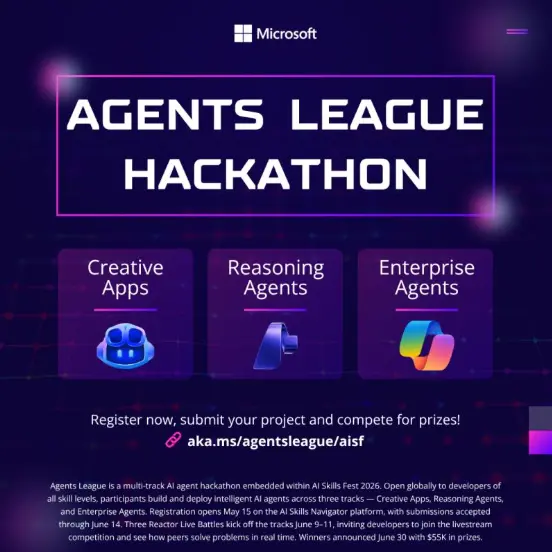
🎮 Agents League — part of Microsoft AI Skills Fest — is a global AI hackathon running from June 4–14, 2026, with a massive $55,000 prize pool across multiple challenge tracks.

Participants will get the chance to build:
✅ AI-powered applications
✅ Reasoning agents
✅ Enterprise AI solutions using Microsoft tools

What makes this especially exciting is the focus on real-world AI development using:

  • GitHub Copilot
  • Microsoft Foundry
  • Copilot Studio
  • Microsoft 365 integrations
  • GitHub workflows

This is a great opportunity for:
🎓 Beginners entering AI
🛠️ Developers building portfolios
🚀 Students looking for hands-on experience with agentic AI

📚 Read more and get started here:
https://techcommunity.microsoft.com/blog/educatordeveloperblog/student-devs-build-ai-agents-compete-for-55k-in-prizes/4521764?wt.mc_id=studentamb_513536

AI #Hackathon #GitHubCopilot #MicrosoftAI #StudentDevelopers #AgenticAI #CloudComputing #Developers #GitHub

student Devs: Build AI Agents & Compete for $55K in Prizes 🚀

🚀 Student Developers, this opportunity is HUGE.

If you’re interested in:
🤖 AI Agents
🧠 Agentic AI
💻 GitHub Copilot
☁️ Microsoft AI tooling
…then you should definitely check this out.

🎮 Agents League — part of Microsoft AI Skills Fest — is a global AI hackathon running from June 4–14, 2026, with a massive $55,000 prize pool across multiple challenge tracks.

Participants will get the chance to build:
✅ AI-powered applications
✅ Reasoning agents
✅ Enterprise AI solutions using Microsoft tools

What makes this especially exciting is the focus on real-world AI development using:

  • GitHub Copilot
  • Microsoft Foundry
  • Copilot Studio
  • Microsoft 365 integrations
  • GitHub workflows

This is a great opportunity for:
🎓 Beginners entering AI
🛠️ Developers building portfolios
🚀 Students looking for hands-on experience with agentic AI

📚 Read more and get started here:
https://techcommunity.microsoft.com/blog/educatordeveloperblog/student-devs-build-ai-agents-compete-for-55k-in-prizes/4521764?wt.mc_id=studentamb_513536

AI #Hackathon #GitHubCopilot #MicrosoftAI #StudentDevelopers #AgenticAI #CloudComputing #Developers #GitHub

student Devs: Build AI Agents & Compete for $55K in Prizes 🚀

🚀 Student Developers, this opportunity is HUGE.

If you’re interested in:
🤖 AI Agents
🧠 Agentic AI
💻 GitHub Copilot
☁️ Microsoft AI tooling
…then you should definitely check this out.

🎮 Agents League — part of Microsoft AI Skills Fest — is a global AI hackathon running from June 4–14, 2026, with a massive $55,000 prize pool across multiple challenge tracks.

Participants will get the chance to build:
✅ AI-powered applications
✅ Reasoning agents
✅ Enterprise AI solutions using Microsoft tools

What makes this especially exciting is the focus on real-world AI development using:

  • GitHub Copilot
  • Microsoft Foundry
  • Copilot Studio
  • Microsoft 365 integrations
  • GitHub workflows

This is a great opportunity for:
🎓 Beginners entering AI
🛠️ Developers building portfolios
🚀 Students looking for hands-on experience with agentic AI

📚 Read more and get started here:
https://techcommunity.microsoft.com/blog/educatordeveloperblog/student-devs-build-ai-agents-compete-for-55k-in-prizes/4521764?wt.mc_id=studentamb_513536

AI #Hackathon #GitHubCopilot #MicrosoftAI #StudentDevelopers #AgenticAI #CloudComputing #Developers #GitHub

student Devs: Build AI Agents & Compete for $55K in Prizes 🚀

🚀 Student Developers, this opportunity is HUGE.

If you’re interested in:
🤖 AI Agents
🧠 Agentic AI
💻 GitHub Copilot
☁️ Microsoft AI tooling
…then you should definitely check this out.

🎮 Agents League — part of Microsoft AI Skills Fest — is a global AI hackathon running from June 4–14, 2026, with a massive $55,000 prize pool across multiple challenge tracks.

Participants will get the chance to build:
✅ AI-powered applications
✅ Reasoning agents
✅ Enterprise AI solutions using Microsoft tools

What makes this especially exciting is the focus on real-world AI development using:

  • GitHub Copilot
  • Microsoft Foundry
  • Copilot Studio
  • Microsoft 365 integrations
  • GitHub workflows

This is a great opportunity for:
🎓 Beginners entering AI
🛠️ Developers building portfolios
🚀 Students looking for hands-on experience with agentic AI

📚 Read more and get started here:
https://techcommunity.microsoft.com/blog/educatordeveloperblog/student-devs-build-ai-agents-compete-for-55k-in-prizes/4521764?wt.mc_id=studentamb_513536

AI #Hackathon #GitHubCopilot #MicrosoftAI #StudentDevelopers #AgenticAI #CloudComputing #Developers #GitHub

student Devs: Build AI Agents & Compete for $55K in Prizes 🚀

🚀 Student Developers, this opportunity is HUGE.

If you’re interested in:
🤖 AI Agents
🧠 Agentic AI
💻 GitHub Copilot
☁️ Microsoft AI tooling
…then you should definitely check this out.

🎮 Agents League — part of Microsoft AI Skills Fest — is a global AI hackathon running from June 4–14, 2026, with a massive $55,000 prize pool across multiple challenge tracks.

Participants will get the chance to build:
✅ AI-powered applications
✅ Reasoning agents
✅ Enterprise AI solutions using Microsoft tools

What makes this especially exciting is the focus on real-world AI development using:

  • GitHub Copilot
  • Microsoft Foundry
  • Copilot Studio
  • Microsoft 365 integrations
  • GitHub workflows

This is a great opportunity for:
🎓 Beginners entering AI
🛠️ Developers building portfolios
🚀 Students looking for hands-on experience with agentic AI

📚 Read more and get started here:
https://techcommunity.microsoft.com/blog/educatordeveloperblog/student-devs-build-ai-agents-compete-for-55k-in-prizes/4521764?wt.mc_id=studentamb_513536

AI #Hackathon #GitHubCopilot #MicrosoftAI #StudentDevelopers #AgenticAI #CloudComputing #Developers #GitHub

How to Write a Cover Letter That Actually Gets You Interviews

Most cover letters fail in the first sentence. Not because job seekers lack qualifications — but because they open with something a hiring manager has read two hundred times this month. “I am writing to apply for the position of…” lands in a mental recycling bin before the second line even registers. Knowing how to write a cover letter that actually gets read is one of the most underrated career skills you can develop, and it is not about being a great writer. It is about understanding what a hiring manager is actually looking for, and giving it to them fast.

This guide is written from both sides of the desk. Whether you have sent ten applications or three hundred, the principles here will sharpen what you are already doing and eliminate the habits that are silently killing your response rate.

Why Most Cover Letters Fail (And It Is Not What You Think)

The conventional wisdom is that cover letters do not matter — that nobody reads them. That is only half true. Nobody reads bad cover letters. Hiring managers do read cover letters when they open with something specific, something that makes them feel like this person actually researched us.

The failure modes are consistent and predictable:

Generic templates. The job seeker downloads a Microsoft Word template, swaps in the company name, and sends the same letter to forty employers. Hiring managers can smell a template. The tell is not just the language — it is the structure. A template letter talks about the job seeker. A good cover letter talks about the company’s problem and the job seeker’s ability to solve it.

Corporate jargon. “I am a results-driven, highly motivated self-starter with a passion for excellence.” What does that sentence communicate? Nothing. Every word in it is so overused it has lost all meaning. If your cover letter reads like a LinkedIn buzzword generator, it creates a negative impression — it signals that you have not thought carefully about how to represent yourself.

Saying nothing specific. This is the deepest problem. A cover letter that could have been written by anyone, for any company, about any role, communicates one thing clearly: the person did not care enough to do the work. And if they did not care enough to spend twenty minutes personalizing a letter for this opportunity, why would they care enough to do the actual job well?

The good news is that clearing this bar is not that hard. Most of your competition is submitting bad cover letters. A cover letter that is specific, warm, and clearly written will stand out not because it is perfect, but because it is rare.

NextCV — build your profile once, generate tailored documents for every application

The Anatomy of a Great Cover Letter

A strong cover letter has four working parts, each doing a distinct job. Understand what each part needs to accomplish and the structure will feel natural rather than formulaic.

Part 1: The Opening Hook

Your first sentence is your audition. It should make the hiring manager want to read the second sentence.

The worst opening is any variation of “I am writing to apply for X.” It is passive, bureaucratic, and signals immediately that this is going to be a form letter. The second-worst opening is a compliment about how wonderful the company is: “I have always admired [Company Name] for its commitment to innovation.” It reads as sycophantic and vague.

A strong opening does one of three things: it makes a specific observation about the company, it leads with a relevant accomplishment, or it names the exact tension or challenge the role is trying to solve.

Before (weak):

I am excited to apply for the Marketing Manager position at Brightline. I have five years of experience in marketing and believe I would be a great fit for your team.

After (strong):

When Brightline rebranded last spring, I spent an afternoon pulling apart what made the new identity work — the shift from product-led to community-led messaging was a smart move, and it is exactly the kind of positioning work I have been doing for the last three years.

The second version accomplishes something the first cannot: it proves, before listing a single credential, that this person actually pays attention.

Part 2: The Connection to the Company

Once you have the hiring manager’s attention, you need to earn their trust. This is where you show that you understand what they are trying to do and why your work is relevant to it.

This is not the place to list your skills in bullet points. That is what your CV is for. The cover letter is where you build context — you explain why your experience matters for this specific company at this specific moment.

Do a few minutes of research before you write this section. What stage is the company at? What problem is this role probably solving? What has changed recently in their market or at their organization? A company that just raised a Series B has different needs than a 500-person enterprise. A startup rebuilding their sales team is looking for something different than a corporation with an established pipeline.

Mirror their language. If the job posting says “customer success,” do not write “account management.” If they describe their team as “fast-moving,” do not describe yourself as “structured and methodical.” This is not about manipulation — it is about speaking the same language, which makes you easier to picture in the role.

Part 3: Evidence of Fit

This is the section most job seekers rush, and it shows. Generic claims are not enough here. You need to connect a specific experience to a specific need they have signaled.

Pick one or two points of genuine fit — not every bullet from your CV, just the ones that speak directly to what they said in the job posting. Then make those points with evidence.

Before (weak):

I am skilled at data analysis and have a strong track record of improving team efficiency.

After (strong):

In my last role, I built a reporting dashboard that cut our weekly analytics review from four hours to forty-five minutes. The team stopped chasing data and started making decisions with it — and that shift in how we used our time was worth more than any single campaign optimization.

The second version has a number, a before-and-after, and a conclusion that shows judgment rather than just output. It is the difference between “I did a thing” and “here is what that thing meant.”

One important principle: be honest. Do not exaggerate or manufacture specifics. If you do not have a perfect example, find a partial one and contextualize it. “I have not done this at scale yet, but I built the early version of X at a smaller organization” is more credible than an inflated claim that falls apart in the interview.

Part 4: The Confident Close

Most cover letters die in the closing paragraph. Job seekers become suddenly passive and apologetic: “I hope to hear from you at your earliest convenience” or “Please do not hesitate to contact me if you have any questions.” These closings are weak because they hand all the power to the other person.

A confident close does three things: it reaffirms your genuine interest in this specific opportunity, it states clearly what you want (an interview or a conversation), and it gives the reader an easy next step.

Before (weak):

Thank you for taking the time to review my application. I look forward to hearing from you.

After (strong):

I would genuinely enjoy talking through how this role could evolve over the next year — the combination of the B2B pivot you mentioned in your Q1 update and the team growth signals to me that the next six months are going to be interesting. I am available most weeks for a conversation and happy to work around your schedule.

The difference is that the strong version sounds like a person, not a form.

Opening Paragraph Strategies: Five Approaches That Actually Work

The opening is where most people stall out. Here are five concrete strategies with examples, so you have options depending on your situation.

1. Lead with a Specific Observation

Reference something real about the company — a product launch, a press piece, a strategic pivot, something they published. This signals genuine attention.

“I read your VP of Product’s post about rebuilding your onboarding flow from scratch, and it put a name to something I have been seeing in my own work: users who churn in the first week rarely come back, no matter how good the product is. Fixing that problem is what I have spent the last two years doing.”

2. Lead with a Relevant Number

If you have an impressive, relevant result, lead with it. Numbers cut through.

“Over the past eighteen months, I have helped four SaaS companies increase trial-to-paid conversion by an average of 23%. When I saw that [Company] is in the middle of a growth push with a new pricing structure, I wanted to reach out directly.”

3. Name the Problem the Role Is Solving

Show that you understand why this position exists.

“Growing an engineering team from 8 to 35 in under two years is a different challenge than building one from scratch — the cultural debt compounds fast, and hiring can start to work against the culture you are trying to protect. That tension is something I have navigated, and it is what drew me to this Head of Engineering role.”

4. Reference a Connection or a Referral

If someone referred you, name them in the first sentence.

“Sarah Chen suggested I reach out — she mentioned you are rebuilding the content marketing function, and from what she described, the scope matches something I have done before.”

5. Lead with a Genuine Reason You Want This Role

Authenticity works when it is specific, not generic.

“I have followed [Company]’s approach to sustainable packaging for about three years, and when this operations role appeared, it felt worth the detour from my current path to apply. The work you are doing is the kind I want to be close to.”

The Middle: Connecting Your Experience to Their Needs

The body of your cover letter is not a summary of your CV. It is a translation. Your job is to take your experience and render it into terms that answer the hiring manager’s unspoken question: “What problem can this person solve for me?”

Start by reading the job posting carefully — not just scanning it for keywords, but reading it as a document that someone wrote under pressure, trying to describe what they actually need. The requirements section is what they think they need. The responsibilities section is closer to what they actually need. The tone and word choice reveal what kind of culture they are working in.

Make a quick list before you write: What are the two or three things they care most about? What experience do you have that maps directly? What experience do you have that maps partially but is still relevant? What is the honest gap, and how would you address it if asked?

Then write the body with those answers in mind. You do not need to address every requirement — you need to address the ones that matter most and show that you can think, not just execute.

The mirror language principle in practice:

If the posting says: “You will work cross-functionally to align product, marketing, and sales on go-to-market strategy.”

Do not write: “I have experience coordinating between different departments.”

Write: “At my last company, I ran the weekly sync between product, marketing, and sales for eight months. The first three months were bad — everyone had different definitions of what ‘launch-ready’ meant. By the end, we had a shared vocabulary and a decision framework that made go-to-market planning actually work.”

The first version tells them you have done coordination. The second version tells them you understand the actual difficulty of the coordination, which is far more valuable.

What to Avoid: Cover Letter Mistakes That Kill Applications

These are the patterns that signal either a lack of care or a lack of self-awareness — both of which hiring managers notice quickly.

Starting with “I”. Grammatically fine, rhetorically weak. It makes the letter about you immediately, before you have earned the right to talk about yourself. Lead with something other than the word I in your first sentence.

Explaining what the company does back to them. “As a leader in the cloud computing space, [Company] has consistently delivered innovative solutions to enterprise clients.” They know who they are. This sentence wastes space and reads as padding.

Apologizing for gaps or weaknesses unprompted. Unless a gap is directly relevant, do not raise it in the cover letter. You have not been asked about it yet. If the interviewer asks, address it directly and honestly — but do not volunteer weaknesses before you have made a case for your strengths.

Making it too long. A cover letter is not an essay. If it runs past one page, it is almost certainly too long. Three to four focused paragraphs is the target. Every sentence should earn its place.

Repeating your CV verbatim. The cover letter exists to add context that a CV cannot. If your letter just restates your job titles and dates, you have wasted both the reader’s time and the format.

Generic enthusiasm. “I am passionate about making a difference” means nothing. “I want to work on this specifically because I spent two years trying to solve an adjacent version of this problem and I am not done yet” means something.

Inconsistent tone. If your CV is crisp and direct, your cover letter should be too. If you come across in the letter as formal to the point of stiffness, and then you are relaxed and personable in the interview, the disconnect is confusing. Be the same person in both.

Length and Formatting Guidelines

A cover letter should be three to four paragraphs, roughly 250 to 400 words. That is enough to say something meaningful and short enough that a hiring manager under time pressure will actually read it.

Use a standard professional format: your contact information, the date, the company address if you have it, then the body. No need for headers or bullet points — this is a letter, not a document. Single-spaced paragraphs with a blank line between them.

Font: whatever matches your CV. If your CV is in Georgia, use Georgia. Consistency across your application materials signals attention to detail.

If you are applying by email, the cover letter can go in the body of the email itself. Do not attach it as a second document and then leave the email body blank — that forces the reader to open an attachment before they know if they care. Put the letter in the email, and if you have an attached CV, note that at the end.

For digital applications, paste the text into the field. Formatting that looks clean in Word can break in an applicant tracking system. Plain text survives better.

One last formatting note: do not use “To Whom It May Concern” or “Dear Sir or Madam” if there is any way to avoid it. Spend five minutes finding the hiring manager’s name on LinkedIn or the company website. Getting the name right — and spelling it correctly — is one of the smallest things you can do that carries genuine weight.

The Before/After Examples You Can Learn From

Example 1: Opening Paragraph

Before:

I am writing to express my interest in the Senior Product Designer position at Helix Labs. I am a highly skilled designer with seven years of experience in product design and a proven track record of delivering results. I believe my experience and skills make me an excellent candidate for this role.

After:

The redesign of your checkout flow last fall cut three steps and apparently reduced cart abandonment by a double-digit percentage — at least that is what your head of growth mentioned in a podcast interview I came across. That kind of collaboration between design and data is exactly the environment I have been looking for. I have spent the last four years at [Company] sitting at the intersection of UX research and conversion optimization, and I would like to bring that to Helix.

Example 2: Evidence Paragraph

Before:

In my current role, I have been responsible for managing a team of five engineers and delivering projects on time and within budget. I am a strong communicator and work well under pressure.

After:

My team of five shipped four major features in the last twelve months — not because we worked nights and weekends, but because we got serious about how we decided what not to build. We introduced a two-day “pre-flight” process before any new feature kicked off, and it cut scope creep nearly in half. My job as a manager is mostly to protect the team’s time and judgment, and that practice has been the most concrete way I have found to do it.

Example 3: Closing Paragraph

Before:

I appreciate your consideration and hope to be given the opportunity to discuss this position further. Please feel free to reach out at your convenience.

After:

The scale of what you are building in APAC over the next eighteen months is a genuinely interesting challenge, and it maps closely to the expansion work I led in Southeast Asia for [Company]. I would welcome a conversation to talk through what that experience might look like applied to your context — I am flexible on timing and happy to work around your calendar.

NextCV generates human-sounding cover letters tailored to each job posting

How to Scale: Writing Tailored Cover Letters Without Burning Out

Here is the honest tension: everything in this guide requires effort. A personalised, specific cover letter takes time — time to research, time to draft, time to revise. And if you are applying to twenty or thirty roles, that time adds up fast.

Most people resolve this tension by cutting corners: they go back to the generic template and blast it out to everyone. The result is a lower response rate, which means they have to apply to even more jobs, which means they cut even more corners. It is a cycle that produces frustration and wasted effort.

A better approach is to build a modular system. Write strong, specific versions of each section — opening strategies for different types of companies, a bank of evidence paragraphs tied to your strongest achievements, closing variations for different levels of urgency. Then assemble and customize, rather than starting from scratch each time.

The research step is usually the longest. Get efficient at it: LinkedIn, the company blog, recent press coverage, the hiring manager’s public posts. Fifteen focused minutes of research yields enough material for a specific, credible letter.

For job seekers who are applying at volume, tools that use the actual job posting to generate a tailored first draft can compress the drafting stage significantly. NextCV does exactly this — the AI reads the job posting, extracts what the company actually needs, and writes a cover letter that connects your specific background to their specific requirements, without the corporate clichés that make most AI-generated letters sound robotic. Each generation produces a tailored CV, a cover letter, and an interview prep guide together, which means you are not just saving time on the letter — you are going into every application with all three pieces ready.

The goal is not to automate the process entirely — the human judgment about which roles to prioritize, which experiences to emphasize, and when to go off-template is still yours. But removing the blank-page friction from the drafting stage means you can spend your energy on the decisions that actually require your judgment, rather than on the mechanical work of formatting and first-drafting.

Putting It All Together: A Checklist Before You Send

Before you hit submit on any application, run through this list:

  • Does the opening sentence make someone want to read the second sentence?
  • Is the company name and role name spelled correctly and used at least once in the letter?
  • Have you referenced something specific about this company — not something any company could have written about themselves?
  • Is at least one of your claims backed by a concrete example or number?
  • Have you read the job posting and matched your language to theirs where it fits naturally?
  • Is the letter under 400 words?
  • Does the close state clearly what you want (a call, an interview) rather than passively waiting?
  • Is the tone consistent with how you actually sound in conversation?
  • Have you proofread it once cold — away from the screen and then back?

If you can check every box on that list, you have written a cover letter that is in the top ten percent of what hiring managers receive. Not because the bar is low, but because most people never do all of these things at once.

A great application letter is not magic. It is research, specificity, and the confidence to sound like yourself rather than like a job posting. Do the work, and the response rate will follow.

NextCV generates tailored CVs, cover letters, and interview prep guides from a single job posting — so your whole application is ready to go in minutes, not hours. Try it at nextcv.net.

Related Articles

How to Write a Cover Letter That Actually Gets You Interviews

Most cover letters fail in the first sentence. Not because job seekers lack qualifications — but because they open with something a hiring manager has read two hundred times this month. “I am writing to apply for the position of…” lands in a mental recycling bin before the second line even registers. Knowing how to write a cover letter that actually gets read is one of the most underrated career skills you can develop, and it is not about being a great writer. It is about understanding what a hiring manager is actually looking for, and giving it to them fast.

This guide is written from both sides of the desk. Whether you have sent ten applications or three hundred, the principles here will sharpen what you are already doing and eliminate the habits that are silently killing your response rate.

Why Most Cover Letters Fail (And It Is Not What You Think)

The conventional wisdom is that cover letters do not matter — that nobody reads them. That is only half true. Nobody reads bad cover letters. Hiring managers do read cover letters when they open with something specific, something that makes them feel like this person actually researched us.

The failure modes are consistent and predictable:

Generic templates. The job seeker downloads a Microsoft Word template, swaps in the company name, and sends the same letter to forty employers. Hiring managers can smell a template. The tell is not just the language — it is the structure. A template letter talks about the job seeker. A good cover letter talks about the company’s problem and the job seeker’s ability to solve it.

Corporate jargon. “I am a results-driven, highly motivated self-starter with a passion for excellence.” What does that sentence communicate? Nothing. Every word in it is so overused it has lost all meaning. If your cover letter reads like a LinkedIn buzzword generator, it creates a negative impression — it signals that you have not thought carefully about how to represent yourself.

Saying nothing specific. This is the deepest problem. A cover letter that could have been written by anyone, for any company, about any role, communicates one thing clearly: the person did not care enough to do the work. And if they did not care enough to spend twenty minutes personalizing a letter for this opportunity, why would they care enough to do the actual job well?

The good news is that clearing this bar is not that hard. Most of your competition is submitting bad cover letters. A cover letter that is specific, warm, and clearly written will stand out not because it is perfect, but because it is rare.

NextCV — build your profile once, generate tailored documents for every application

The Anatomy of a Great Cover Letter

A strong cover letter has four working parts, each doing a distinct job. Understand what each part needs to accomplish and the structure will feel natural rather than formulaic.

Part 1: The Opening Hook

Your first sentence is your audition. It should make the hiring manager want to read the second sentence.

The worst opening is any variation of “I am writing to apply for X.” It is passive, bureaucratic, and signals immediately that this is going to be a form letter. The second-worst opening is a compliment about how wonderful the company is: “I have always admired [Company Name] for its commitment to innovation.” It reads as sycophantic and vague.

A strong opening does one of three things: it makes a specific observation about the company, it leads with a relevant accomplishment, or it names the exact tension or challenge the role is trying to solve.

Before (weak):

I am excited to apply for the Marketing Manager position at Brightline. I have five years of experience in marketing and believe I would be a great fit for your team.

After (strong):

When Brightline rebranded last spring, I spent an afternoon pulling apart what made the new identity work — the shift from product-led to community-led messaging was a smart move, and it is exactly the kind of positioning work I have been doing for the last three years.

The second version accomplishes something the first cannot: it proves, before listing a single credential, that this person actually pays attention.

Part 2: The Connection to the Company

Once you have the hiring manager’s attention, you need to earn their trust. This is where you show that you understand what they are trying to do and why your work is relevant to it.

This is not the place to list your skills in bullet points. That is what your CV is for. The cover letter is where you build context — you explain why your experience matters for this specific company at this specific moment.

Do a few minutes of research before you write this section. What stage is the company at? What problem is this role probably solving? What has changed recently in their market or at their organization? A company that just raised a Series B has different needs than a 500-person enterprise. A startup rebuilding their sales team is looking for something different than a corporation with an established pipeline.

Mirror their language. If the job posting says “customer success,” do not write “account management.” If they describe their team as “fast-moving,” do not describe yourself as “structured and methodical.” This is not about manipulation — it is about speaking the same language, which makes you easier to picture in the role.

Part 3: Evidence of Fit

This is the section most job seekers rush, and it shows. Generic claims are not enough here. You need to connect a specific experience to a specific need they have signaled.

Pick one or two points of genuine fit — not every bullet from your CV, just the ones that speak directly to what they said in the job posting. Then make those points with evidence.

Before (weak):

I am skilled at data analysis and have a strong track record of improving team efficiency.

After (strong):

In my last role, I built a reporting dashboard that cut our weekly analytics review from four hours to forty-five minutes. The team stopped chasing data and started making decisions with it — and that shift in how we used our time was worth more than any single campaign optimization.

The second version has a number, a before-and-after, and a conclusion that shows judgment rather than just output. It is the difference between “I did a thing” and “here is what that thing meant.”

One important principle: be honest. Do not exaggerate or manufacture specifics. If you do not have a perfect example, find a partial one and contextualize it. “I have not done this at scale yet, but I built the early version of X at a smaller organization” is more credible than an inflated claim that falls apart in the interview.

Part 4: The Confident Close

Most cover letters die in the closing paragraph. Job seekers become suddenly passive and apologetic: “I hope to hear from you at your earliest convenience” or “Please do not hesitate to contact me if you have any questions.” These closings are weak because they hand all the power to the other person.

A confident close does three things: it reaffirms your genuine interest in this specific opportunity, it states clearly what you want (an interview or a conversation), and it gives the reader an easy next step.

Before (weak):

Thank you for taking the time to review my application. I look forward to hearing from you.

After (strong):

I would genuinely enjoy talking through how this role could evolve over the next year — the combination of the B2B pivot you mentioned in your Q1 update and the team growth signals to me that the next six months are going to be interesting. I am available most weeks for a conversation and happy to work around your schedule.

The difference is that the strong version sounds like a person, not a form.

Opening Paragraph Strategies: Five Approaches That Actually Work

The opening is where most people stall out. Here are five concrete strategies with examples, so you have options depending on your situation.

1. Lead with a Specific Observation

Reference something real about the company — a product launch, a press piece, a strategic pivot, something they published. This signals genuine attention.

“I read your VP of Product’s post about rebuilding your onboarding flow from scratch, and it put a name to something I have been seeing in my own work: users who churn in the first week rarely come back, no matter how good the product is. Fixing that problem is what I have spent the last two years doing.”

2. Lead with a Relevant Number

If you have an impressive, relevant result, lead with it. Numbers cut through.

“Over the past eighteen months, I have helped four SaaS companies increase trial-to-paid conversion by an average of 23%. When I saw that [Company] is in the middle of a growth push with a new pricing structure, I wanted to reach out directly.”

3. Name the Problem the Role Is Solving

Show that you understand why this position exists.

“Growing an engineering team from 8 to 35 in under two years is a different challenge than building one from scratch — the cultural debt compounds fast, and hiring can start to work against the culture you are trying to protect. That tension is something I have navigated, and it is what drew me to this Head of Engineering role.”

4. Reference a Connection or a Referral

If someone referred you, name them in the first sentence.

“Sarah Chen suggested I reach out — she mentioned you are rebuilding the content marketing function, and from what she described, the scope matches something I have done before.”

5. Lead with a Genuine Reason You Want This Role

Authenticity works when it is specific, not generic.

“I have followed [Company]’s approach to sustainable packaging for about three years, and when this operations role appeared, it felt worth the detour from my current path to apply. The work you are doing is the kind I want to be close to.”

The Middle: Connecting Your Experience to Their Needs

The body of your cover letter is not a summary of your CV. It is a translation. Your job is to take your experience and render it into terms that answer the hiring manager’s unspoken question: “What problem can this person solve for me?”

Start by reading the job posting carefully — not just scanning it for keywords, but reading it as a document that someone wrote under pressure, trying to describe what they actually need. The requirements section is what they think they need. The responsibilities section is closer to what they actually need. The tone and word choice reveal what kind of culture they are working in.

Make a quick list before you write: What are the two or three things they care most about? What experience do you have that maps directly? What experience do you have that maps partially but is still relevant? What is the honest gap, and how would you address it if asked?

Then write the body with those answers in mind. You do not need to address every requirement — you need to address the ones that matter most and show that you can think, not just execute.

The mirror language principle in practice:

If the posting says: “You will work cross-functionally to align product, marketing, and sales on go-to-market strategy.”

Do not write: “I have experience coordinating between different departments.”

Write: “At my last company, I ran the weekly sync between product, marketing, and sales for eight months. The first three months were bad — everyone had different definitions of what ‘launch-ready’ meant. By the end, we had a shared vocabulary and a decision framework that made go-to-market planning actually work.”

The first version tells them you have done coordination. The second version tells them you understand the actual difficulty of the coordination, which is far more valuable.

What to Avoid: Cover Letter Mistakes That Kill Applications

These are the patterns that signal either a lack of care or a lack of self-awareness — both of which hiring managers notice quickly.

Starting with “I”. Grammatically fine, rhetorically weak. It makes the letter about you immediately, before you have earned the right to talk about yourself. Lead with something other than the word I in your first sentence.

Explaining what the company does back to them. “As a leader in the cloud computing space, [Company] has consistently delivered innovative solutions to enterprise clients.” They know who they are. This sentence wastes space and reads as padding.

Apologizing for gaps or weaknesses unprompted. Unless a gap is directly relevant, do not raise it in the cover letter. You have not been asked about it yet. If the interviewer asks, address it directly and honestly — but do not volunteer weaknesses before you have made a case for your strengths.

Making it too long. A cover letter is not an essay. If it runs past one page, it is almost certainly too long. Three to four focused paragraphs is the target. Every sentence should earn its place.

Repeating your CV verbatim. The cover letter exists to add context that a CV cannot. If your letter just restates your job titles and dates, you have wasted both the reader’s time and the format.

Generic enthusiasm. “I am passionate about making a difference” means nothing. “I want to work on this specifically because I spent two years trying to solve an adjacent version of this problem and I am not done yet” means something.

Inconsistent tone. If your CV is crisp and direct, your cover letter should be too. If you come across in the letter as formal to the point of stiffness, and then you are relaxed and personable in the interview, the disconnect is confusing. Be the same person in both.

Length and Formatting Guidelines

A cover letter should be three to four paragraphs, roughly 250 to 400 words. That is enough to say something meaningful and short enough that a hiring manager under time pressure will actually read it.

Use a standard professional format: your contact information, the date, the company address if you have it, then the body. No need for headers or bullet points — this is a letter, not a document. Single-spaced paragraphs with a blank line between them.

Font: whatever matches your CV. If your CV is in Georgia, use Georgia. Consistency across your application materials signals attention to detail.

If you are applying by email, the cover letter can go in the body of the email itself. Do not attach it as a second document and then leave the email body blank — that forces the reader to open an attachment before they know if they care. Put the letter in the email, and if you have an attached CV, note that at the end.

For digital applications, paste the text into the field. Formatting that looks clean in Word can break in an applicant tracking system. Plain text survives better.

One last formatting note: do not use “To Whom It May Concern” or “Dear Sir or Madam” if there is any way to avoid it. Spend five minutes finding the hiring manager’s name on LinkedIn or the company website. Getting the name right — and spelling it correctly — is one of the smallest things you can do that carries genuine weight.

The Before/After Examples You Can Learn From

Example 1: Opening Paragraph

Before:

I am writing to express my interest in the Senior Product Designer position at Helix Labs. I am a highly skilled designer with seven years of experience in product design and a proven track record of delivering results. I believe my experience and skills make me an excellent candidate for this role.

After:

The redesign of your checkout flow last fall cut three steps and apparently reduced cart abandonment by a double-digit percentage — at least that is what your head of growth mentioned in a podcast interview I came across. That kind of collaboration between design and data is exactly the environment I have been looking for. I have spent the last four years at [Company] sitting at the intersection of UX research and conversion optimization, and I would like to bring that to Helix.

Example 2: Evidence Paragraph

Before:

In my current role, I have been responsible for managing a team of five engineers and delivering projects on time and within budget. I am a strong communicator and work well under pressure.

After:

My team of five shipped four major features in the last twelve months — not because we worked nights and weekends, but because we got serious about how we decided what not to build. We introduced a two-day “pre-flight” process before any new feature kicked off, and it cut scope creep nearly in half. My job as a manager is mostly to protect the team’s time and judgment, and that practice has been the most concrete way I have found to do it.

Example 3: Closing Paragraph

Before:

I appreciate your consideration and hope to be given the opportunity to discuss this position further. Please feel free to reach out at your convenience.

After:

The scale of what you are building in APAC over the next eighteen months is a genuinely interesting challenge, and it maps closely to the expansion work I led in Southeast Asia for [Company]. I would welcome a conversation to talk through what that experience might look like applied to your context — I am flexible on timing and happy to work around your calendar.

NextCV generates human-sounding cover letters tailored to each job posting

How to Scale: Writing Tailored Cover Letters Without Burning Out

Here is the honest tension: everything in this guide requires effort. A personalised, specific cover letter takes time — time to research, time to draft, time to revise. And if you are applying to twenty or thirty roles, that time adds up fast.

Most people resolve this tension by cutting corners: they go back to the generic template and blast it out to everyone. The result is a lower response rate, which means they have to apply to even more jobs, which means they cut even more corners. It is a cycle that produces frustration and wasted effort.

A better approach is to build a modular system. Write strong, specific versions of each section — opening strategies for different types of companies, a bank of evidence paragraphs tied to your strongest achievements, closing variations for different levels of urgency. Then assemble and customize, rather than starting from scratch each time.

The research step is usually the longest. Get efficient at it: LinkedIn, the company blog, recent press coverage, the hiring manager’s public posts. Fifteen focused minutes of research yields enough material for a specific, credible letter.

For job seekers who are applying at volume, tools that use the actual job posting to generate a tailored first draft can compress the drafting stage significantly. NextCV does exactly this — the AI reads the job posting, extracts what the company actually needs, and writes a cover letter that connects your specific background to their specific requirements, without the corporate clichés that make most AI-generated letters sound robotic. Each generation produces a tailored CV, a cover letter, and an interview prep guide together, which means you are not just saving time on the letter — you are going into every application with all three pieces ready.

The goal is not to automate the process entirely — the human judgment about which roles to prioritize, which experiences to emphasize, and when to go off-template is still yours. But removing the blank-page friction from the drafting stage means you can spend your energy on the decisions that actually require your judgment, rather than on the mechanical work of formatting and first-drafting.

Putting It All Together: A Checklist Before You Send

Before you hit submit on any application, run through this list:

  • Does the opening sentence make someone want to read the second sentence?
  • Is the company name and role name spelled correctly and used at least once in the letter?
  • Have you referenced something specific about this company — not something any company could have written about themselves?
  • Is at least one of your claims backed by a concrete example or number?
  • Have you read the job posting and matched your language to theirs where it fits naturally?
  • Is the letter under 400 words?
  • Does the close state clearly what you want (a call, an interview) rather than passively waiting?
  • Is the tone consistent with how you actually sound in conversation?
  • Have you proofread it once cold — away from the screen and then back?

If you can check every box on that list, you have written a cover letter that is in the top ten percent of what hiring managers receive. Not because the bar is low, but because most people never do all of these things at once.

A great application letter is not magic. It is research, specificity, and the confidence to sound like yourself rather than like a job posting. Do the work, and the response rate will follow.

NextCV generates tailored CVs, cover letters, and interview prep guides from a single job posting — so your whole application is ready to go in minutes, not hours. Try it at nextcv.net.

Related Articles