The Agent Reproducibility Paradox: Debugging Non-Determinism in Production
Your production agent made a decision that broke something. A user reports a weird output. A compliance audit flags unexpected behavior. You investigate.
You grab yesterday’s logs. Same prompt, same tools, same input. You replay it locally. Different output.
Welcome to the agent reproducibility paradox.
The Root Problem: Agents Aren’t Deterministic
Traditional software bugs are deterministic. Same input + same code = same crash, every time. This is why debuggers work: you can reproduce the exact state, step through execution, find the bug.
Agents don’t work this way.
Consider a single agent API call:
Input prompt: "Process this transaction"
Model: Claude 3.5 Sonnet
Temperature: 0.2
Available tools: [payment_api, audit_log, fraud_check]
Yesterday, this returned output_a. Today, same prompt, same config:
- The model version updated (Anthropic released a patch)
- The temperature seed drifted (framework version changed)
- The context window shrank (you added more system prompt)
- The tool response latency changed (payment API slowdown)
- Token encoding shifted (model training data evolved)
Now you get output_b.
Both are “correct” given the current system state. But they’re different. And you can’t reproduce output_a anymore because the system that produced it no longer exists.
Why This Breaks Debugging
Deterministic debugging works because:
- You identify the problem
- You reproduce it locally
- You step through execution with a debugger
- You find where state diverges from expected
- You fix it
Non-deterministic systems break this cycle:
- You identify the problem (user reports
output_b broke something)
- You try to reproduce it (can’t—model updated)
- You look at logs (they show parameters, not execution details)
- You check tool responses (they’re cached summaries, not raw data)
- You give up (ship a hotfix, hope it works)
This isn’t speculation. This happens every week in production AI teams.
Engineer A: “Agent returned false for is_fraud_check_passed(). Spent 2h debugging. Turned out the fraud_check API had a one-minute outage. By the time I investigated, the API recovered. The agent was right, the system state was unstable, and logs didn’t capture it.”
Engineer B: “Same prompt, exact same tools, returns different classifications today vs yesterday. No code changes. Model had a micro-update. Context window is now 3 tokens shorter. Spending days trying to figure out if the agent broke or if the system did.”
Engineer C: “Compliance audit asks: prove your agent followed rule X yesterday. I have logs that show the agent saw the rule and processed the transaction. But the rule was ambiguous. The model interpreted it one way. The log can’t prove the interpretation was correct or incorrect. Just that it happened.”
Why Non-Determinism Matters More for Agents
In monolithic systems, non-determinism is rare and usually a bug. In agent systems, it’s fundamental.
Your agent:
- Calls 5+ different APIs (each has variable latency, variable response format)
- Processes variable-length context (different conversation histories)
- Uses temperature/sampling (inherent randomness in language generation)
- Delegates to multiple sub-agents (each adds more entropy)
- Relies on external state (databases, services, market data)
Each of these adds non-determinism. Together, they mean:
The probability of reproducing exact execution is approximately zero.
For compliance, this is catastrophic. EU AI Act Article 6 requires AI systems to maintain audit trails. But you can’t maintain an audit trail for execution that you can’t reproduce.
Regulators ask: “Prove your agent didn’t discriminate against this applicant.”
You show logs. They ask: “But can you reproduce the exact decision today?”
You can’t. Model updated. You show logs again. They say: “Logs are claims made by your system. We need proof witnessed by someone without stake in the outcome.”
You’re stuck.
What Reproducibility Actually Requires
Real reproducibility isn’t “same input → same output.” It’s “prove this exact execution happened as logged, at a specific time, without tampering, witnessed by a party that can’t deny it.”
Three requirements:
-
Cryptographic capture of execution — Every step (model call, tool invocation, response, decision) is timestamped, hashed, and signed at execution time. Not logged afterward (logs can be edited). Captured live.
-
Independent witness — A third party observes and attests to the execution. Not you (you have motive to edit). Not the model provider (they have motive to hide issues). A party with legal liability for false claims.
-
Proof you can’t forge — Signatures, hashes, timestamping using infrastructure you don’t control. If you try to alter the execution record, the tampering is cryptographically detectable.
Example: Your agent calls payment_processor.charge() with amount €100.
Without reproducibility proof, you log:
agent_id=123, action=charge, amount=100, response=success
With reproducibility proof, an independent witness timestamps and signs:
Time: 2026-03-20T14:32:17.451Z
Call: POST /payment_processor.charge(amount=100)
Request hash: a7f2e9d... (SHA256)
Response: success
Response hash: f1b4c2e... (SHA256)
Witnessed by: trust_layer_v1.2.5
Signature: MIIDe9w... (RSA-2048, key_id=tl_prod_2026)
Now you can prove the call happened exactly as logged, at a specific time, witnessed by infrastructure that can’t deny it.
Tomorrow, if regulators ask: “Did your agent charge €100 at 14:32:17 UTC?” You show the witness signature. They verify the signature against the public key. The signature is cryptographically valid. The agent charged exactly what it claimed.
You can’t produce a fake signature (you don’t have the private key). The witness can’t deny it (the signature is their legal attestation).
That’s reproducibility that holds up in court.
Why Logs Aren’t Enough
You might think: “Can’t I just log more detail?”
No. Here’s why:
Logs are claims made by the system that performed the action. Your agent logs what it did. Your payment processor logs what it processed. Your database logs what it committed. But logs are created by the parties with motive to hide problems.
If your agent made a mistake, it won’t log the mistake—it logs success.
If your payment processor had a bug, it won’t log the bug—it logs the transaction.
If your compliance team wants to hide a violation, they won’t log the violation.
Logs are useful for internal debugging. They’re insufficient for compliance, audit, or legal disputes, because they’re self-serving.
Proof requires a third-party witness that observed the system’s behavior and certified it. The witness can’t lie (cryptographic proof) and can’t deny it (legal liability).
The Multi-Agent Amplification
Single-agent systems have one layer of non-determinism. Multi-agent systems multiply it.
Agent A queries Agent B. Agent B queries your API. Agent C synthesizes their outputs. An orchestrator delegates to Agent D. Each step:
- Agent A’s output depends on model state, temperature, context length
- Agent B’s response depends on its own non-determinism plus what it received from A (which might be corrupted)
- Your API’s response depends on database state, cache state, load
- Agent C’s synthesis depends on how it interpreted A and B’s outputs
- Orchestrator’s delegation depends on all of the above
With n agents, you have n sources of non-determinism plus n opportunities for misinterpretation.
Proving execution required proving all n agents’ behavior. Logs won’t do it. Self-attestation won’t do it. You need n independent witnesses.
The Solution: Reproducibility as System Boundary Function
Reproducibility isn’t something your agent can solve alone. Your logging framework can’t solve it. Your orchestrator can’t solve it.
It requires an independent verification layer that:
- Observes all agent execution (API calls, model invocations, responses)
- Timestamps and signs everything at execution time
- Can’t be tampered with by agent code or application logic
- Provides cryptographic proof verifiable by external auditors
This layer sits outside your agent, outside your infrastructure, outside any single provider’s control.
When your agent runs, the verification layer watches:
- Agent sends request to Claude API
- Witness timestamps, hashes request
- Claude returns response
- Witness hashes, signs, timestamps response
- Witness stores proof in immutable ledger
- Agent continues execution
Later, auditors can verify:
- The exact request and response (cryptographic hash)
- The exact timestamp (3rd-party authority)
- The signature validity (witness’s public key)
- The ledger immutability (cryptographic chain)
Your agent doesn’t need to change. The verification is transparent.
Implications for Your Team
-
You can now reproduce execution — Not by running the same code (model may have updated), but by showing the witness signature. Auditors can verify the proof without trusting you.
-
Multi-agent complexity becomes auditable — Each agent’s behavior is independently witnessed. No single point of trust.
-
Compliance moves from “our logs show we’re compliant” to “here’s our witness proof of compliance.” These are different legal positions.
-
You can debug production incidents with real data — Instead of “logs show parameter X was Y,” you have “witness proof shows parameter X was Y at timestamp T with response Z from service W.” No ambiguity.
The Takeaway
Your agents can’t be deterministic. But their execution can be verifiable.
Logs won’t satisfy regulators. Proof will.
Start thinking about reproducibility not as “same input = same output,” but as “I can prove this execution happened exactly as claimed, witnessed by infrastructure I don’t control, using cryptography I can’t forge.”
That’s what enables AI agents to scale into regulated environments.


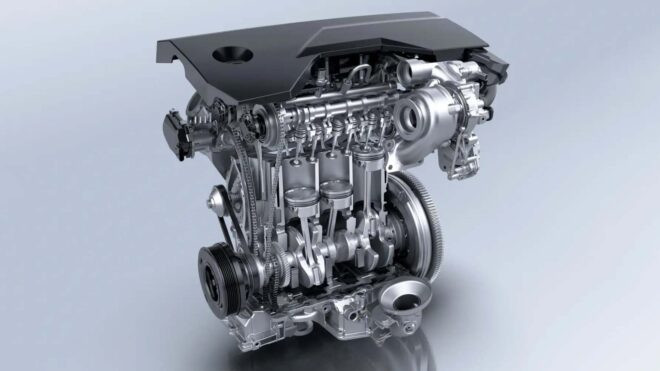
 İçten yanmalı motor çalışmalarını aktif olarak sürdüren Peugeot, 1.2 litrelik triger zincirli yeni turbo motorunu tanıttı. Üç silindirli yeni ünite resmi verilere göre 100 beygir güç (5.500 rpm) ve 205 Nm tork (1.750 rpm) üretiyor. Termal verimliliği daha yüksek sıkıştırma oranıyla artırmak adına Miller döngüsüyle çalıştığı aktarılan ünite için mühendisler, iç sürtünmeyi azaltan yeni bir supap zamanlama sistemi ve düşük devirlerdeki tepkiyi artırmak için de değişken geometrili bir turboşarj geliştirmiş. Sürücülere ciddi sıkıntılar yaşatan ıslak kayış yerine triger zincirine (zamanlama zinciri) yer verilen motor, Peugeot’nun açıklamasına göre silindir bloğu, turbo ve enjeksiyon sistemi gibi ana parçalardaki güncellemelerle birlikte yaklaşık yüzde 70’i yeni bir ünite olarak geliyor. Test ortamında 30 bin saat, test araçlarında ise üç milyon kilometreden fazla yol yapıldığı açıklanan yeni motorun, ilk olarak 208 modelinde, daha sonra ise 2008’de kullanılacağı aktarılıyor.
 Google, Microsoft, LinkedIn, Meta, Amazon, OpenAI, Adobe, Pinterest, Target, Levi’s Strauss & Co. ve Tinder ile Hinge’in sahibi Match Group, Birleşmiş Milletler küresel dolandırıcılık zirvesi öncesinde önemli bir adım atarak oluşturulan dolandırıcılıkla mücadele girişimine imza attı. Suç örgütlerinin dolandırıcılık faaliyetlerinde artık daha önce hiç olmadığı kadar yapay zeka desteği aldığını ve bu yüzden mücadele için bir araya gelmek zorunda olduklarını belirten Google yetkilisi Karen Courington, “Dolandırıcılıkla toplu bir şekilde mücadele etmek için sektördeki tüm isimlerin ortak çalışmasına ihtiyacımız var.” diye konuştu. İlginç olarak Apple’ın dahil olmadığı iş birliği hakkında yapılan açıklamada, “Teknoloji şirketleri ve mağazaların yeni dolandırıcılık yöntemleri hakkında bilgi paylaşması, tüketicilere yılda 442 milyar dolara mal olan ve hızla büyüyen bu sorunla başa çıkmak için çok önemli.” ifadelerine de yer verildi.
 Tamamen elektrikli yeni Mercedes-Benz C-Class, paylaşılan ilk resmi bilgilere göre 700 km’den fazla menzille geliyor. Resmi olarak önümüzdeki ay içerisinde tanıtılacak araç, 800V’lık MB.EA mimarisini temel alıyor. Geçtiğimiz saatlerde tasarımı sızdırılan tamamen elektrikli BMW i3’ün karşısına konumlandırılacak elektrikli C-Class, 64 kWh ile 94 kWh arasında değişen farklı pil kapasiteleriyle sunulacak. Autocar’ın prototip sürümünü kullanma şansı elde ettiği araç, opsiyonel olarak hareketli arka aks sistemiyle elde edilebilecek. Çok konforlu ve sessiz olduğu söylenen araç, aktarıldığı kadarıyla oldukça “çevik” hissettiriyor.