Free security tools for AI-powered coding (Sponsored)

Security teams talk risk. Developers talk function. AURI by Endor Labs is the common language between them, grounded in shared context and evidence.
AURI by Endor Labs brings security into the architecture of agentic coding, with free tools for developers and AI agents to detect vulnerabilities, block malware, and fix security bugs.
Learn more and try it yourself →
Happy Thursday 👋 and a warm welcome to Tech Talks Weekly #105!
Before we start, if you found something useful, leave a comment. Thank you!
That said, there’s tons of great content this week, so let’s jump right in!
Join 9,500+ Software Engineers & Engineering Leads who receive a free weekly email with all the recently published conference talks and podcasts. Stop scrolling through messy YouTube/RSS feeds. Stop FOMO. Easy to unsubscribe. No spam, ever.
🏆 Featured this week
Here are our top recommendations this week. Watch now or bookmark!
1. “Java 26: Better Language, Better APIs, Better Runtime” from JavaOne 2026
Conference ⸱ +8k views ⸱ May 17, 2026 ⸱ 00h 50m 25s
tldw: After JavaOne 2025, JDK 25 became the latest LTS release. But Java keeps moving forward, and now JDK 26 is here. Nicolai Parlog, a Java Developer Advocate at Oracle, demoes the key changes from Java 21 to 25, including unnamed patterns, module imports, the foreign-function and memory API, stream gatherers, and the class-file API. He also takes a closer look at JDK 26 and its preview features, such as primitive patterns, improved structured concurrency, and HTTP/3 support.
https://youtube.com/watch?v=86eK0Or2eIE
2. “Beyond Code Coverage: Functionality Testing with Playwright MCP — Marlene Mhangami, Microsoft” from AI Engineer Singapore 2026
Conference ⸱ +7k views ⸱ May 16, 2026 ⸱ 00h 19m 45s
tldw: When an LLM writes tests after the code, it often produces tests that simply confirm the current implementation rather than checking whether the user experience really works. As a result, your test suite can pass even while the app is broken in ways the tests never cover. Marlene Mhangami, Senior Developer Advocate for Python and AI at Microsoft, argues for reversing that workflow. Get the agent first to write failing Playwright tests, then generate the code needed to make those tests pass. The demo walks through this approach using GitHub Copilot and the Playwright MCP server on a toy store search feature. With the browser open, you can watch the agent interact with filters and validate search results in real time.
https://youtube.com/watch?v=FWEInOtngmM
3. “Tech Truth: Agile Evolution & the Future of SW Engineering • Martin Fowler & Kent Beck • GOTO 2025” from GOTO Copenhagen 2025
Conference ⸱ +1k views ⸱ May 18, 2026 ⸱ 00h 53m 56s
tldw: Martin Fowler and Kent Beck, longtime friends and leaders in software development, recently sat down to talk about their experiences over the past thirty years. They shared how AI now plays a real role in their work: Kent sees it as a patient tutor for trying out ideas, while Martin points out that AI helps us communicate with computers, but people skills are still essential for building software that meets real needs. They also looked back at the Agile Manifesto, almost 25 years later, discussing what Extreme Programming got right and how some of its ideas changed as more people adopted them. The conversation ends with helpful advice for junior developers.
https://youtube.com/watch?v=ii_rLjQfjp0
4. “Why Most Event-Driven Systems Fail in Banking (And How to Fix It)” from InfoQ Dev Summit Munich 2025
Conference ⸱ +1k views ⸱ May 18, 2026 ⸱ 00h 51m 25s
tldw: Event-driven, cloud-native architectures promise ultimate scalability, but highly regulated industries like fintech and healthcare introduce strict boundaries where you cannot afford to lose or duplicate a single event. Chris Tacey-Green, Head of Engineering at Investec, walks us through the foundational principles of lean events versus fat events, the critical difference between commands and events and why you do not need event sourcing to succeed. You will also learn how to implement patterns like Inbox and Outbox patterns to stop data duplication, maintain event contracts across domain boundaries and tackle event ordering.
https://youtube.com/watch?v=8VUXniuTTBA
5. “Structured Concurrency: The paradigm shift that changes modern development – Android Makers” from Android Makers 2026
Conference ⸱ +100 views ⸱ May 14, 2026 ⸱ 00h 38m 38s
tldw: For decades concurrent programming has meant wrestling with complexity, resource leaks and stray processes. Structured concurrency is the paradigm shift that changes how you write, read and reason about concurrent code, and this session cuts through the hype to reveal the core principle: concurrent tasks should have a clear beginning, end and scope, just like any other code block. You will see how that simple idea organizes tasks into clear hierarchies that enable automatic, reliable cancellation, so when one task fails its entire family is gracefully cleaned up. Watch to see how this paradigm, now being adopted in languages from Java to Kotlin and beyond, makes concurrent code robust, readable and easier to manage than ever.
https://youtube.com/watch?v=SQFQyyA1VOI
Found something useful? Leave a comment. Thank you 🙏
6. “Formal Methods as Agent Guardrails” from Software Engineering Daily
Podcast ⸱ May 19, 2026 ⸱ 00h 48m 32s
tldl: Formal methods are a branch of mathematics and computer science focused on proving the correctness of systems and they are promising a more rigorous foundation for software. Their complexity has kept them confined to a small community of specialists, but that is now changing as agentic AI systems take on increasingly autonomous roles. This episode of Software Engineering Daily explores how formal methods can act as guardrails for AI agents, giving them the verifiable safety that autonomous software increasingly demands.
https://softwareengineeringdaily.com/2026/05/19/formal-methods-as-agent-guardrails/?utm_source=rss&utm_medium=rss&utm_campaign=formal-methods-as-agent-guardrails
7. “What is harness engineering? — Thoughtworks Technology Podcast” from Thoughtworks
Podcast ⸱ May 14, 2026 ⸱ 0 days 00:40:51
tldl: Harness engineering is one of the most significant terms to emerge in software engineering in 2026. It broadly refers to the work done to control unpredictable AI agents and coding assistants, and its rise signals growing attention on what it takes to make agents reliable and consistent enough for real-world production software. Listen to this episode to see what harness engineering actually is and how it should be done.
https://youtube.com/watch?v=KQJLPsbnKiQ
📆 New talks
Here’s the complete list of all the talks published since the last issue, grouped by conference, and ordered by number of views for your convenience.
AI Engineer Singapore 2026 (18), Android Makers 2026 (17), Conference Talks 2026 (3), Devnexus 2026 (11), Devoxx Poland 2024 (2), GOTO Copenhagen 2025 (2), GOTO Serverless Bangalore 2025 (1), InfoQ Dev Summit Munich 2025 (2), JavaOne 2026 (1), Node Congress 2026 (1), QCon AI New York 2025 (1), QCon San Francisco 2025 (2), Spring I/O 2026 (3)
📆 New podcasts
Here’s the complete list of all the podcasts published since the last issue.
Go to 📆 New podcasts
📈 Most-watched talks
Find the most watched talks from the past 7d, 30d, 90d, 6m, and 12m.
Go to 📈 Most-watched
🗄️ Talks and podcasts by category
This issue’s talks, sorted by view count and organized by topic.
AI Engineering
-
“Harnesses in AI: A Deep Dive — Tejas Kumar, IBM” from AI Engineer Singapore 2026 — Conference ⸱ +38k views ⸱ May 17, 2026 ⸱ 00h 20m 27s
-
“Build Agents That Run for Hours (Without Losing the Plot) — Ash Prabaker & Andrew Wilson, Anthropic” from AI Engineer Singapore 2026 — Conference ⸱ +28k views ⸱ May 18, 2026 ⸱ 01h 15m 40s
-
“Agents Don’t Do Standups: Building the Post-Engineer Engineering Org — Mike Spitz, PFF” from AI Engineer Singapore 2026 — Conference ⸱ +22k views ⸱ May 15, 2026 ⸱ 00h 17m 50s
→ See 31 more AI Engineering talks on Tech Talks Weekly Plus
AWS
-
“How to Build Your Full-Stack Applications With CDK & AWS Amplify • Erik Hanchett • GOTO 2025” from GOTO Serverless Bangalore 2025 — Conference ⸱ +200 views ⸱ May 19, 2026 ⸱ 00h 25m 40s
DevOps
-
“Mind the Gap (In your Agent Observability) — Amy Boyd & Nitya Narasimhan, Microsoft” from AI Engineer Singapore 2026 — Conference ⸱ +2k views ⸱ May 14, 2026 ⸱ 01h 20m 07s
Java
-
“Java 26: Better Language, Better APIs, Better Runtime” from JavaOne 2026 — Conference ⸱ +8k views ⸱ May 17, 2026 ⸱ 00h 50m 25s
-
“Core Resilience Features in Spring Framework 7 by Juergen Hoeller @ Spring I/O 2026” from Spring I/O 2026 — Conference ⸱ +1k views ⸱ May 18, 2026 ⸱ 00h 46m 46s
-
“Beyond local tools: Deep dive into MCP with Spring AI by James Ward / Maximilian Schellhorn” from Spring I/O 2026 — Conference ⸱ +1k views ⸱ May 18, 2026 ⸱ 00h 51m 55s
→ See 12 more Java talks on Tech Talks Weekly Plus
Kotlin
-
“Offline Should be the norm building local first apps with CRDTs & Kotlin Multiplatform” from Android Makers 2026 — Conference ⸱ +100 views ⸱ May 14, 2026 ⸱ 00h 44m 51s
-
“Koin + Kotlin Compiler = ♥️” from Android Makers 2026 — Conference ⸱ +100 views ⸱ May 19, 2026 ⸱ 00h 43m 40s
-
“The Lord of Collection Functions – The Fellowship of Kotlin” from Android Makers 2026 — Conference ⸱ +100 views ⸱ May 18, 2026 ⸱ 00h 38m 16s
→ See 1 more Kotlin talk on Tech Talks Weekly Plus
Kubernetes
-
“Product Thinking for Cloud Native Engineers” from InfoQ Dev Summit Munich 2025 — Conference ⸱ <100 views ⸱ May 18, 2026
Misc
-
“How I Doubled eBay’s Productivity – And Still Got Fired” from QCon San Francisco 2025 — Conference ⸱ +3k views ⸱ May 14, 2026 ⸱ 00h 49m 18s
-
“Tech Truth: Agile Evolution & the Future of SW Engineering • Martin Fowler & Kent Beck • GOTO 2025” from GOTO Copenhagen 2025 — Conference ⸱ +1k views ⸱ May 18, 2026 ⸱ 00h 53m 56s
-
“Ye Cannae Change the Laws of Physics • Kevlin Henney • GOTO 2025” from GOTO Copenhagen 2025 — Conference ⸱ +900 views ⸱ May 15, 2026 ⸱ 00h 45m 37s
→ See 4 more Misc talks on Tech Talks Weekly Plus
Mobile
-
“Shipping “Smart UI” with RemoteCompose – Android Makers by droidCon 2026” from Android Makers 2026 — Conference ⸱ +200 views ⸱ May 16, 2026 ⸱ 00h 45m 48s
-
“The ViewModel Performance Trap: When State Management Bites Back – Android Makers by droidCon 2026” from Android Makers 2026 — Conference ⸱ +100 views ⸱ May 17, 2026 ⸱ 00h 48m 57s
-
“Ways to reduce your app’s memory and storage footprint – Android Makers by droidCon 2026” from Android Makers 2026 — Conference ⸱ +100 views ⸱ May 15, 2026 ⸱ 00h 40m 44s
→ See 14 more Mobile talks on Tech Talks Weekly Plus
Python
-
“Beyond Code Coverage: Functionality Testing with Playwright MCP — Marlene Mhangami, Microsoft” from AI Engineer Singapore 2026 — Conference ⸱ +7k views ⸱ May 16, 2026 ⸱ 00h 19m 45s
Security
-
“Hack Your Own App Getting Started with Mobile Penetration Testing – Android Makers by droidCon 2026” from Android Makers 2026 — Conference ⸱ +100 views ⸱ May 16, 2026 ⸱ 00h 32m 00s
Software Architecture
-
“Why Most Event-Driven Systems Fail in Banking (And How to Fix It)” from InfoQ Dev Summit Munich 2025 — Conference ⸱ +1k views ⸱ May 18, 2026 ⸱ 00h 51m 25s
-
“Relevance of Unix Philosophy in Modern Architectural Solutions • Daniel Pokusa • Devoxx Poland 2024” from Devoxx Poland 2024 — Conference ⸱ <100 views ⸱ May 15, 2026 ⸱ 00h 47m 27s
-
“From SQL to Flow: clean offline-first architecture with Kotlin 2.x” from Android Makers 2026 — Conference ⸱ <100 views ⸱ May 19, 2026 ⸱ 00h 17m 03s
→ See 1 more Software Architecture talk on Tech Talks Weekly Plus
🔓 See everything in Tech Talks Weekly Plus
Never miss great conference talks and podcasts again for $7 $5/month.
-
📁 Search, filter, sort the full archive of talks & podcasts since 2020.
-
🗄️ Complete category view of new talks & podcasts.
-
📈 Most-watched talks from the past 7d, 30d, 90d, 6m, and 12m.
Subscribe to Tech Talks Weekly Plus →
This issue is free for everyone, so feel free to share or forward it!
Enjoy the weekend ☀️ and see you next week!


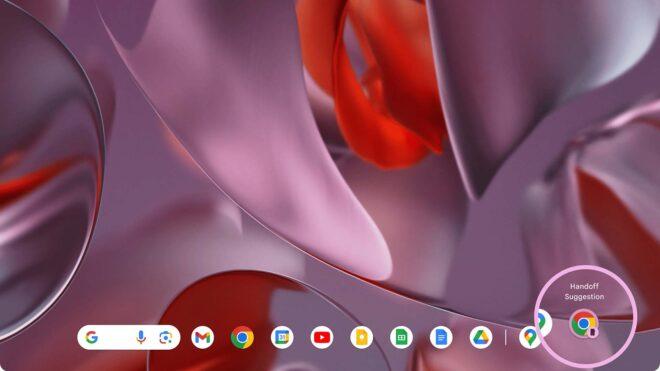
 Google, I/O 2026 etkinliğinde Android 17 işletim sistemi için geliştirilen, Apple’ın Handoff sistemine benzer “Continue On” altyapısını da duyurdu. Bu altyapı, kullanıcıların Android cihazlarını uygulama kullanımları özelinde birbirine bağlamasına imkan tanıyor. Örneğin telefondaki bir uygulamada açılan doküman ya da e-posta, doğrudan tablette de görünüyor ve tek dokunmayla açılabiliyor. Zaman kazandıran bu altyapı için her iki cihazda da aynı hesabın kullanılması gerekiyor.
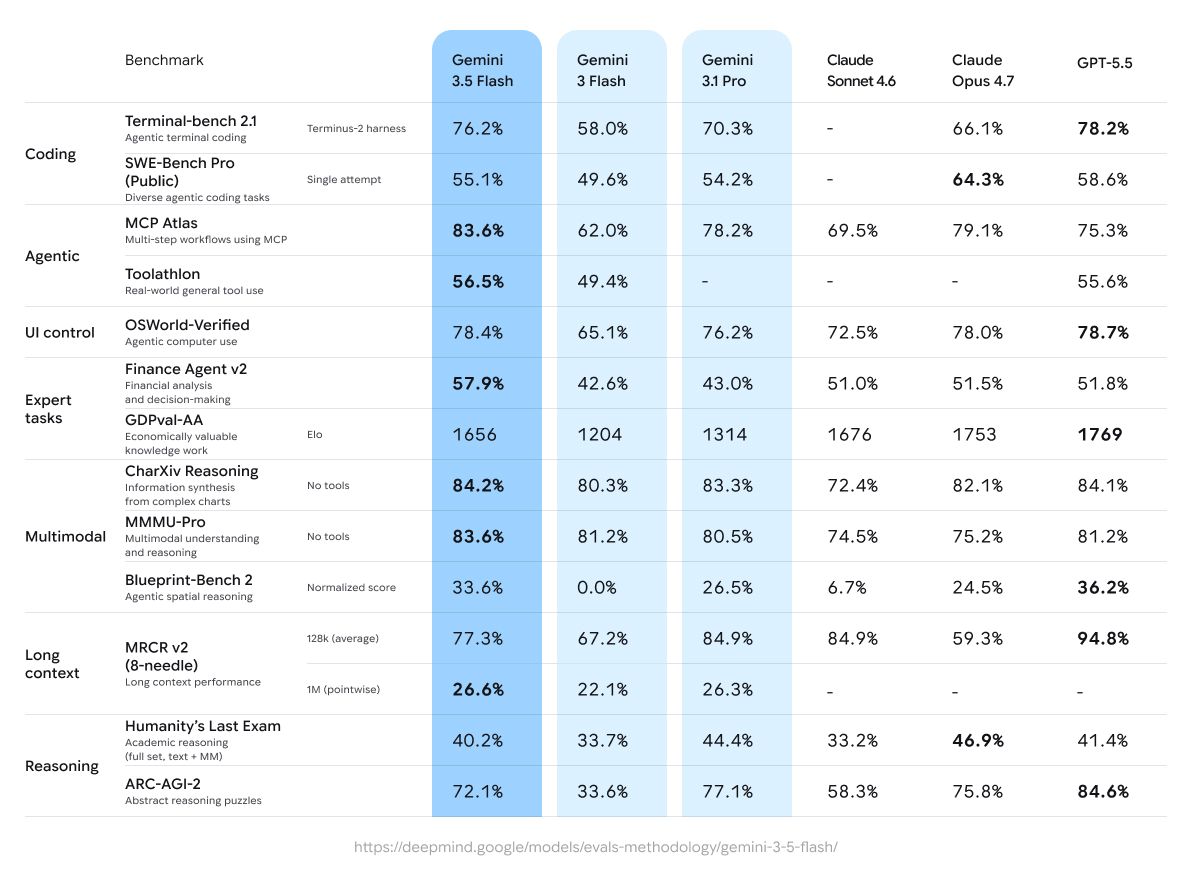

 SuperGrok ve X Premium aboneleri bundan böyle OpenClaw içerisinde Grok yapay zekâ modelini kullanabilecek ve geniş bir ortamda entegrasyon imkânı bulacak.